
Last updated November 15, 2026
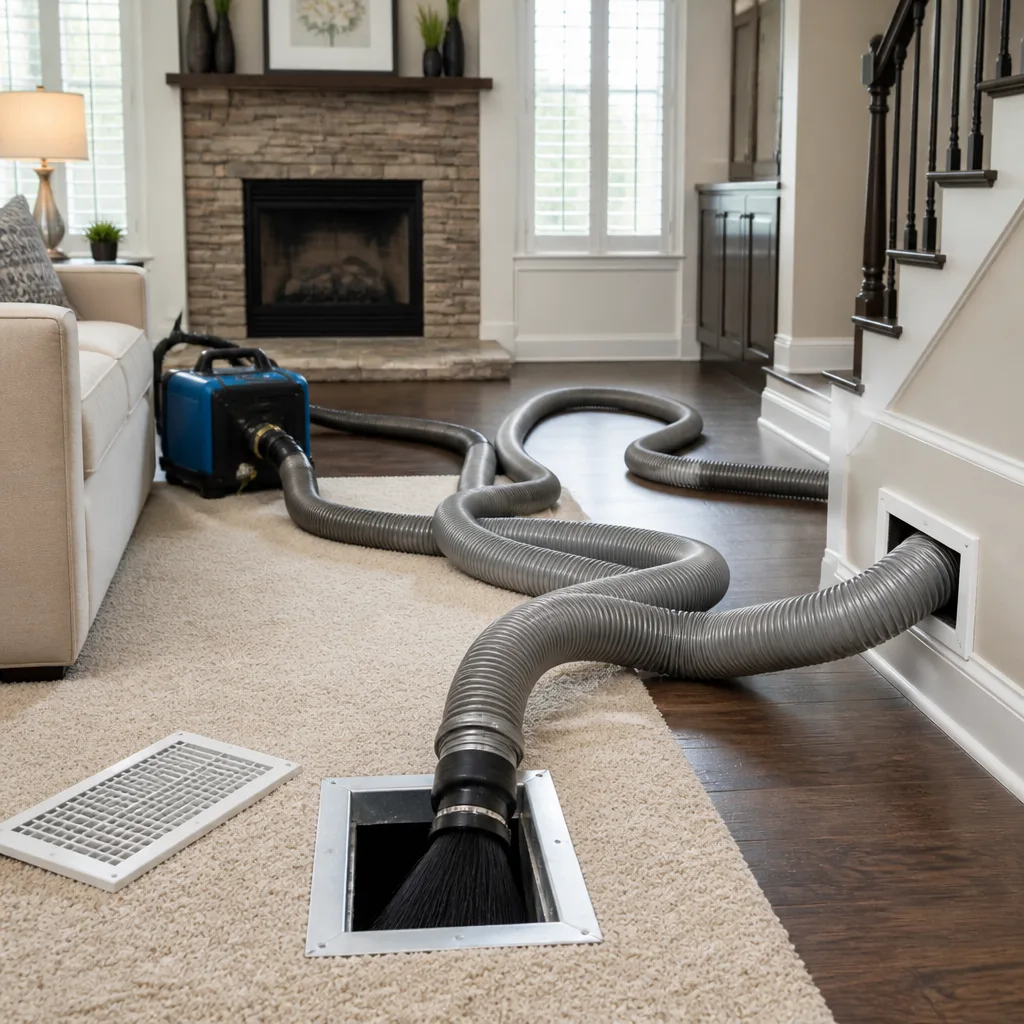 Whole-home duct cleaning
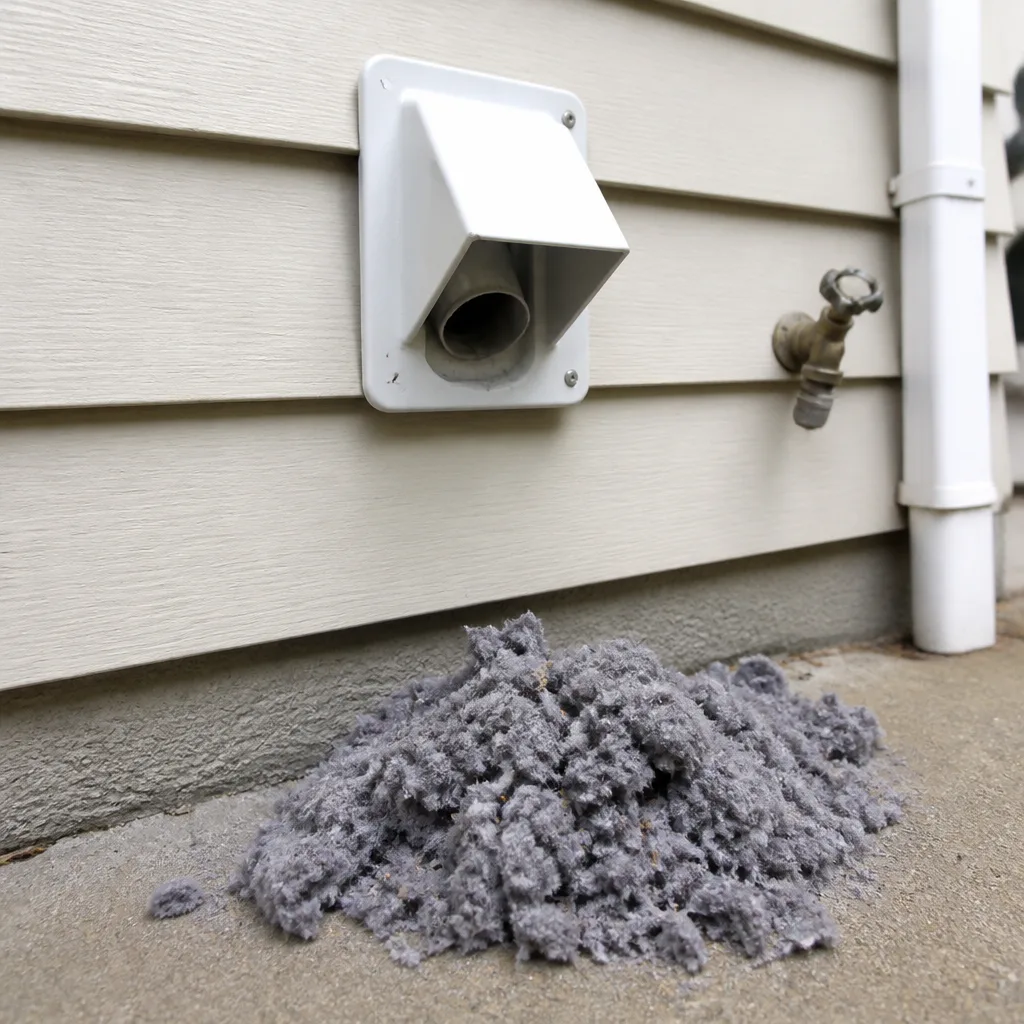 Dryer vent cleaning
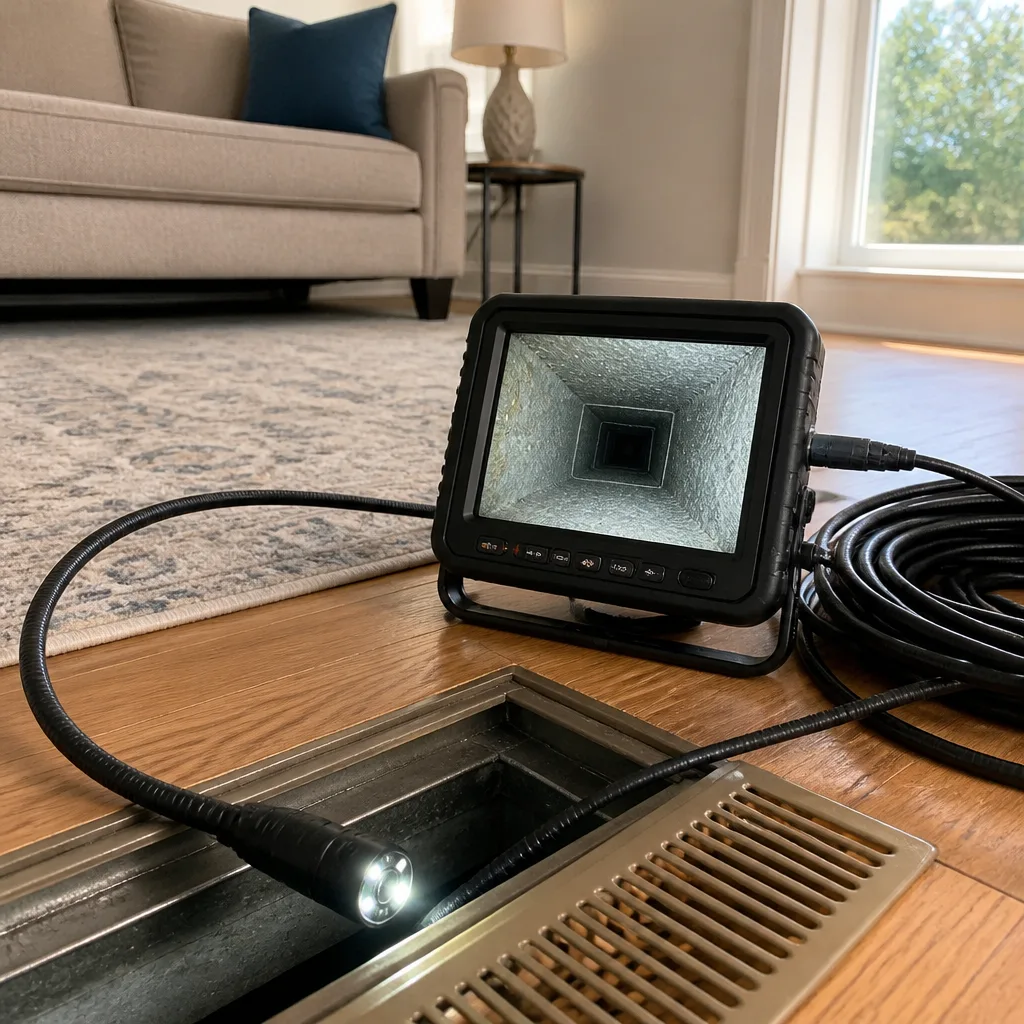 Camera inspection
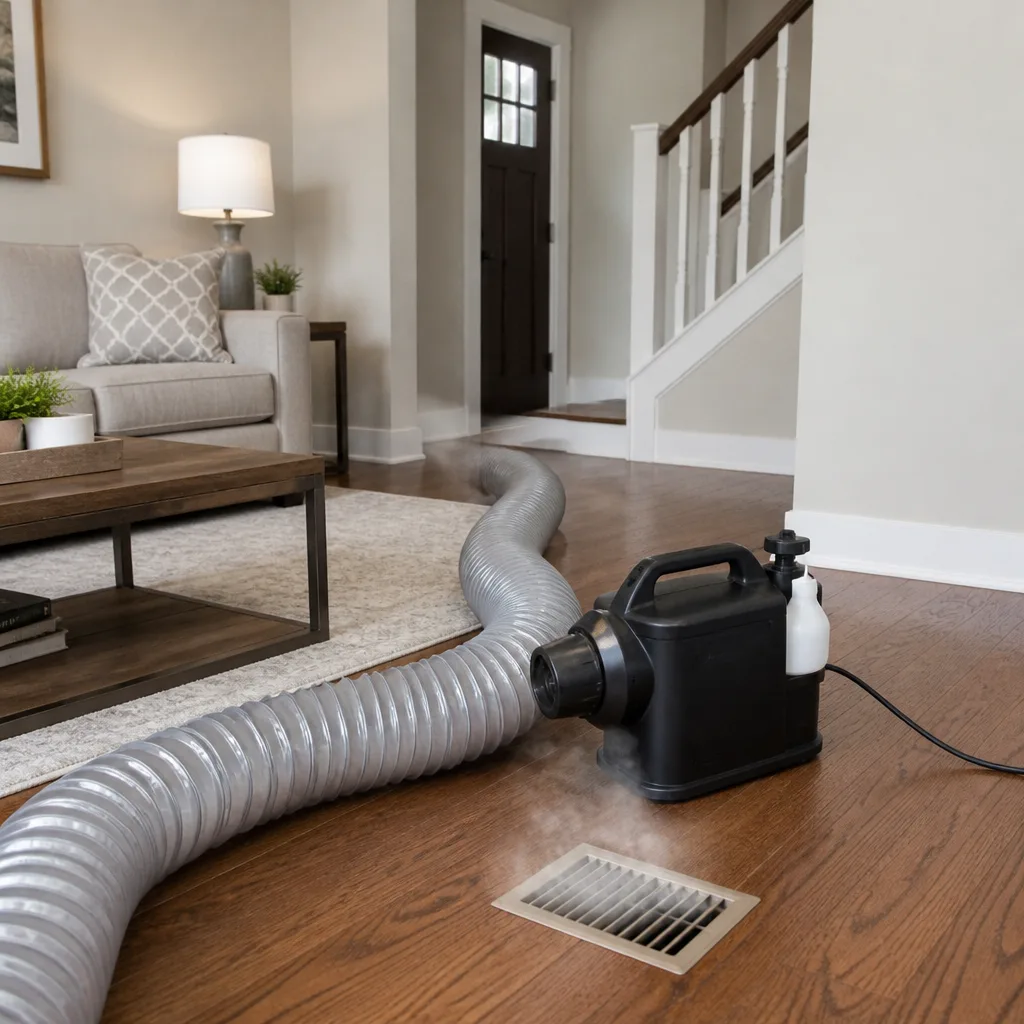 Sanitizing & deodorizing
Whole-system duct and dryer vent check with before-and-after photos - you see exactly what came out of your vents
That "$99 whole-house special" is a bait ad - the real number appears once they are in your hallway, or the "clean" is a shop-vac at the register. We photograph the inside of your ducts before and after instead.
Choosing the Right Air Duct Cleaning Brand: A Buyer’s Guide for North Charleston
Every duct cleaning company in North Charleston has before-and-after photos of dirty registers. Almost none of them show you what happened inside the trunk lines, the air handler, or the return plenum, because that’s where the real work is. A shiny register photo proves someone wiped a grille. It tells you nothing about whether the debris that settles through your whole system actually left the house. This guide teaches you how to judge what a company does rather than how well it markets itself: the equipment it runs, the scope it can deliver, and the review language that separates real thoroughness from a good write-up. You’ll finish knowing exactly what to ask before anyone touches your ducts.
Quick Answer
The right air duct cleaning brand in North Charleston is the one that runs professional-grade extraction equipment rather than a shop vacuum, can repair and seal damaged ductwork instead of only cleaning it, and documents what it removed from the full system, not just the vents. Price matters less than equipment class and service scope, because a cheap clean that leaves the trunk lines untouched is money spent on nothing. Verify method, scope, and proof before you book.
Styles & brands we work with
- Whole-home duct cleaning
- Dryer vent cleaning
- Camera inspection
- Sanitizing & deodorizing
Table of Contents
- What Equipment Should a Duct Cleaning Company Use?
- Why Do CFM Ratings and Truck-Mount vs. Portable Matter?
- Is NADCA Membership Enough to Trust a Company?
- How Do You Read Reviews for a Duct Cleaning Company?
- Why Does Service Scope Matter More Than Price?
- Why Isn’t the Cheapest Company the Right One?
- How Do You Verify a Company Before Booking?
- What Should North Charleston Homeowners Know About Their Ducts?
What Equipment Should a Duct Cleaning Company Use?
A serious duct cleaning company uses rotary-brush agitation paired with HEPA-filtered vacuum extraction. Anything less is a surface pass. The machine matters because ducts don’t give up debris to suction alone. Dust, drywall grit, pet hair, and construction residue bond to the walls of the duct, and they need to be mechanically loosened before they can be captured.
That’s why Sunstone Air Duct Cleaning runs Rotobrush rotary-brush systems and Nikro HEPA-filtered vacuum units. The brush agitates debris off the duct walls; the HEPA vacuum pulls it out of the airstream and traps it. One without the other either stirs contaminants into your living space or leaves them stuck in place. There’s no in-between.
When you evaluate a company, ask pointed questions about equipment class. Vague answers are answers too.
- What kind of vacuum do you use? A HEPA-filtered extraction unit is professional grade. A wet/dry shop vac is not, and it will redistribute fine particulate into the room.
- Do you agitate the duct walls? Rotary brush or compressed-air whips, yes. Suction-only, no.
- What’s the vacuum’s CFM rating? A company that can’t tell you has probably never been asked.
- Do you use filtration or negative-air equipment in the home? Remediation-grade operators often do, especially on jobs with visible contamination.
We use filtration equipment from Abatement Technologies because some homes need more than a vacuum: post-renovation dust, mold concerns, and heavy allergen loads all call for containment, not just extraction. Professional-grade equipment, not improvised tools, is the first line between a real clean and a cosmetic one.
Why Do CFM Ratings and Truck-Mount vs. Portable Matter?
CFM, or cubic feet per minute, measures how much air a vacuum moves. In duct cleaning it’s the difference between lifting debris out of a branch line and politely suggesting it leave. A unit that moves real air volume can pull loosened material through the system; a weak one can’t, no matter how long the technician stands there.
Truck-mount units generally deliver higher airflow than portable machines because they run on a larger power plant. Portables are not automatically bad, and a well-run portable with strong CFM and HEPA filtration can do excellent work. What matters is whether the operator knows the numbers and matches the equipment to the job. When you look into air duct cleaning options in the area, treat this as a qualifying question, not a technicality.
Here’s how to frame the conversation:
- Ask for the CFM rating of the vacuum they’ll bring. A professional answers without hesitation.
- Ask whether it’s truck-mount or portable, and why they chose it for your home’s layout.
- Ask how they keep the vacuum sealed to the duct while the brush runs. A loose connection loses suction fast.
- Ask what happens to the debris once it’s captured. It should leave the house inside a HEPA-filtered system, not get dumped in a bag in your hallway.
In North Charleston, where plenty of homes have long trunk runs and attic-mounted air handlers, airflow capacity isn’t academic. A weak machine working a long run is a machine that quits before the far end of the house.
Is NADCA Membership Enough to Trust a Company?
NADCA membership is a meaningful signal, and it isn’t sufficient on its own. The National Air Duct Cleaners Association sets recognized standards for how duct cleaning should be done, and a member company has at least committed to that framework. But membership is a credential, not a demonstration of method. Plenty of companies belong to trade groups and still run a shop vac and a leaf blower.
So treat NADCA as one checkbox among several. What you actually want to verify is how the company cleans, and whether it can show you evidence.
- Method: Does the company describe source removal through agitation plus HEPA extraction, or does it talk about “blowing out” the system?
- Inspection: Will they look inside the air handler and return plenum, not just the registers?
- Documentation: Do they photograph the work inside the ducts and share the images with you?
- Equipment transparency: Do they name the systems they run? Rotobrush, Nikro, and Abatement Technologies are names you can check.
- Scope: If they find a disconnected or crushed duct, can they repair it, or do they hand you a business card for someone else?
The best signal isn’t a membership logo. It’s a company that can explain, specifically, what it does inside a duct and show you the result. We’ve seen homeowners pay good money for a “certified” clean that never touched the trunk line. The credential was real. The work wasn’t.
How Do You Read Reviews for a Duct Cleaning Company?
Read reviews for the details, not the ratings. Detailed reviews mention what a company actually did: which parts of the system it cleaned, whether it photographed the return plenum, whether it found a disconnected duct, whether the technician explained anything. Generic positive reviews (“great job, very professional”) could describe almost any visit to your home, including one that never touched the ducts.
Here’s what separates a useful review from noise:
- Specific locations mentioned: air handler, return plenum, trunk line, branch runs. A reviewer who names these had a technician who showed them the work.
- Equipment mentioned: a review that mentions a HEPA vacuum, a rotary brush, or a filtration unit is describing a method, not a mood.
- Proof mentioned: before-and-after photos of the customer’s own system, not stock images.
- Repair findings: reviews that mention a company repaired or sealed a duct are evidence of real scope.
- Follow-through: reviews that describe what happened after the visit, not just on the day.
And watch for the opposite pattern: many glowing reviews clustered close together, all using the same phrasing, none mentioning what was cleaned. Duct cleaning attracts review farms because the work happens inside a system the customer can’t easily inspect afterward. That’s exactly why the review language matters.
When you look at companies in North Charleston, cross-check any review against the company’s stated method. If reviews describe a method the company doesn’t claim to use, something’s off.
Why Does Service Scope Matter More Than Price?
A company that only cleans ducts is structurally limited. It can vacuum your system, and then it has to hand you off the moment something’s wrong. Duct cleaning often reveals problems that cleaning can’t fix: disconnected joints, crushed flex runs, torn insulation, gaps that leak conditioned air into an attic.
A cleaner-only company finds those and refers you out. You now have two contractors, two estimates, two schedules, and a system that’s been cleaned but still isn’t sealed. That gap is where the value of scope shows up.
- Inspection first. A company should be willing to look inside the system before quoting, not after.
- Cleaning second. The whole system: supply runs, returns, trunk lines, air handler, and the plenum where debris accumulates.
- Repair and sealing third. If the inspection found a leak or a disconnected run, it should be repairable on the same call.
- Adjacent safety work. Dryer vents share the same contamination problem and carry fire risk, which is why dryer vent cleaning belongs in the same conversation.
Sunstone Air Duct Cleaning built its service lineup around that sequence: cleaning, repair, and dryer vent work under one roof. One call covers cleaning, repair, and dryer vent safety. That’s not a marketing line; it’s a structural advantage over single-service operators, and it’s the question most homeowners forget to ask.
Why Isn’t the Cheapest Company the Right One?
The cheapest duct cleaning quote is almost always a quote for the least work. A low price has to come from somewhere: fewer hours on site, weaker equipment, fewer parts of the system touched, or a technician paid to move fast. None of those trade-offs show up in the number you were given.
Here’s the pattern worth understanding. A very low headline price is usually an entry point. Once the technician is inside, the scope can expand: an “extra” charge for the returns, a separate charge for the air handler, a recommendation for treatment or sealing that wasn’t in the original number. The final invoice is the real price, not the quote.
You don’t have to guess. Ask for a single flat price for the whole system, agreed before anyone starts. That’s how we work at Sunstone: one flat price per system, agreed in writing before work starts, with no per-vent pricing and a written estimate that sets the final number. It also lets you compare proposals honestly, because every company is pricing the same scope.
The same logic applies to the most heavily advertised company in town. Advertising budget comes from somewhere too, and it doesn’t necessarily correlate with equipment class or scope. The right operator is usually found through verification, not through the top of a search results page.
How Do You Verify a Company Before Booking?
Verification takes about ten minutes and answers questions a sales pitch won’t. Work through this list in order. Any company that clears it is worth a conversation.
- Ask about equipment by name. Rotobrush, Nikro, Abatement Technologies, and Guardsman are real systems with known capabilities. A company that can’t name its equipment is using generic tools.
- Ask for the CFM rating and whether the unit is truck-mount or portable. Hesitation here is telling.
- Ask what parts of the system get cleaned. The answer should include supply registers, return grilles, trunk lines, branch runs, and the air handler area, not just the vents you can see.
- Ask whether they can repair ductwork, not just clean it. If not, they’re a partial solution.
- Ask how they’ll prove the work. Before-and-after photos of your own system, not stock images of someone else’s.
- Ask for one flat price for the whole system, in writing. No per-vent pricing, no tiers, no surprises once the technician arrives.
- Ask whether they’re licensed and insured. Any legitimate operator answers this without flinching.
Confirm licensing and insurance status directly; don’t accept a verbal yes as the whole story. Then compare at least two companies against the same questions. The contrast is usually obvious, and it has nothing to do with which one ranks first.
What Should North Charleston Homeowners Know About Their Ducts?
North Charleston’s housing mix puts unusual demands on duct systems. The area includes a lot of homes built during and after the region’s growth spurts, which means you’ll find everything from older systems with decades of accumulated dust to newer construction where drywall dust and construction debris were never fully cleared before the family moved in. Both present the same problem: contamination in a place you can’t see.
The local climate adds its own layer. Long, humid summers mean the air conditioning runs hard for months, and a system under sustained load moves more air through the same ductwork than a system in a milder climate. That constant airflow keeps fine particulate circulating, and it’s why a return plenum can accumulate visible material even in a house that gets cleaned regularly. Homes near the older industrial corridors and busy commercial stretches of North Charleston also tend to pull more airborne grit into the return.
A few North Charleston-specific factors worth weighing:
- Newer subdivisions often have flex duct runs in hot attics. They’re efficient, and they’re also easy to crush or disconnect during other trades’ work.
- Older homes may have duct systems that were retrofitted rather than designed, with plenty of improvised joints worth inspecting.
- Post-renovation homes carry drywall dust and sawdust that settles deep in the trunk line. Cleaning after the renovation, not before, is the point.
- Allergy-sensitive households in North Charleston benefit from knowing the system actually got cleaned, not just serviced.
If you already run a Honeywell or Aprilaire air quality system, the ductwork feeding it matters as much as the equipment itself. A whole-home filter or humidifier can only work with what the ducts deliver. Built for homes that take air quality seriously, that’s the layer most companies skip.
Common Mistakes to Avoid
- Judging the company by its register photos. A clean grille proves someone wiped a grille. Ask to see images from inside the trunk line and the return plenum, where the debris actually lives.
- Booking on price alone. The lowest quote buys the least work. When you compare estimates, confirm every company is pricing the same scope, because a cheap number often excludes the returns or the air handler.
- Skipping the equipment question. In North Charleston, a lot of homes have long duct runs in hot attics, and a weak vacuum quits before it reaches the far end. Ask for CFM and equipment names before you book.
- Hiring a cleaner who can’t repair. Duct cleaning regularly uncovers disconnected joints and crushed runs. If your company can’t fix them, you’ll be managing two contractors for one problem.
- Ignoring the dryer vent. The dryer vent is part of the same contamination story and carries real fire risk. If the vent hasn’t been cleaned, add it to the same visit.
- Accepting a verbal price. Get one flat price per system, in writing, before work starts. Per-vent pricing invites expansion once the technician is on site.
- Reading only the star ratings. Read for specifics: which parts of the system were cleaned, what was found, and whether photos were shared afterward.
See the difference
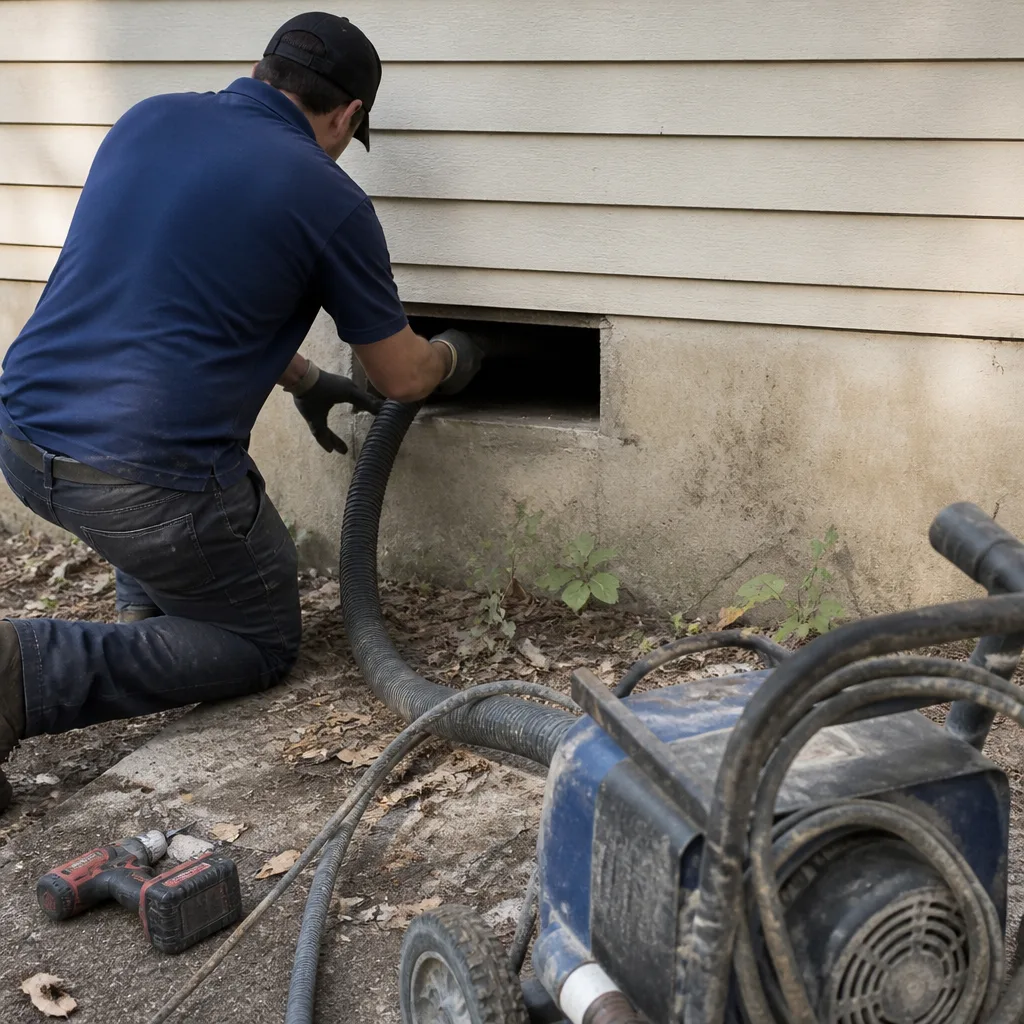 Before
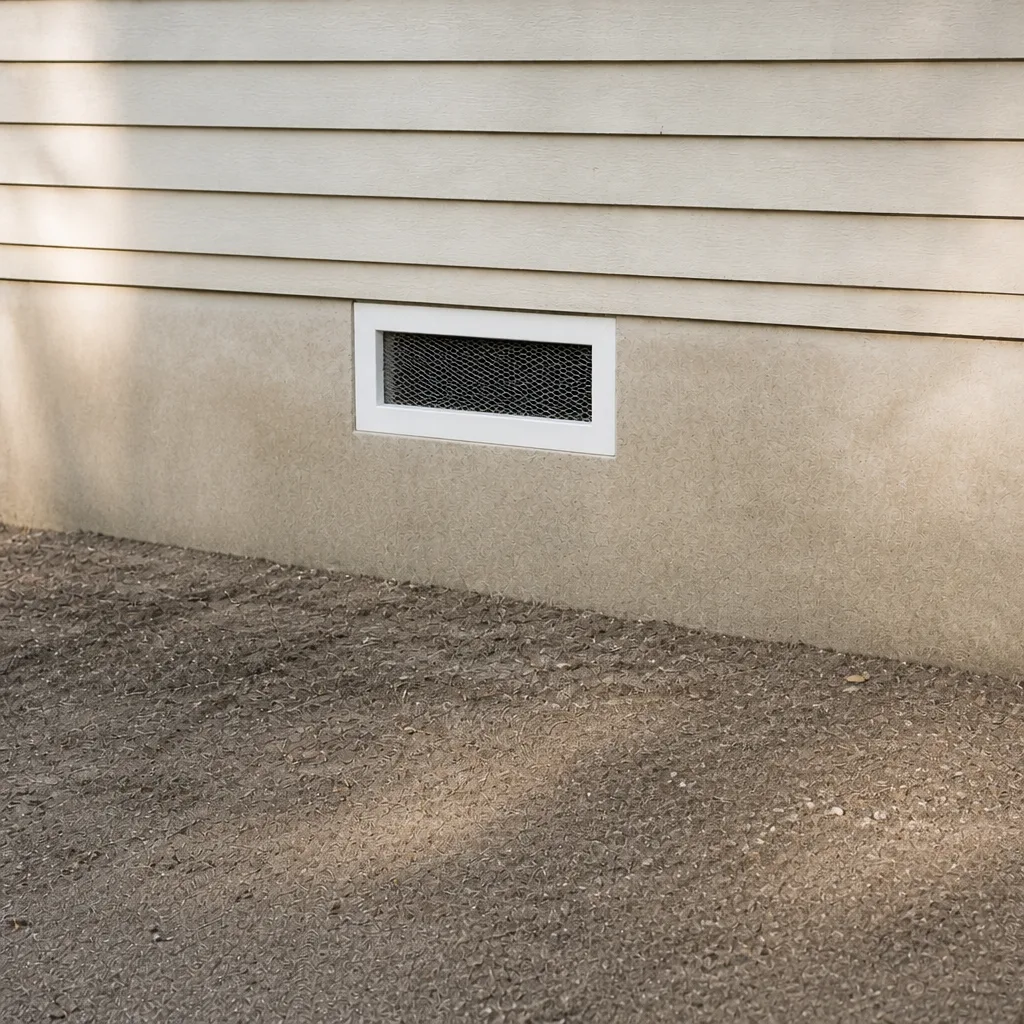 After
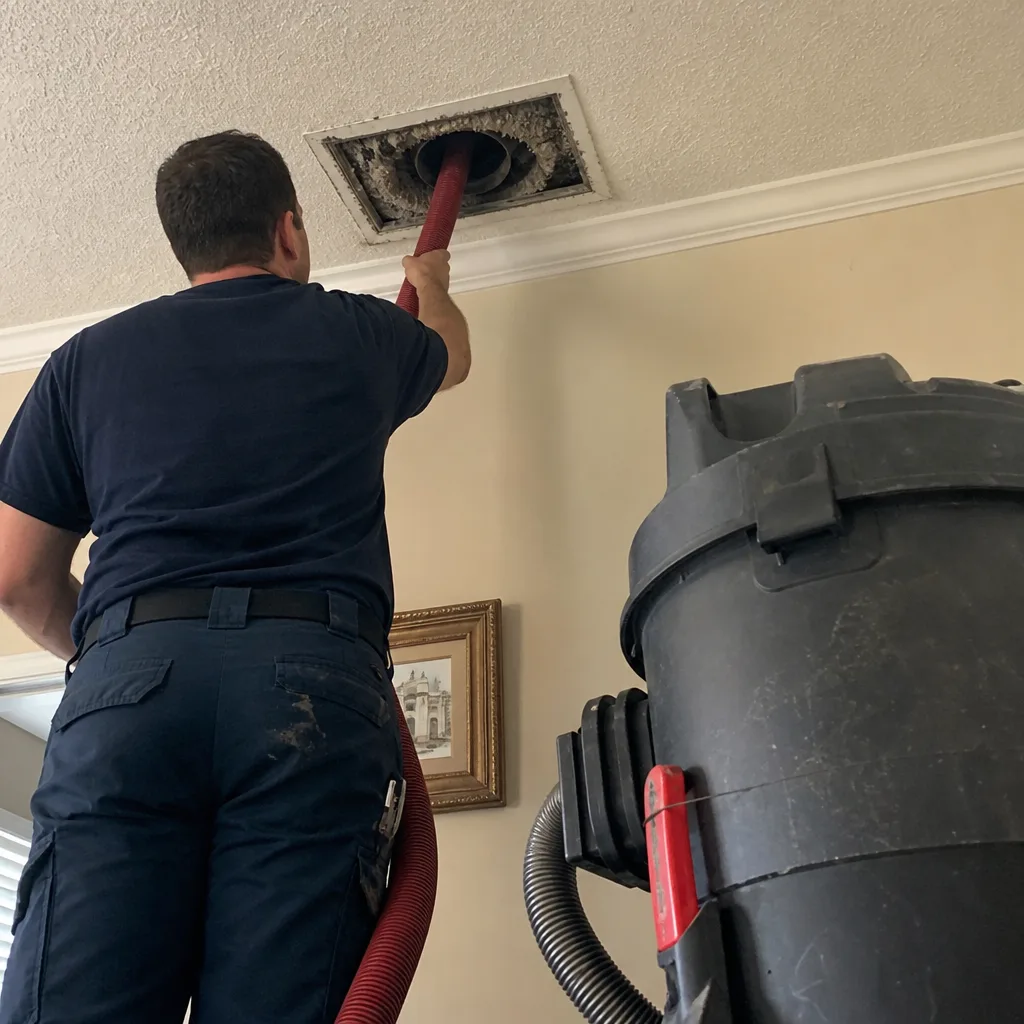 Before
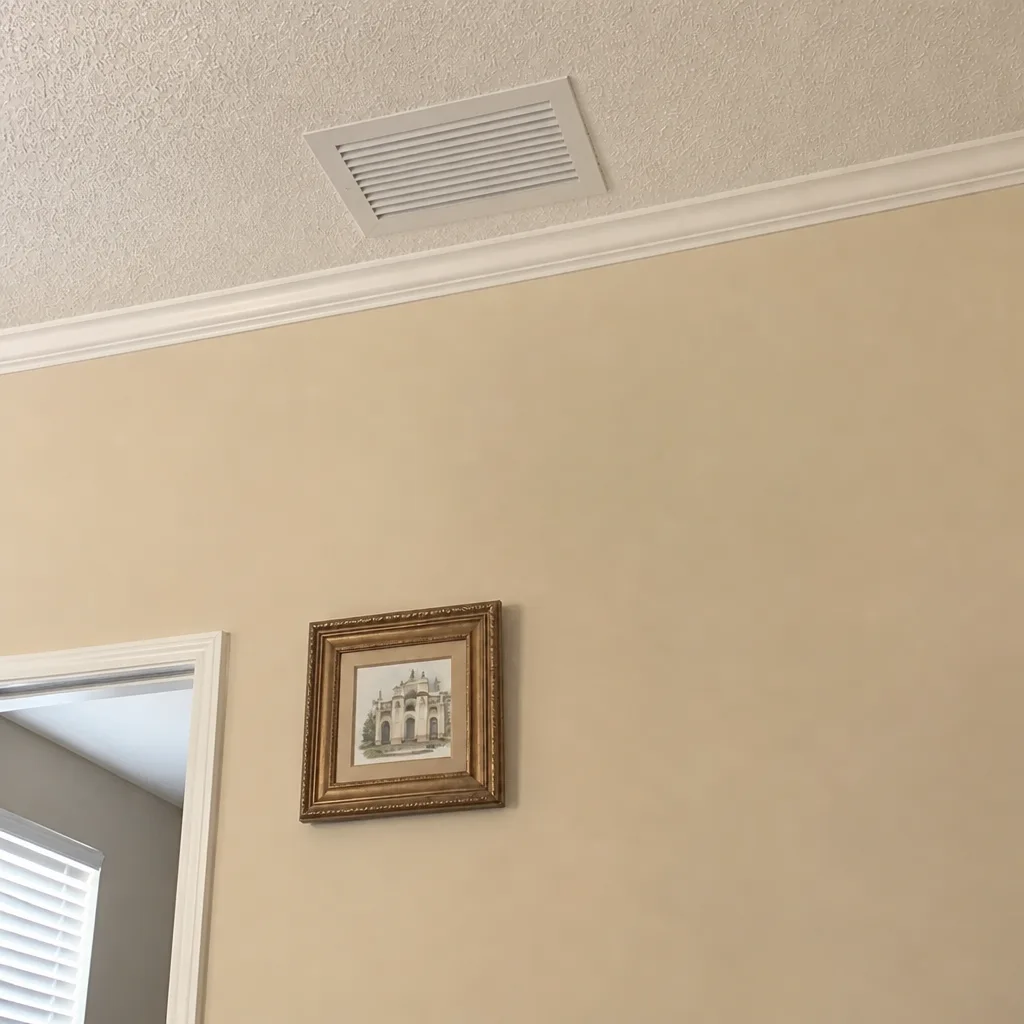 After
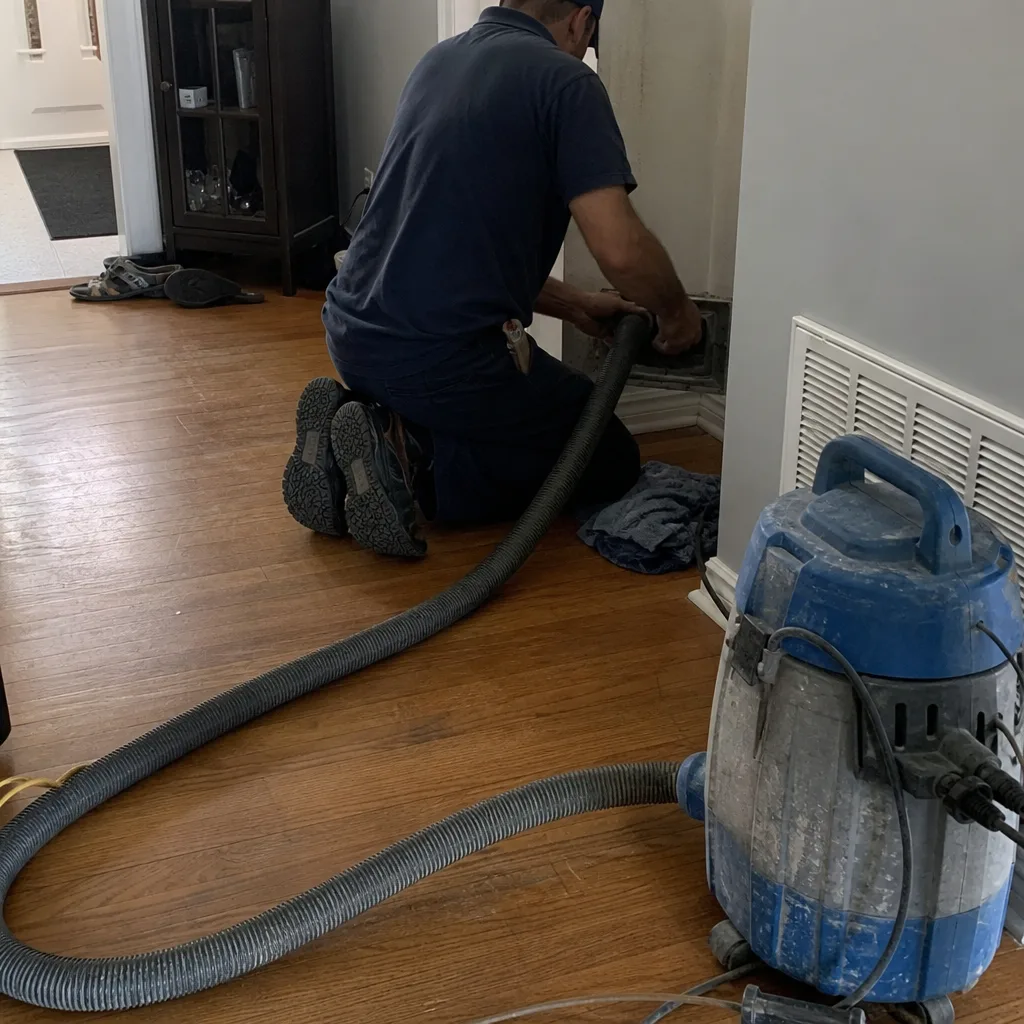 Before
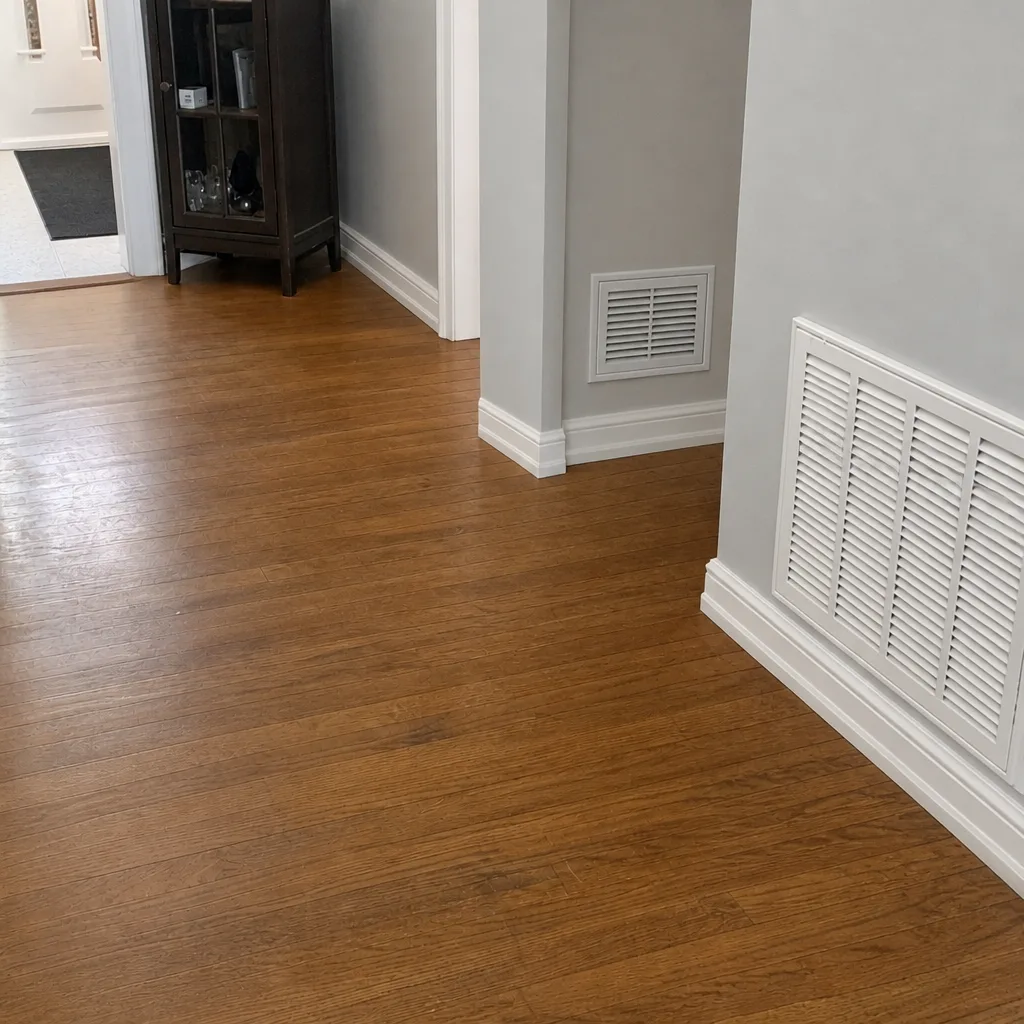 After
When to Call a Professional
Call a professional when you notice a persistent musty smell every time the air conditioning kicks on, when visible dust gathers on registers and nearby furniture faster than it should, or when anyone in the house has allergy symptoms that worsen indoors. Call after a renovation, before you turn the system back to normal use, and call if you’ve never had the ducts inspected and the house has changed hands more than once. Call if the system runs unevenly from room to room, which can point to a disconnected or crushed run. And call about the dryer vent separately, because lint accumulation there is a fire-safety matter, not a comfort one.
Sunstone Air Duct Cleaning offers free estimates in North Charleston. Call (855) 683-7582. We answer 24/7. Fast dispatch from 7am to 7pm, Sunday through Friday.
Frequently Asked Questions
Duct cleaning is priced per system, not per vent, so the only honest number is one based on your home’s size, duct layout, and condition. The price is set per job by a written estimate, which means you’ll know the final number before work starts. Call (855) 683-7582 for a free estimate.
Because they cover less work. A low quote usually means a weaker vacuum, fewer parts of the system cleaned, or a price that expands once the technician is on site. Ask what’s included: returns, trunk lines, air handler, and plenum should all be named. Call (855) 683-7582 for a free estimate based on real scope.
Ask for before-and-after photos of your own system, not stock images, and ask specifically about the trunk lines and return plenum. A professional documenting source removal will photograph the parts that matter. Call (855) 683-7582 for a free estimate.
There’s no fixed schedule that fits every home. New construction, recent renovation, pets, allergy-sensitive occupants, and visible dust around registers all shorten the interval. A system that’s been inspected and sealed holds its condition longer than one with leaking joints. Call (855) 683-7582 to talk through your situation.
We run professional-grade extraction equipment including Rotobrush rotary-brush systems and Nikro HEPA-filtered vacuums, matched to the job and the home’s layout. What matters is that the machine agitates debris off the duct walls and captures it in a HEPA filter rather than redistributing it. Ask any company you’re considering the same question.
Yes, if it hasn’t been done recently. Dryer vent cleaning is a fire-safety service, and combining it with a duct visit means one appointment instead of two. Call (855) 683-7582 for a free estimate on both.
The Bottom Line
The right air duct cleaning brand in North Charleston is the one that runs professional-grade extraction equipment, can repair what it finds, and proves the work with images from the parts of the system you can’t see. NADCA membership helps, but only alongside method, scope, and documentation. Read reviews for specifics, ask for CFM and equipment names, insist on one flat price per system in writing, and remember that the cheapest or most advertised company is rarely the one doing the most work. Built for homes that take air quality seriously means asking better questions before you book, not after.
Call (855) 683-7582 for a free estimate. We answer 24/7. Fast dispatch from 7am to 7pm, Sunday through Friday.
Written by the team at Sunstone Air Duct Cleaning.