
Last updated November 15, 2026
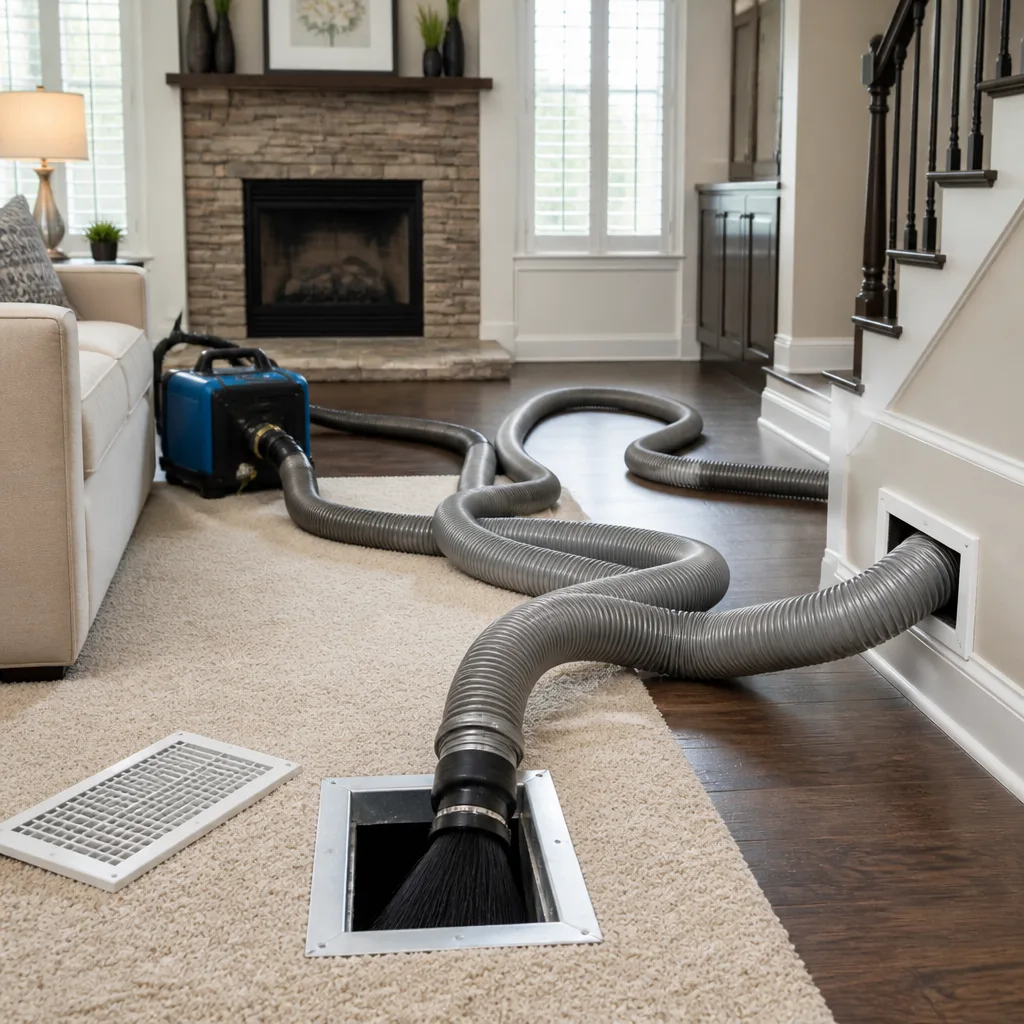 Whole-home duct cleaning
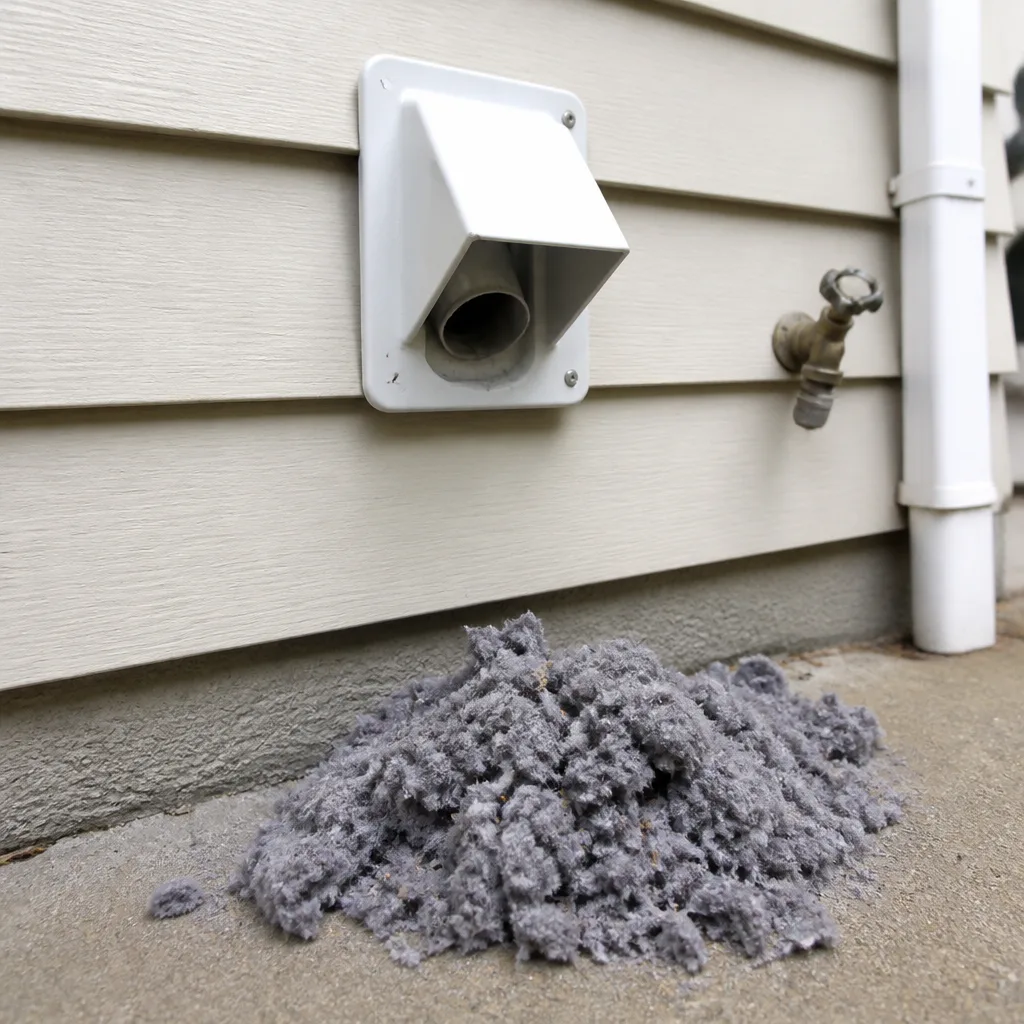 Dryer vent cleaning
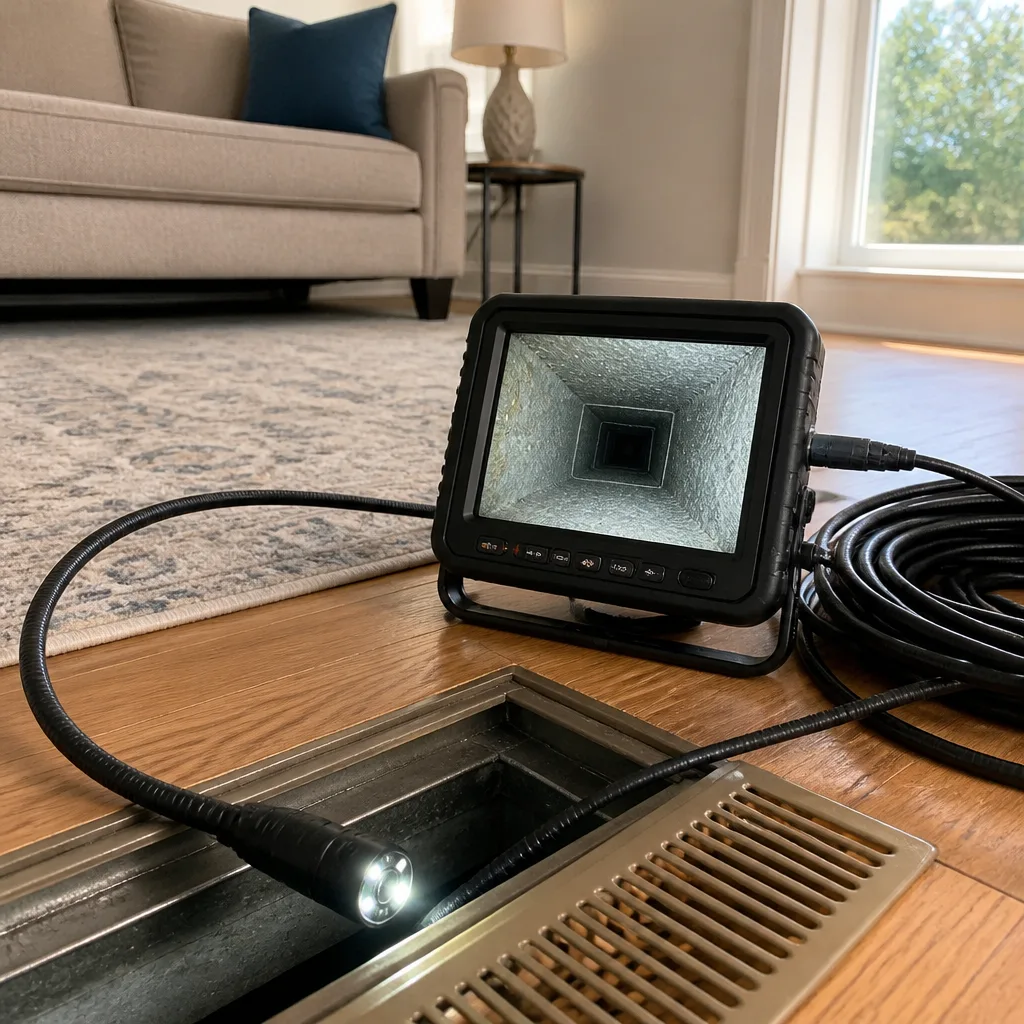 Camera inspection
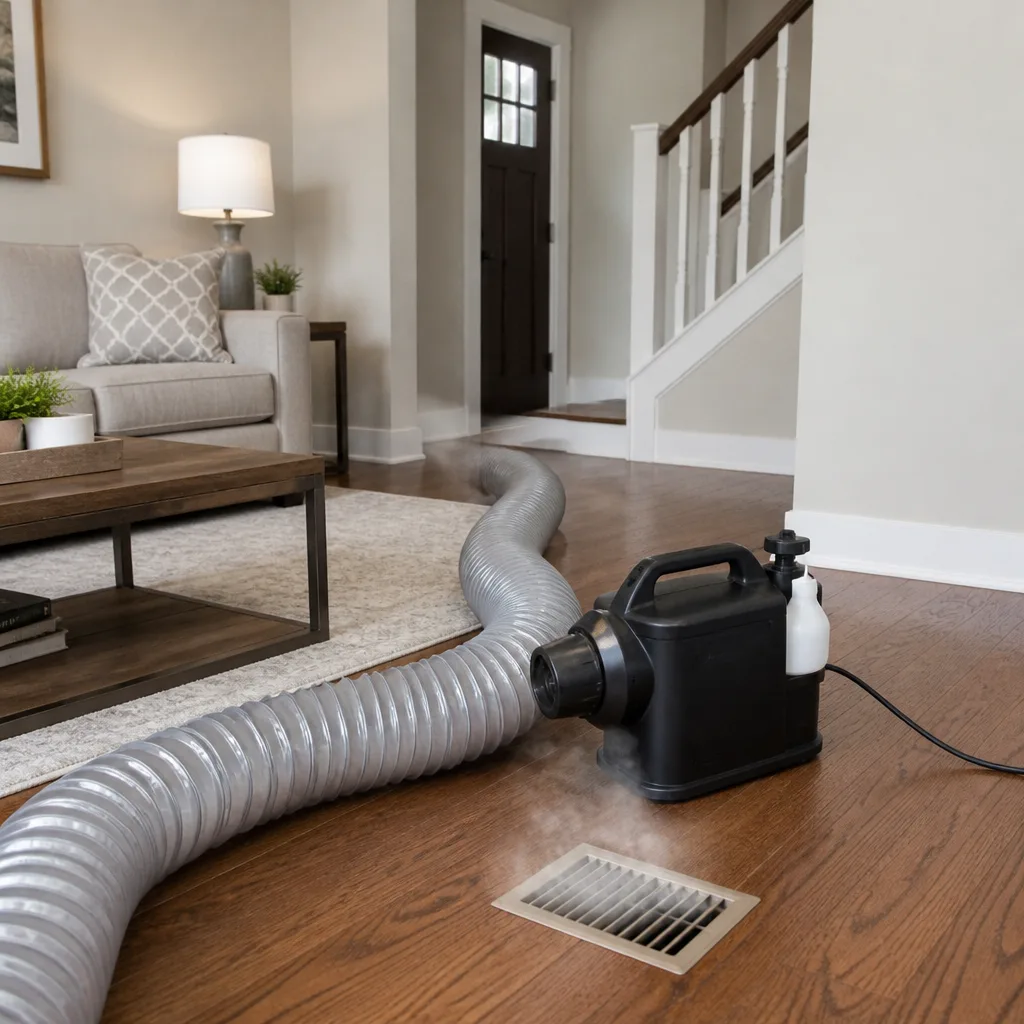 Sanitizing & deodorizing
Whole-system duct and dryer vent check with before-and-after photos - you see exactly what came out of your vents
That "$99 whole-house special" is a bait ad - the real number appears once they are in your hallway, or the "clean" is a shop-vac at the register. We photograph the inside of your ducts before and after instead.
The Complete Guide to Air Duct Cleaning in North Charleston
Most air duct guides are written for Denver or Phoenix. North Charleston sits at roughly 15 feet above sea level with average humidity that stays high across most of the year, and that changes what grows inside your ducts. The same sealed metal box that collects dust in a dry climate becomes a damp, warm surface here, which is why the contamination we find in North Charleston homes looks different from what a national checklist describes. This guide maps what’s actually inside local ductwork, why the area’s post-war and 1980s housing stock traps debris in ways newer designs don’t, and what a full-system clean has to involve before it’s worth paying for.
Quick Answer
Air duct cleaning in North Charleston means removing accumulated dust, biological growth, and construction debris from the entire duct system using negative-pressure extraction and mechanical agitation, not a surface vacuum of the registers. In this climate, a proper clean also means inspecting for leaks and damaged lining, because high humidity turns a small gap into a growth site. Expect a full-system service with before-and-after photos of your own ducts and one flat price agreed in writing before work starts.
Styles & brands we work with
- Whole-home duct cleaning
- Dryer vent cleaning
- Camera inspection
- Sanitizing & deodorizing
Table of Contents
- Why North Charleston’s Humidity Changes What’s Inside Your Ducts
- How North Charleston’s Housing Stock Shapes Duct Problems
- Surface Vacuum vs. Full-System Clean: What Each One Actually Removes
- Why Cleaning Without Checking for Leaks Wastes Money
- What NADCA Standards Require vs. What Most Contractors Deliver
- What a Full-System Clean Looks Like, Step by Step
- The Equipment That Separates a Real Clean from a Vacuum Pass
- What Air Duct Cleaning Costs in North Charleston
Why North Charleston’s Humidity Changes What’s Inside Your Ducts
Ductwork in a humid climate isn’t just a dust container. It’s a small ecosystem. When return air carries moisture into a duct run, and that run passes through an unconditioned attic or crawlspace, the inside surface stays damp long enough for mold spores and biofilm to colonize. Biofilm is the sticky layer that dust binds to, which is why a duct that looks merely dusty from the register can hide a much heavier deposit ten feet into the run.
The humidity in North Charleston isn’t a seasonal event. It’s the baseline for most of the year, and that matters for one specific reason: air conditioning runs constantly, so the system cycles moist air through cold metal again and again. Condensation forms on duct surfaces wherever insulation is thin or missing. That film of water is all the biology needs.
What this means in practice:
- Growth is heaviest on the inside of duct lining and insulation, not on the visible vent covers. Wall registers often look clean while the duct behind them is the problem.
- Flex duct with torn or sagging liner traps moisture in the folds. Once the inner liner is compromised, cleaning alone won’t restore it.
- Supply runs through hot attics are the first to sweat. That’s where we find the worst of it in North Charleston homes.
- Air that smells musty when the system first kicks on is a signal worth taking seriously, because it usually points to growth rather than dust.
If you already run a Honeywell or Aprilaire whole-home air quality system, you’ve made an investment in the air your family breathes. Duct condition is the part of that system most homeowners never see, and it’s the part that determines whether filtration is working with clean air or fighting a contaminated source.
How North Charleston’s Housing Stock Shapes Duct Problems
North Charleston grew in waves, and each wave left behind ductwork with its own failure pattern. The post-WWII building boom produced thousands of smaller homes with short, simple duct runs, often original galvanized metal or early flex. Many of those systems have been retrofitted, patched, and extended over the years, and each patch is a place where debris collects and air escapes.
The 1980s construction wave added a different set of problems. That era’s duct designs often routed long flex runs through tight attic spaces with minimal support. Flex duct that sags creates a low point where dust settles and moisture pools. It also restricts airflow, which makes the blower work harder and pulls more dust into the system over time.
Here’s what those two patterns mean for a North Charleston homeowner:
- Older metal systems tend to have seam separations and disconnected joints after decades of expansion and contraction. Debris collects at every seam.
- 1980s flex systems tend to have sagging runs, crushed sections behind drywall, and torn inner liners near connections.
- Renovated homes in either group often carry drywall dust and sawdust from projects that were never isolated from the return air.
- Additions and converted spaces frequently tap into existing trunks without resizing, which changes pressure balance across the whole system.
New construction is its own category. Drywall dust, joint compound residue, and construction debris end up in the ducts before the first occupant moves in, and that material is fine enough to coat every surface inside the system. A first-year clean on a new North Charleston home is less about dirt and more about construction residue.
Surface Vacuum vs. Full-System Clean: What Each One Actually Removes
This is the difference that most separates a real job from a cheap one, and it’s worth understanding before you hire anyone.
A surface vacuum pass means a technician runs a shop-style vacuum at the registers and maybe pulls the vent covers to reach what’s immediately behind them. It removes loose dust near the openings. It does not reach the trunk lines, the long flex runs, the plenum above the air handler, or the deposits stuck to duct walls. In a humid climate, the material that matters most is exactly the material a surface vacuum leaves behind.
A full-system clean with negative pressure works differently. The system is put under constant negative pressure so that every bit of debris loosened inside the ducts is pulled toward the collection unit instead of drifting into your living space. Mechanical agitation, meaning a rotary brush or air whip, knocks deposits off the duct walls while that negative pressure holds. Every branch, trunk, and plenum gets treated, not just the registers.
What each approach actually removes:
- Surface vacuum: loose dust at the register face, some debris in the first foot of each run.
- Full-system negative pressure: adhered dust and biofilm on duct walls, debris in trunk lines and plenums, construction residue, and material settled in low points of flex runs.
We run Rotobrush rotary-brush systems to agitate duct walls and Nikro HEPA-filtered extraction to capture what’s loosened. That combination is what a real full-system clean requires, and it’s why the job takes hours rather than minutes.
Why Cleaning Without Checking for Leaks Wastes Money
In a dry climate, leaking ducts mostly waste energy. In North Charleston, they do something worse. Every gap in the system is a place where humid attic or crawlspace air gets pulled into the supply stream. You can clean the ducts perfectly and still have a contamination problem the next season, because the entry point was never closed.
That’s why inspection has to come before or alongside the clean, not after. A duct system with disconnected joints, torn flex liner, or separated seams needs repair, not just cleaning. Cleaning a leaking system is like mopping a floor with the tap still running.
What we look for during inspection:
- Disconnected or separated joints at trunk takeoffs and register boots.
- Torn or collapsed inner liners in flex runs.
- Crushed sections behind finished walls or in tight attic chases.
- Missing or deteriorated insulation on runs through unconditioned space.
- Improperly sealed plenum connections at the air handler.
This is why Sunstone offers air duct cleaning and duct repair as a single service. A clean with no repair leaves the problem in place, and a repair with no clean leaves the contamination behind. One call covers both, and the written estimate covers both before anything starts.
What NADCA Standards Require vs. What Most Contractors Deliver
NADCA, the National Air Duct Cleaners Association, publishes the industry standard for what a proper duct cleaning actually involves. The standard exists because the trade has a wide gap between contractors who follow it and contractors who don’t.
What the standard calls for, in broad terms:
- Source removal of contaminants, meaning the material has to leave the system, not just get moved around.
- Negative pressure maintained during cleaning so debris doesn’t escape into occupied space.
- Cleaning of all system components: supply and return ducts, registers, grilles, diffusers, heat exchangers, cooling coils, condensate pans, and the plenum.
- Mechanical agitation of duct surfaces, because adhered deposits don’t come loose with suction alone.
- Inspection before and after, with documentation of condition.
- Protection of the HVAC equipment during the process.
Where the gap shows up locally is in components. A quick job might hit the visible registers and stop. The standard requires the whole system, including the parts homeowners never see. It also requires that the contractor can tell you what condition the ducts were in and prove what was removed.
That’s why we photograph the inside of your ducts before and after. Before-and-after photos of your own system are the simplest proof that a full clean happened, and they’re a fair thing to ask any contractor for.
What a Full-System Clean Looks Like, Step by Step
A thorough job follows a sequence, and knowing it helps you evaluate what’s happening in your home.
- Walkthrough and system inspection. We identify every supply and return, map the layout, and check for leaks, torn liner, or disconnected runs before any equipment comes in.
- Equipment setup and negative pressure. HEPA extraction connects to the system and negative pressure is established, so the whole duct network pulls toward the collection unit.
- Rotary brush agitation. A Rotobrush line works through each branch and trunk, scrubbing adhered debris off duct walls as the extraction captures it.
- Component cleaning. Registers, grilles, diffusers, the plenum, and accessible components at the air handler get cleaned as part of the system.
- Blower and coil area attention. The parts that move and condition the air get checked, since debris there re-contaminates clean ducts quickly.
- Leak and damage documentation. Any gaps, torn liner, or disconnected joints found along the way are documented with photos and explained before repair is discussed.
- Repair recommendations and after-photos. Where repair is needed, we explain the scope and pricing in writing. Where it isn’t, we say so. Before-and-after photos go to you either way.
The full picture matters. The air inside your home is only as clean as the system moving it, and cleaning one part while leaving another contaminated doesn’t fix anything. That’s why we treat Sunstone Air Duct Cleaning as a full-system service rather than a duct-and-done line item.
The Equipment That Separates a Real Clean from a Vacuum Pass
You can’t clean what you can’t reach, and you can’t reach duct walls with consumer equipment. The tools are the job. What we bring to a North Charleston home includes:
- Rotobrush rotary-brush systems for mechanical agitation inside duct runs. This is the industry-standard method for breaking adhered debris off duct walls, not blowing it downstream.
- Nikro HEPA-filtered extraction to capture particulates at the source. HEPA filtration is what keeps fine debris out of your living space during cleaning, which matters most in homes with allergy concerns.
- Abatement Technologies air filtration units, the same category of equipment used in professional mold and contaminant remediation. That equipment class matters for homes dealing with musty odors, post-renovation dust, or visible growth concerns.
- Guardsman access and inspection components where the job calls for them, so we can reach runs without cutting corners structurally.
If you’ve already invested in a Honeywell or Aprilaire indoor air quality system, the equipment above is what lets us work alongside that investment instead of around it. Filtration systems do their best work downstream of clean ducts.
What Air Duct Cleaning Costs in North Charleston
Pricing depends on the size of the system, the number of runs, and whether repair is needed. What doesn’t depend on it is how the price gets set: one flat price per system, agreed in writing before any work starts, never a per-vent charge that grows once a technician is on site.
Typical ranges look like this:
- Air duct cleaning (full system): quoted per system by the written estimate. Number of vents affects scope, but the price is set up front.
- Duct repair: quoted per job by the written estimate, based on what inspection finds. No work happens until you approve it.
- dryer vent cleaning: quoted per job by the written estimate.
If your ducts need both cleaning and repair, we scope both together so there are no surprise additions halfway through. If you’ve gotten a quote elsewhere that seems unusually low, ask what it covers: how many components, whether trunk lines are included, whether negative pressure is used, and whether you get before-and-after photos. Those questions separate a real quote from a teaser price. Call (855) 683-7582 for a free estimate. We answer 24/7. Fast dispatch from 7am to 7pm, Sunday through Friday.
Common Mistakes to Avoid
- Hiring on price alone. A low headline number often covers surface vacuuming only. It leaves the trunk lines and adhered deposits untouched, which in a humid North Charleston home is where the real problem lives.
- Skipping the leak inspection. Cleaning without checking for gaps and torn liner means humid attic air keeps entering the system. The contamination returns, and you’ve paid twice.
- Accepting no photos. Before-and-after images of your own ducts are the honest proof of what happened. A contractor who can’t provide them hasn’t documented the job.
- Ignoring the dryer vent. Lint buildup in a blocked dryer vent is a fire risk, not a performance issue. It’s a separate service from duct cleaning and worth doing on its own schedule.
- Assuming newer construction is clean. Homes built recently across North Charleston often carry drywall dust and construction debris through the system. A pre-move-in clean is worth the call.
- Cleaning only the registers. Registers are the visible part. Only full-system negative-pressure cleaning with mechanical agitation reaches the ducts behind them.
- Waiting for a musty smell to be obvious. By the time an odor is strong, growth inside liners is usually well established. An inspection earlier costs less than a repair later.
See the difference
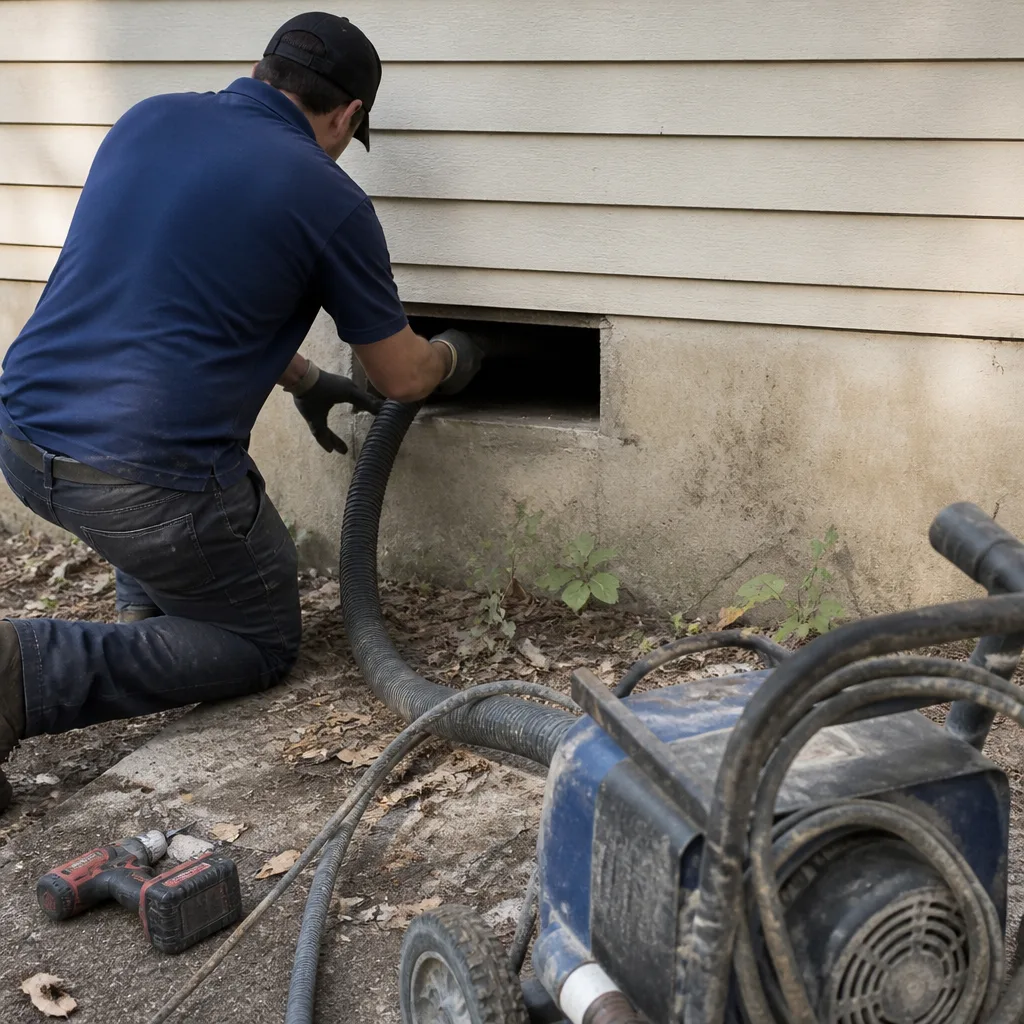 Before
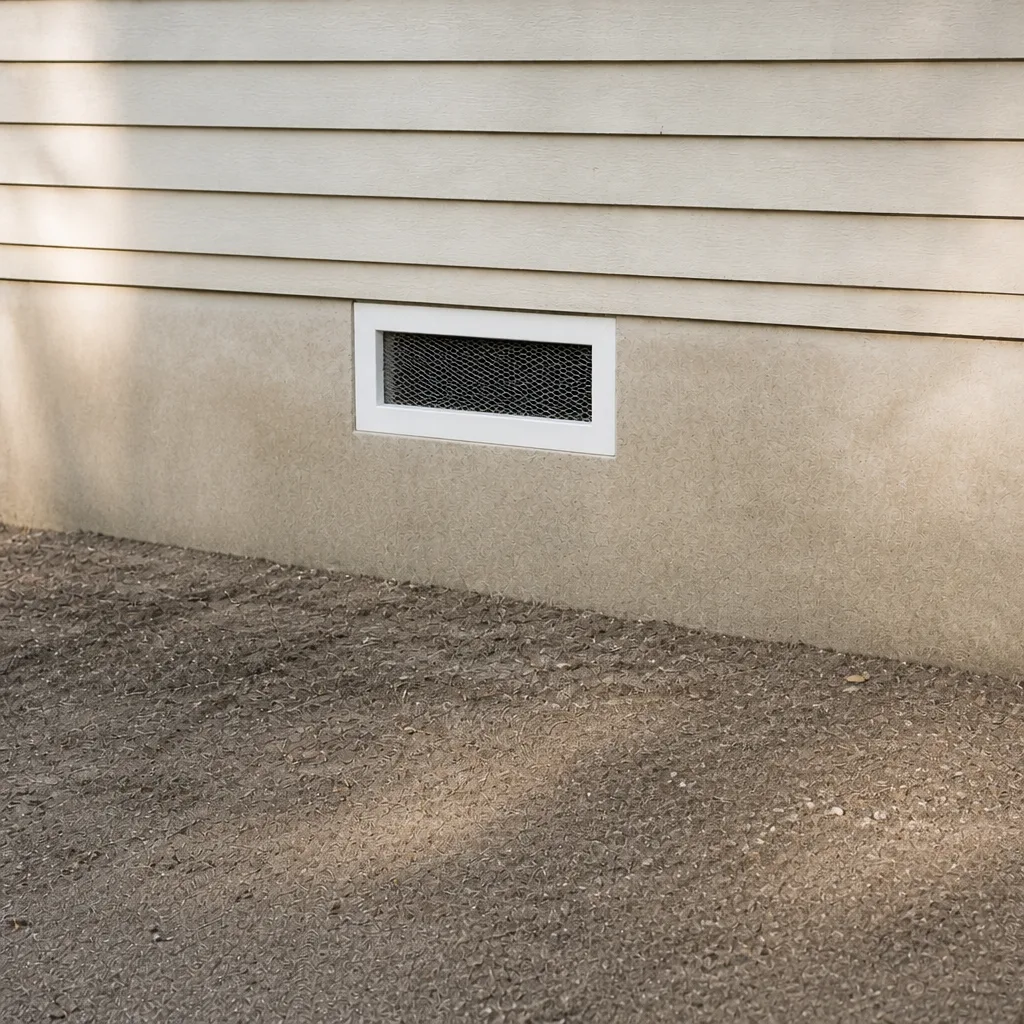 After
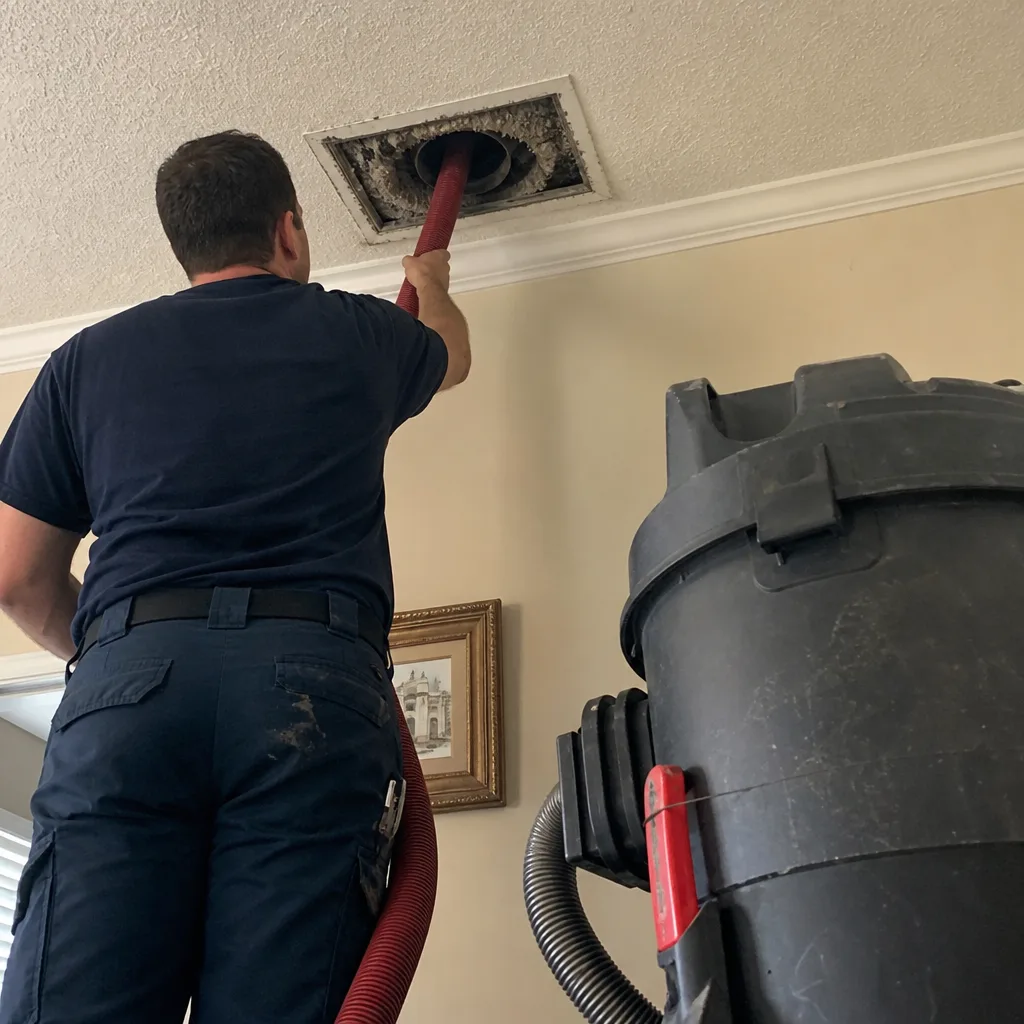 Before
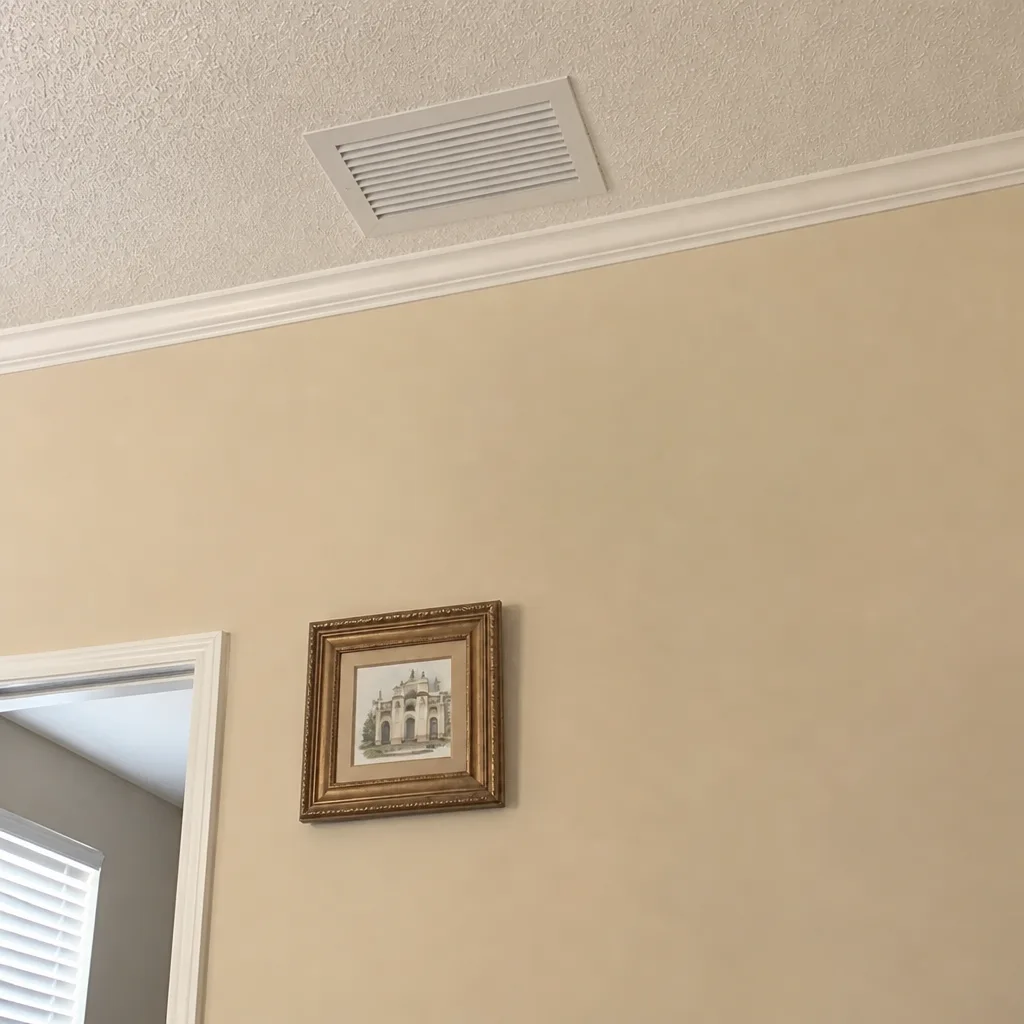 After
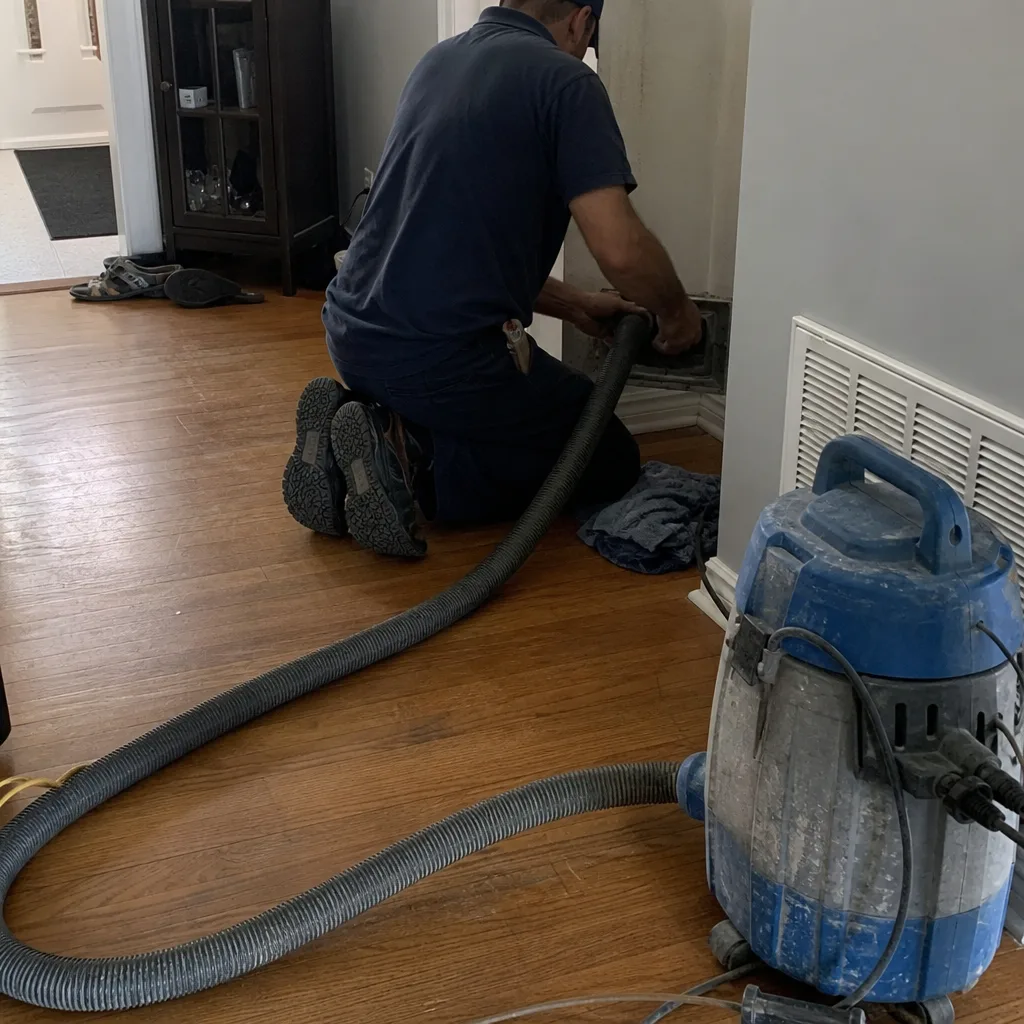 Before
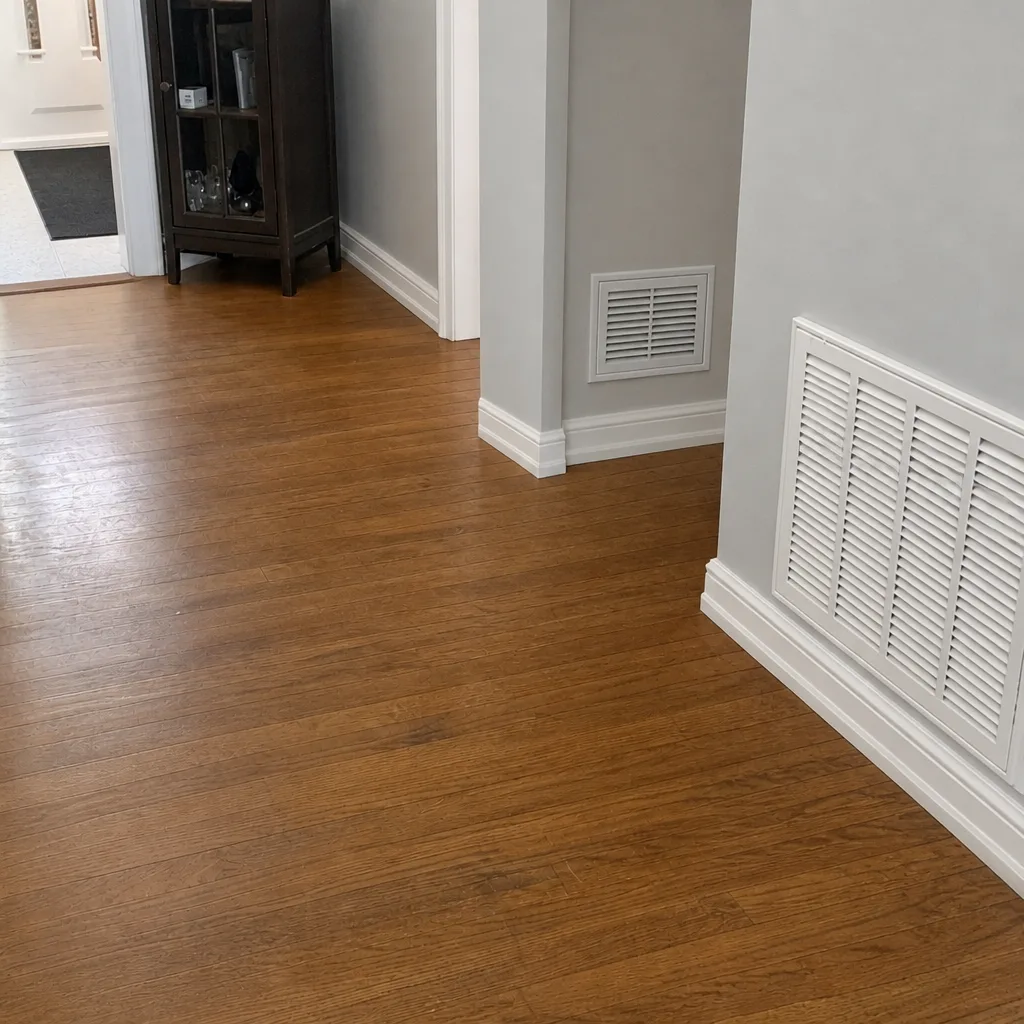 After
When to Call a Professional
Some duct condition you can spot yourself. Growth inside duct lining, torn flex liner, disconnected joints, and construction residue are not in that category. Call a trained professional when you notice a musty smell on system startup, visible dust blowout at registers, recent renovation dust in the returns, or a home that’s newly built and about to be occupied. Call when allergy symptoms seem worse indoors than outdoors. Call when the system sounds different or airflow has dropped at some rooms. And call for dryer vent cleaning if you can’t remember the last time it was done, because lint accumulation is a fire safety issue that no visual check will catch. Sunstone Air Duct Cleaning offers free estimates in North Charleston – call (855) 683-7582. We answer 24/7. Fast dispatch from 7am to 7pm, Sunday through Friday. Our technicians have up to 8 years of experience, and the estimate you receive is in writing before any work begins.
Frequently Asked Questions
Air duct cleaning is priced per system, not per vent, and the written estimate sets the final price. Number of runs, system size, and whether repair is needed all factor into the quote. The estimate is free, and you’ll see the full scope before any work starts. Call (855) 683-7582 for an exact quote – estimates are free.
Cheap quotes usually skip components. They may vacuum registers only, work without negative pressure, or leave trunk lines and plenums untouched. That gap is where the real contamination lives, especially in humid North Charleston homes. Ask what a quote covers, then compare scope rather than headline price. Call (855) 683-7582 if you want to compare estimates.
You get before-and-after photos of your own ducts, not stock images or a generic invoice. Photos of the interior runs and the air handler area show condition before and condition after, and they’re your record of what was removed. Ask any contractor to provide the same. Call (855) 683-7582 for a free estimate.
Most homes benefit from an inspection every few years, and cleaning when inspection shows real accumulation rather than on a fixed calendar. Homes in North Charleston with humidity-driven growth, recent renovations, or allergy concerns often need attention sooner. The honest answer is that condition, not the calendar, should set the timing. Call (855) 683-7582 and we’ll tell you what we find.
Yes, and in a specific way. Constant air conditioning pushes moist air across cold duct surfaces all year, and any thin insulation or gap leaves condensation behind. That damp film is what lets mold and biofilm colonize the duct lining rather than just the visible vents. It’s the most common reason we find interior growth that the homeowner never suspected.
We do both. Repair covers disconnected joints, torn flex liner, sagging runs, and damaged insulation, all of which allow humid air into the system. Cleaning a leaking system without repair wastes the clean, because the entry point stays open. Both are scoped together in the written estimate. Call (855) 683-7582 for a free inspection.
The Bottom Line
Ductwork in North Charleston deals with a climate most duct guides never address. Humidity keeps duct interiors damp enough for growth, older and 1980s-era systems trap debris at seams and low points, and every leak is an open door for moist air to re-contaminate what you paid to clean. A real clean means full-system negative pressure, mechanical agitation with professional-grade equipment, leak inspection, and repair where needed, all at one flat price agreed in writing. If you’re near North Charleston and want to know what’s actually inside your system, call (855) 683-7582. We answer 24/7. Fast dispatch from 7am to 7pm, Sunday through Friday, and estimates are free.
Written by the team at Sunstone Air Duct Cleaning.