
Last updated November 15, 2026
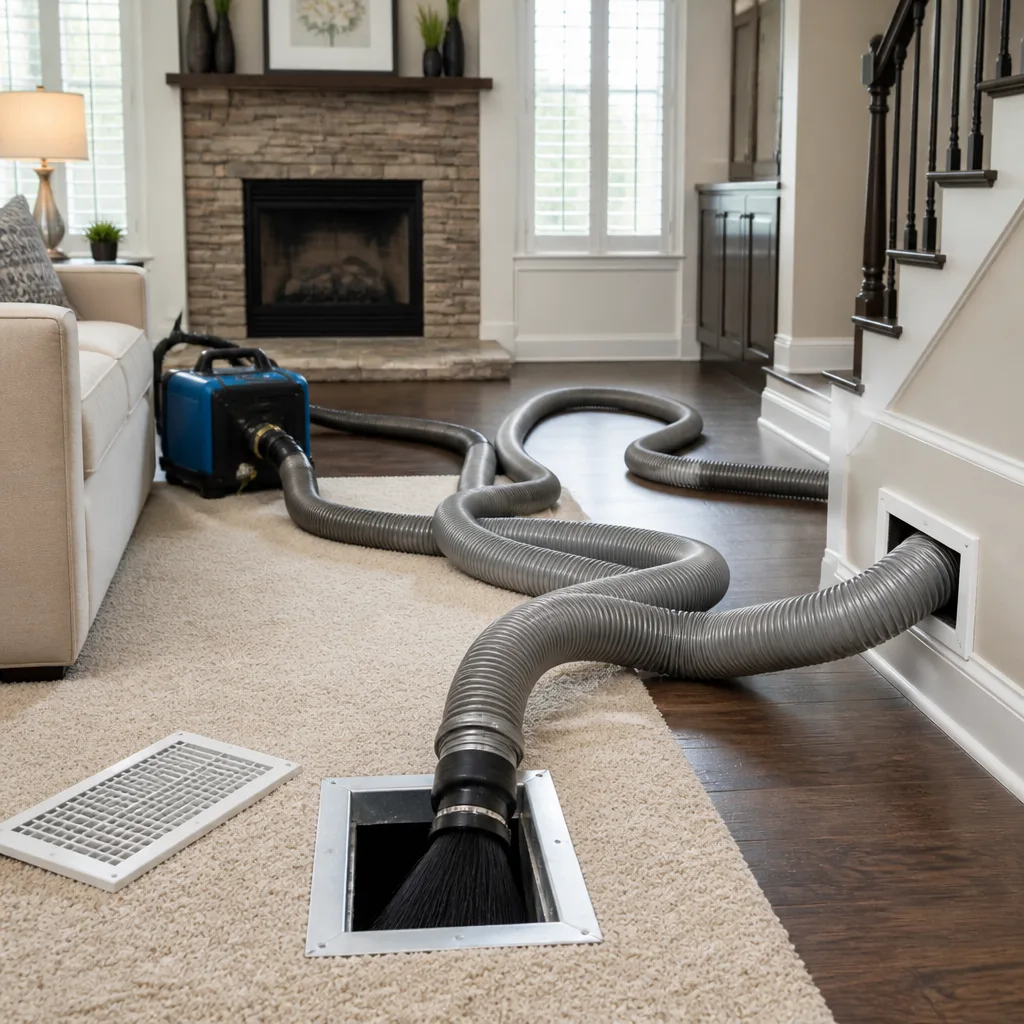 Whole-home duct cleaning
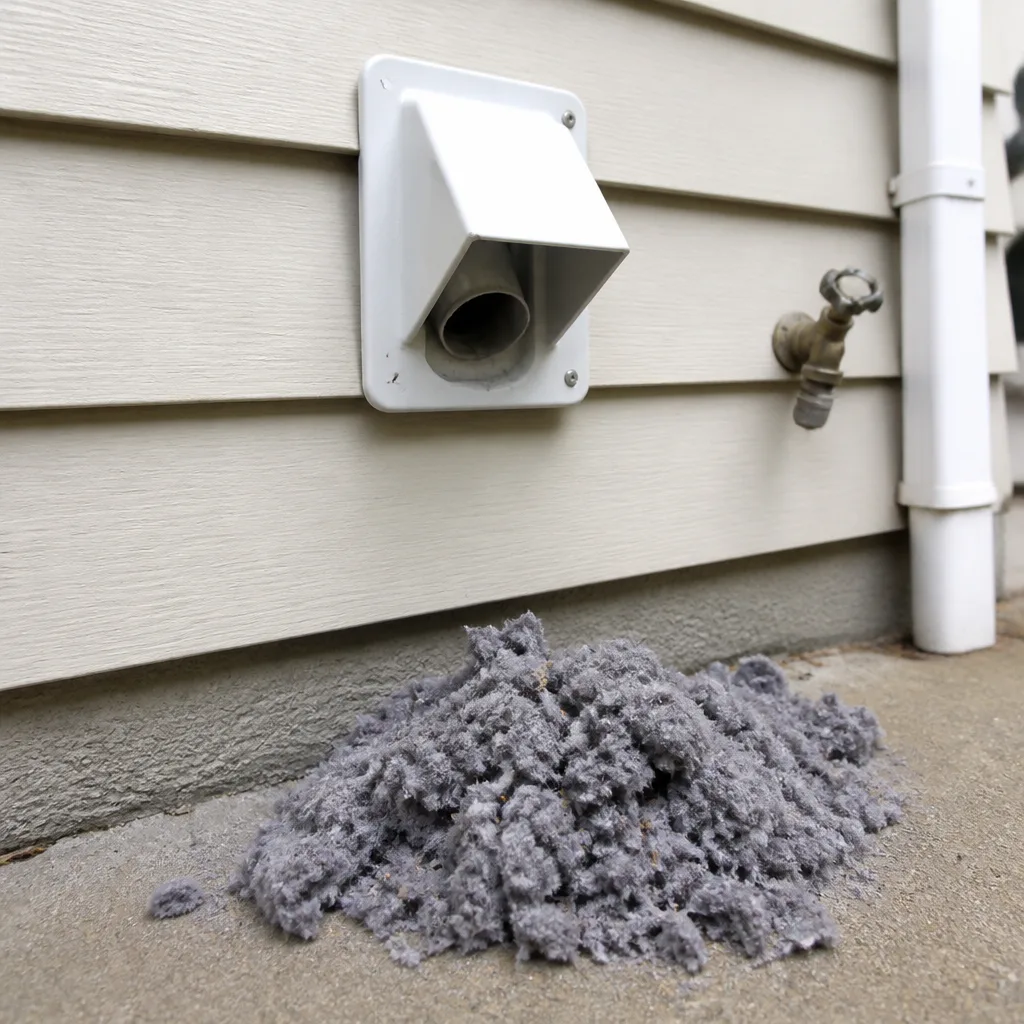 Dryer vent cleaning
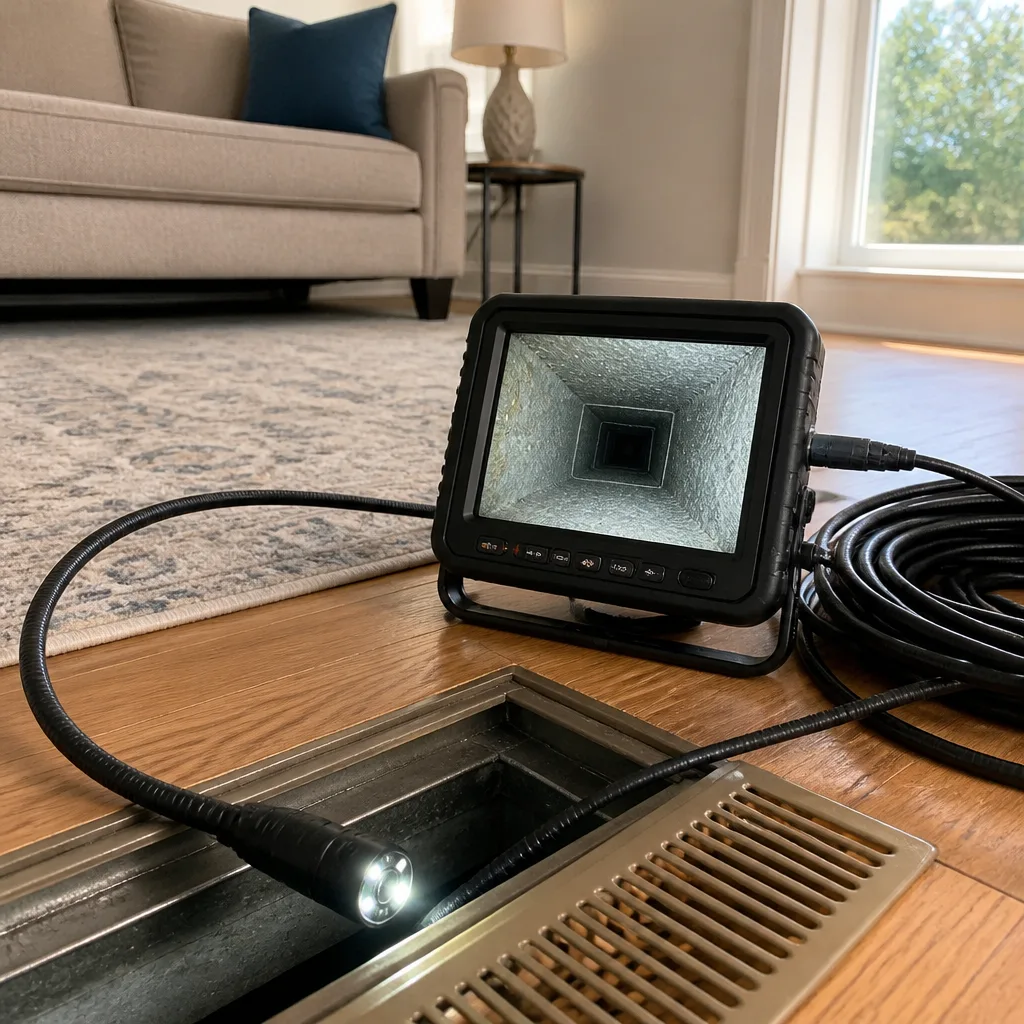 Camera inspection
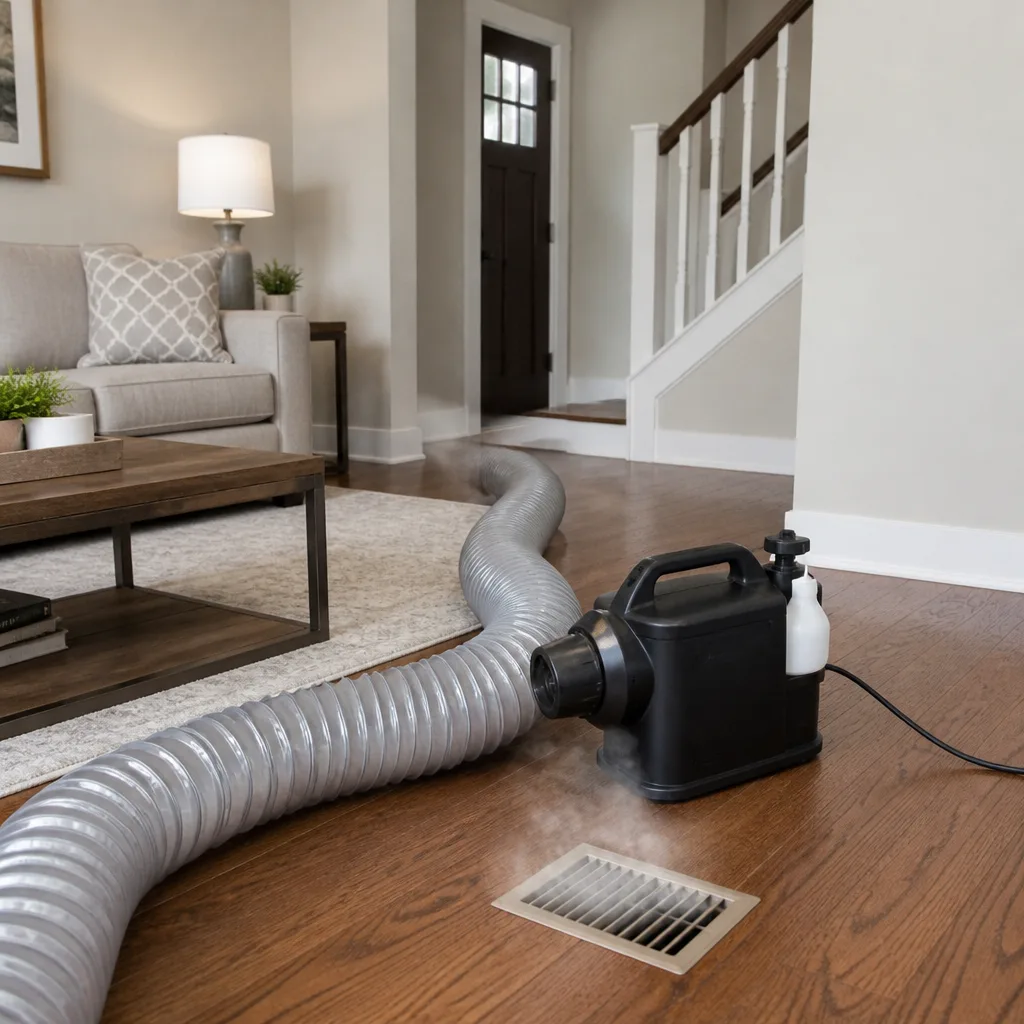 Sanitizing & deodorizing
Whole-system duct and dryer vent check with before-and-after photos - you see exactly what came out of your vents
That "$99 whole-house special" is a bait ad - the real number appears once they are in your hallway, or the "clean" is a shop-vac at the register. We photograph the inside of your ducts before and after instead.
Air Duct Cleaning Warning Signs: A North Charleston Homeowner’s Reference Guide
Dust on your registers is one of the last warning signs, not the first. By the time you see that gray film on the grille, the system has been pulling debris through the supply runs for weeks or longer, and you’ve been breathing the result every time the blower kicks on. In North Charleston homes, the earliest signals are quieter: a faint smell in one room, air that feels weaker upstairs, a cough that shows up every time the heat runs. This guide walks through the signs that matter, in the order they tend to show up, and gives you a few checks you can do yourself with a phone flashlight before you call anyone. North Charleston has its own patterns, and we’ll get to those.
Quick Answer
The most reliable air duct cleaning warning signs in North Charleston are: a musty or stale smell that persists after cleaning the room, uneven airflow between rooms on the same system, visible dust or debris buildup inside supply registers, increased allergy or asthma symptoms indoors, pest activity near exterior vents or the air handler, and rising dust on furniture after a renovation. Visible dust on the registers is usually a later-stage sign, not the first one. When two or more of these appear together, the system is telling you something has built up or a duct has failed.
Styles & brands we work with
- Whole-home duct cleaning
- Dryer vent cleaning
- Camera inspection
- Sanitizing & deodorizing
Table of Contents
- Smell Signals: Mildew, Rodents, and Degrading Flex Lining
- Uneven Room Temperatures as a Duct Integrity Problem
- Why Long-Term Residents Suddenly Feel Worse Indoors
- Pest Activity Near Vents and the Air Handler
- Five Visual Checks You Can Do With a Phone Flashlight
- The Post-Renovation and New Construction Problem
- Your Dryer Vent Is Part of This Conversation
- Common Mistakes to Avoid
- When to Call a Professional
- Frequently Asked Questions
Smell Signals: Mildew, Rodents, and Degrading Flex Lining
A smell is the most underrated warning sign in the whole system, because unlike dust, you can’t tidy it away. By the time a smell reaches the living room, the source is already inside the duct path, and every cycle of the blower pushes more of it out. In North Charleston, three smells show up often enough to be worth separating.
The first is mustiness. A faint, wet-cardboard smell that lingers after you’ve cleaned the room usually points to the interior lining of ducts or to condensation collecting on a cold run. If the smell is strongest in the bathroom or in a bedroom that sits under the roofline, it’s worth having someone look inside the run rather than just spraying air freshener.
The second is an animal smell. Rodent activity leaves a sharp, sour, ammonia-tinged odor, and it tends to concentrate around the return side of the system and near exterior penetrations. If the smell has a definite trail to it, the run may have a gap or a chewed flex joint that’s letting air from a crawl space or attic straight into your living room. That’s a repair issue as much as a cleaning issue.
The third is the trickiest: a light chemical or plastic smell that appears when the heat first kicks on. That’s often deteriorating flex duct insulation off-gassing as the inner lining breaks down. It’s not a smell you can scrub out. It means the run itself is failing, and a clean won’t fix it. Sunstone Air Duct Cleaning handles repair as well as cleaning for exactly this reason; if the lining is shot, the duct needs replacing, not just vacuuming.
Uneven Room Temperatures as a Duct Integrity Problem
When one bedroom stays five degrees warmer than the rest of the house, most homeowners assume the AC is undersized. Sometimes it is. But in a great many North Charleston homes, the real problem is a leaking, crushed, or disconnected run. The system is doing its job, but the cooled air is escaping into an attic or crawl space before it reaches the register.
Here’s the test to run before you call anyone. On a mild day, close every interior door, turn the system on, and walk through the house. Hold your hand over each supply register for ten seconds. What you’re feeling for is a consistent push across every vent, not just “some air.” If one room has noticeably weaker flow and the vent itself isn’t blocked, the problem is upstream in the ductwork, not in the room.
Next, look at the register grille itself. A vent that whistles usually means the damper is partially closed or the run is undersized for the register. A vent that’s completely silent means the run may be disconnected or blocked. In older homes around Park Circle and in the neighborhoods off Dorchester Road, we’ve seen runs collapse inside the attic where flex duct sagged between supports, quietly starving a bedroom for years while the homeowner kept paying for a bigger AC unit that never solved it.
Temperature imbalance is diagnostic. It tells you where in the system to look. A technician reading static pressure at the air handler can confirm whether the system is moving the air it’s supposed to, and a camera run through the ducts shows the leak directly.
Why Long-Term Residents Suddenly Feel Worse Indoors
People move into a house, feel fine for years, and then one day develop morning congestion, a scratchy throat, or a cough that shows up whenever the HVAC is running. They blame seasonal pollen and leave it there. But the timing doesn’t match the seasons, and that mismatch matters.
Pollen plays a role, sure. The clue is when the symptoms follow the HVAC cycle rather than the calendar. If your eyes water and your nose runs more when the system is running and less when it’s off, look inside the ducts. Three things typically build up together: dust and debris that collected on the duct walls, biological growth on any damp surface inside the run, and particles pulled in from the return-side grille through the air handler filter bypass. Over months, that mix can overwhelm a system that used to handle it fine.
A second pattern worth knowing: symptoms tend to cluster in one part of the house. If two people in the same home both notice it in the master bedroom but not the kitchen, that’s not “seasonal allergies,” that’s a single run with a problem. Run a mental map of which rooms feel worst and when.
None of this means you need to be diagnosed. It means the pattern is worth tracking for a week or two, and if it holds, it’s worth having the system looked at from the inside rather than the filter side. That’s what we mean when we say the air inside your home is only as clean as the system moving it.
Pest Activity Near Vents and the Air Handler
Pests and the HVAC system have an unfortunate relationship, and the signs are usually in the places most people don’t look. Roaches and silverfish flock to the condensate line and the drain pan because both stay damp. Mice chew through flex duct to nest in the insulation. Ants trail into a circuit board warmed by the blower.
What to check:
- Exterior penetrations around the AC lineset. Look where the refrigerant lines and condensate pipe enter the house. Gaps larger than a pencil around the pipe are an open door for insects and rodents.
- Droppings or rub marks on top of the air handler cabinet. Rodents like the warmth and often leave small dark pellets along the cabinet’s top edge.
- Chewing damage on flex duct. Look for torn insulation, gaps between joints, or sections that look “collapsed” – a mouse can hollow out a run without leaving visible damage from the outside.
- Wing or droppings in the return plenum. A flashlight view into the return box sometimes reveals what crawled in and didn’t get out.
Each of these is worth fixing, not just cleaning. If a mouse has been through a duct run, the run is contaminated with urine and droppings that a standard vacuum doesn’t remove. HEPA-filtered extraction, the kind of equipment we use with Nikro systems, is designed to capture those particles at the source rather than blow them into the next room. And if the run was chewed open, repair is part of the same visit.
Five Visual Checks You Can Do With a Phone Flashlight
You don’t need special tools to look inside a supply register. A phone flashlight and two minutes per vent will tell you a lot. Do this in each room, starting with the rooms that feel worst.
- Look straight in at the register boot. A clean boot is smooth metal or lined duct. A dirty one shows a fuzzy gray layer or a dust mat along the bottom edge. Note whether the buildup is even or clustered.
- Check the duct walls, not the grille. Dust on the grille is normal. Dust on the walls inside the duct is not. If the wall has visible texture from buildup, that run has been collecting for a long time.
- Look for debris that doesn’t belong. Drywall dust from a renovation, insulation fibers from degrading flex, small black specks that could be droppings, or sand from outside. Each points to a different problem.
- Wipe the duct wall with a white paper towel. Light gray dust is typical. Black, brown, or damp gray is a sign to escalate. Damp is the most concerning of the three.
- Watch for light coming through. In an accessible attic, you can often see gaps in the run where the system is leaking air into the attic. If you can see daylight inside the duct, the duct is broken.
Whatever you find, take a photo. A technician can use it as a starting point, and it makes the difference between “I think something’s off” and “look at this.” Before-and-after photos are also how you’ll judge the work once it’s done; we take them on every job so you can compare what the run looked like before with what it looks like after.
The Post-Renovation and New Construction Problem
New construction dust and post-renovation debris are their own category. Drywall dust is fine and travels through the air like smoke. Once it settles on duct walls, it doesn’t lift off with a normal vacuum, and it doesn’t break down on its own. It sits there until it’s agitated loose by the blower, which is why a system can seem fine during the renovation and worse three months later.
If you’ve just finished a kitchen or bath remodel, or moved into a new-build, the checklist is different. You’re looking for construction debris rather than the slow build-up we just covered.
- Fine white or gray powder along the bottom of every supply run
- Small chips of trim, tile, or caulk in the return plenum
- Plastic wrappers, filler strips, or screws left inside ductwork by a sloppy install (this happens more than people think)
- A smell of new material that lingers longer than it should in one room
- Airflow that never fully balanced out, even though the system is new
The right response is a full-system clean with HEPA-filtered extraction, not a spot vacuum through the registers. Equipment matters here. air duct cleaning with rotary agitation (the Rotobrush approach) loosens the fine powder off the walls, and HEPA extraction at the air handler pulls it out of the house rather than parking it in the next room. We also use Abatement Technologies filtration units when the debris load is heavy or when mold concerns are part of the picture.
Your Dryer Vent Is Part of This Conversation
Air duct warning signs usually get all the attention, but the dryer vent deserves a spot on the list because it’s the same problem in a different system. Both are ducted paths that collect lint and reduce airflow over time. Both quietly raise the temperature of the appliance behind them. The difference is that a restricted dryer vent doesn’t just cost you money on drying time; it’s a fire-safety issue.
Signs your dryer vent needs attention:
- Clothes take noticeably longer to dry than they used to
- The dryer feels hot to the touch on top or at the back
- The lint screen fills up faster than it used to
- You can’t feel strong airflow at the exterior vent flap
- There’s a musty smell on clothes or inside the dryer drum
- The exterior vent hood is clogged or stuck open
If more than one of those is true, dryer vent cleaning is worth scheduling alongside the duct work. One call covers cleaning, repair, and dryer vent safety, and it’s a lot easier to book them together than to chase them down separately.
How We Read a Duct System, and What “Cleaning” Actually Means
A thorough duct clean looks different from what most people picture. We don’t point a shop vac at the registers and call it a day. We start at the air handler, work outward through the supply runs and the return, and use equipment matched to the actual condition of the duct.
Here’s the sequence, step by step, because it matters to what you’re paying for:
- Inspect and photograph. Each accessible run gets a look from both ends. Photos go on file as the before picture.
- Set negative pressure. A HEPA-filtered vacuum pulls a continuous negative pressure on the system so debris that gets loosened travels out of the house rather than into it.
- Agitate the walls. A rotary brush opens up the accumulated layer that’s stuck to the duct wall, which is the part a vacuum alone can’t remove.
- Extract from the trunk line out. Everything that came loose is pulled back towards the vacuum and captured by HEPA filtration.
- Sanitize where warranted. We use Guardsman-sanitizing products when biological growth or pest contamination is present, not as a default step.
- Inspect again, photograph. The after picture shows the same runs from the same angles. You compare them yourself.
- Repair what’s broken. If a run is crushed, disconnected, or missing insulation, it gets repaired as part of the same visit rather than left as a follow-up appointment with a different contractor.
We work with Honeywell and Aprilaire air quality systems too, which matters if your home has a whole-house humidifier, a media filter cabinet, or a UV purification unit already in place. Those systems interact with what’s inside the ductwork, and we set them back up correctly after cleaning rather than leaving them bypassed.
See the difference
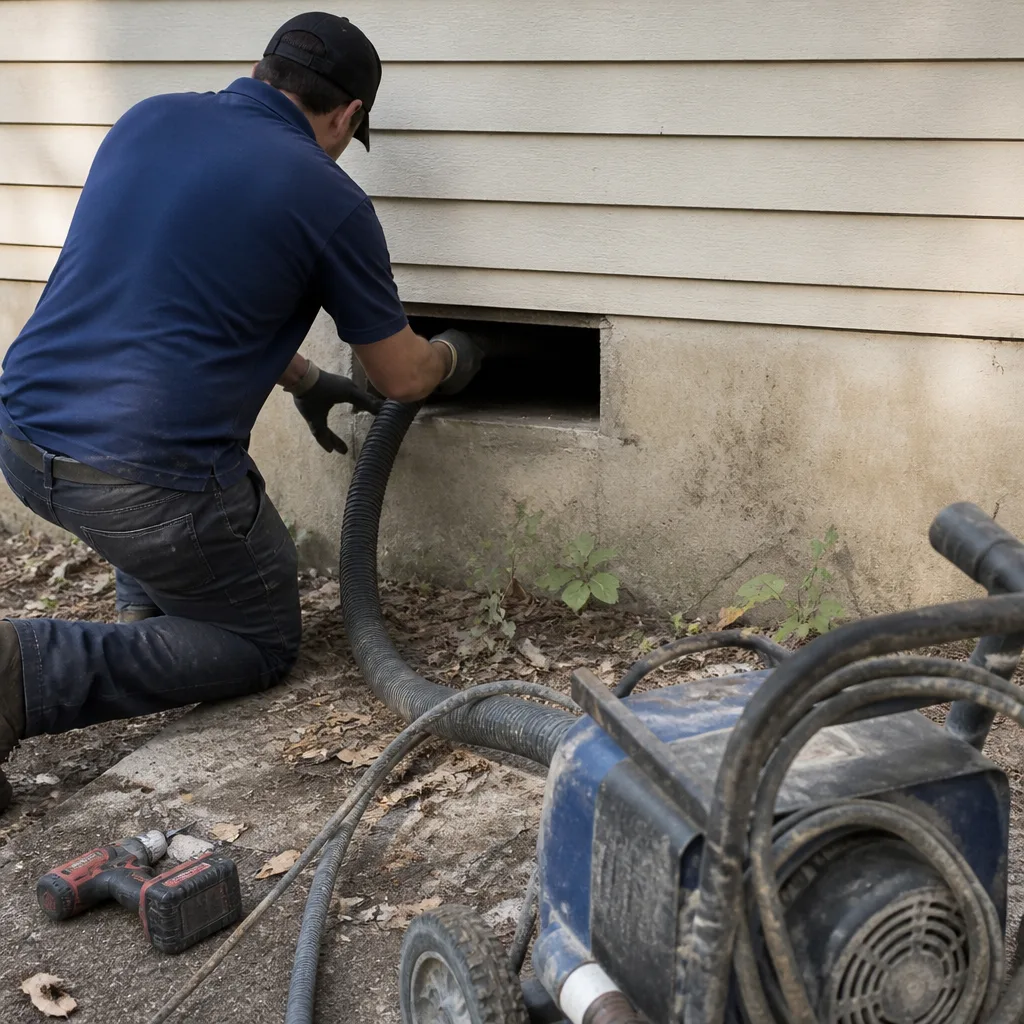 Before
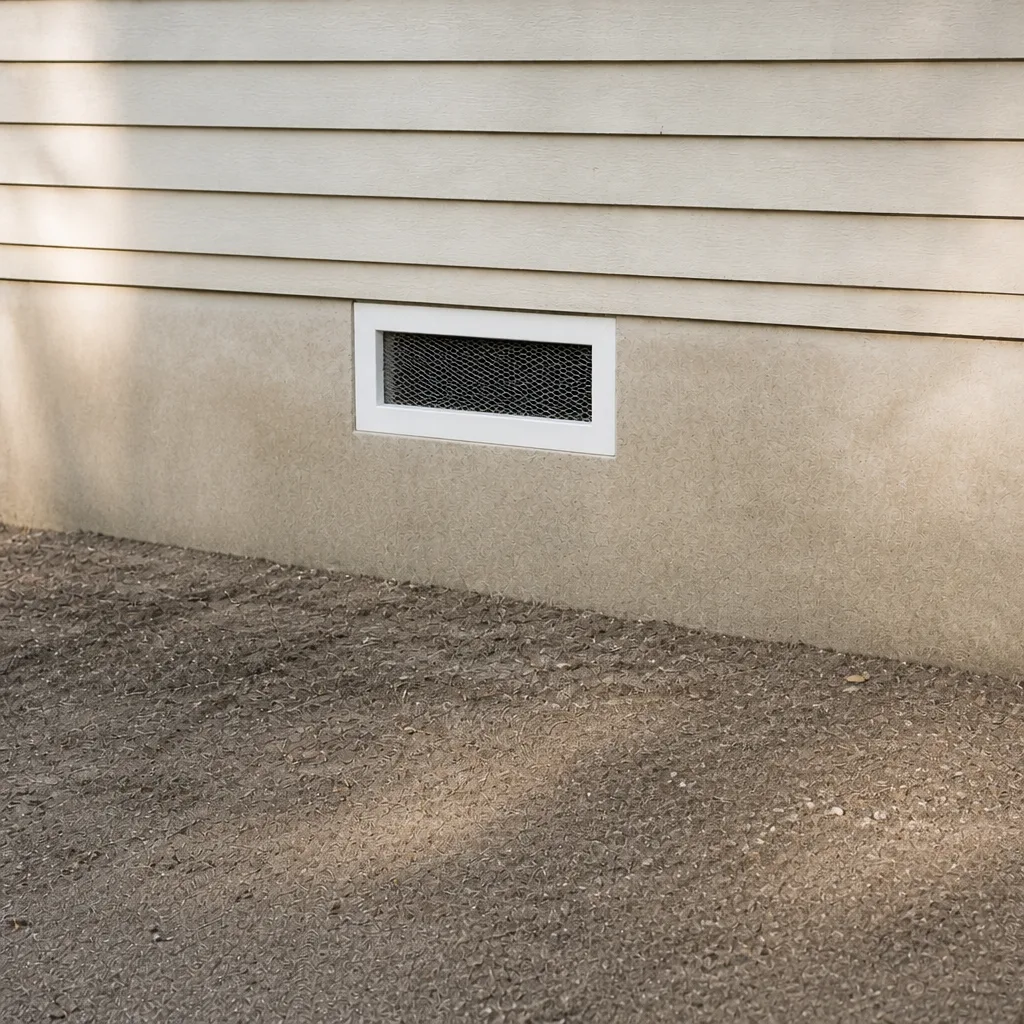 After
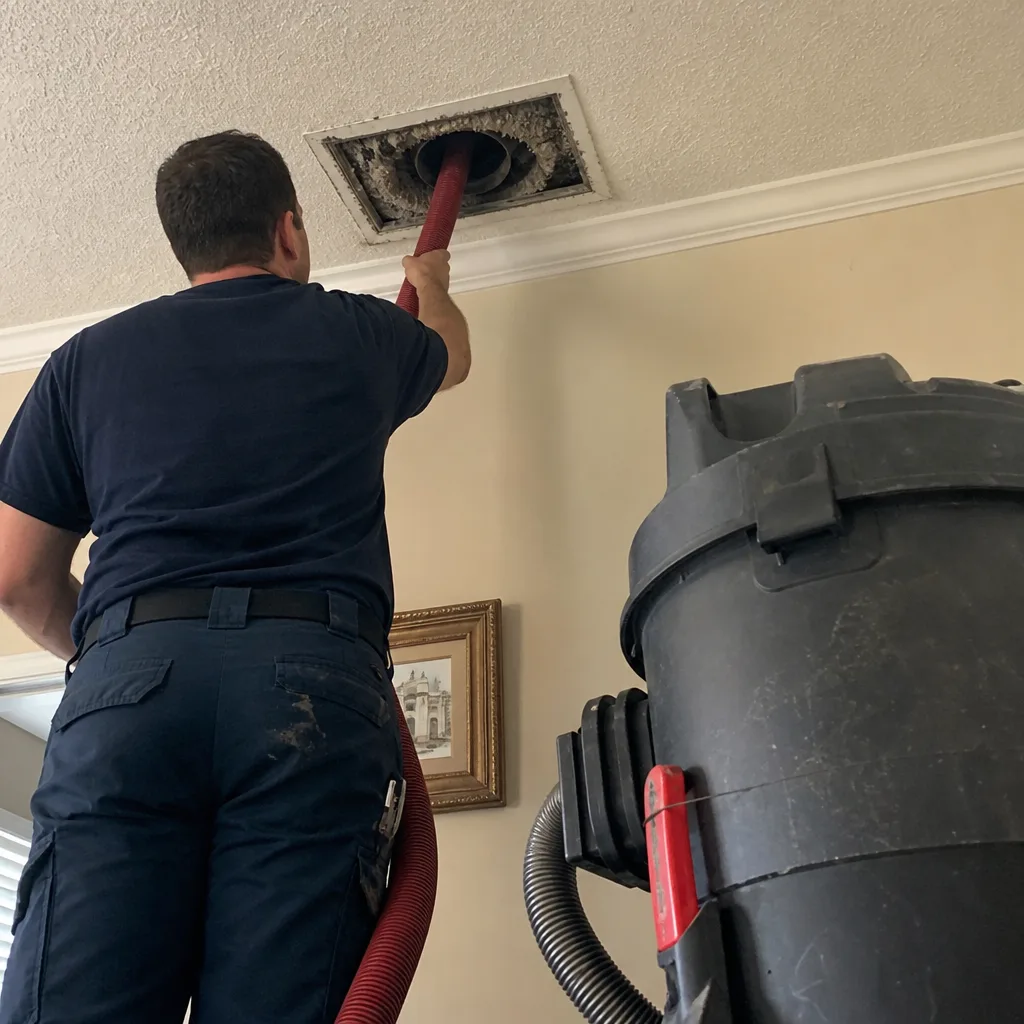 Before
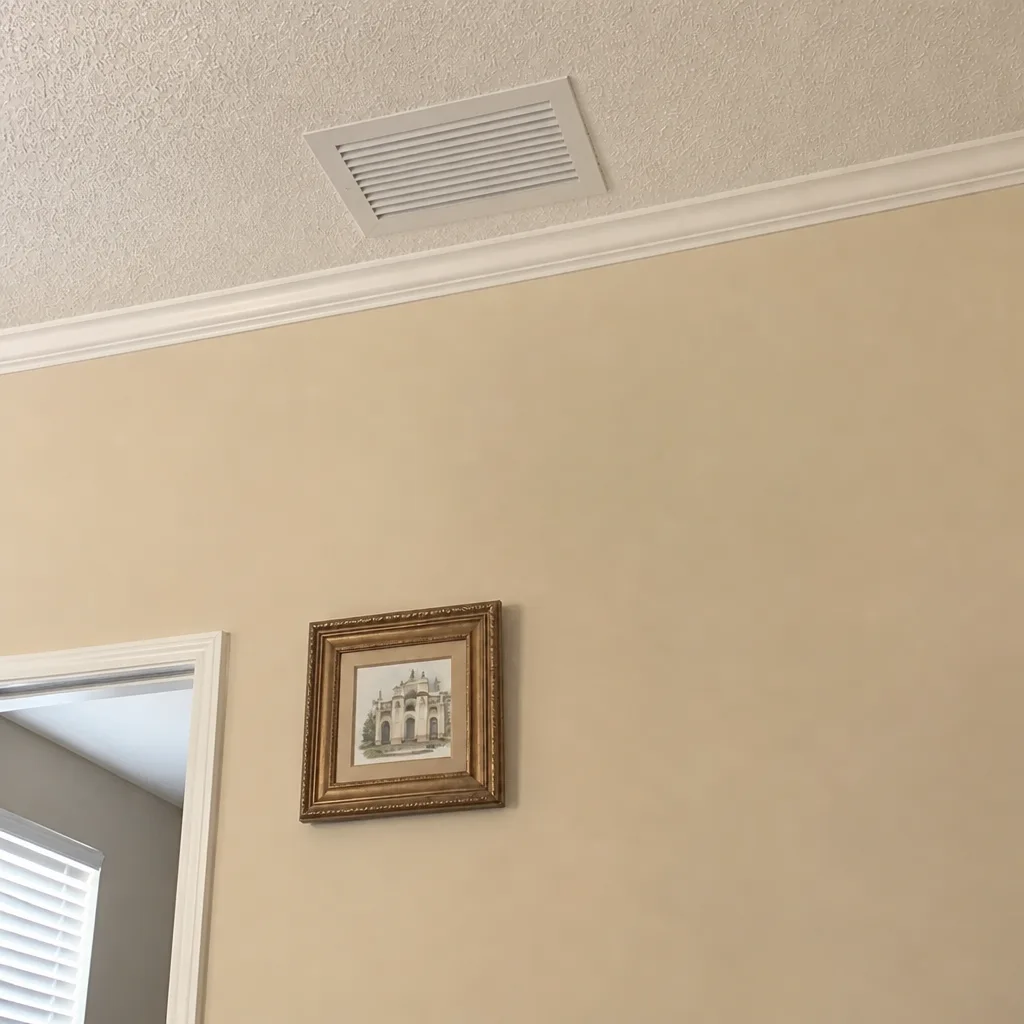 After
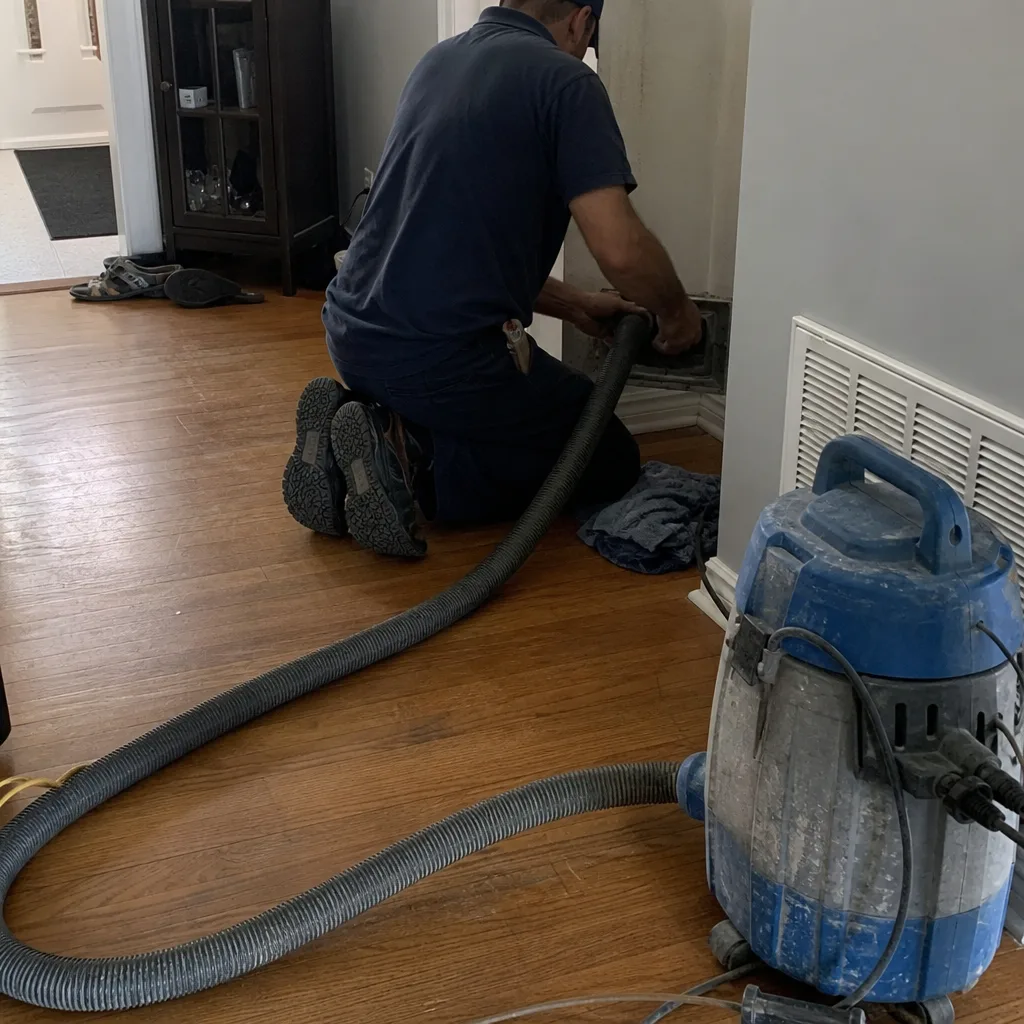 Before
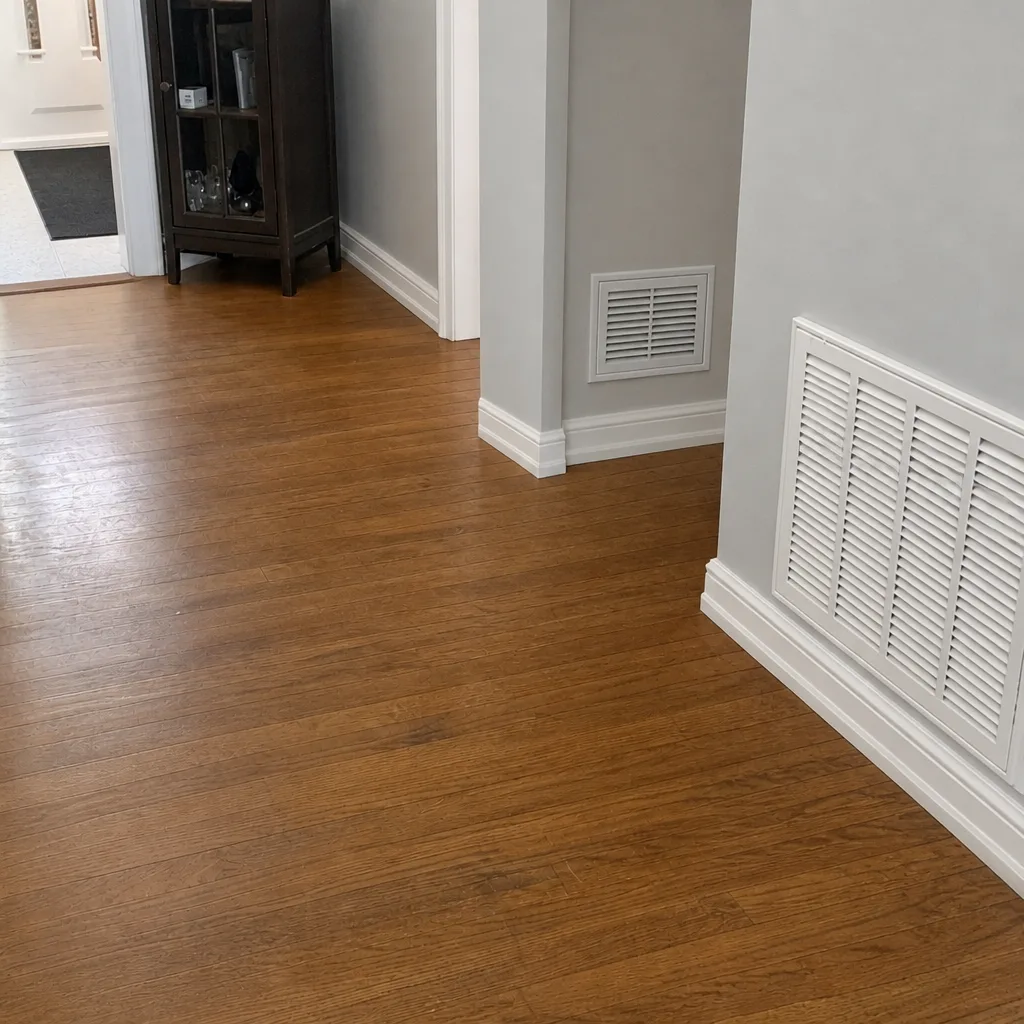 After
Common Mistakes to Avoid
- Judging cleanliness by the register grille. A shiny new grille on top of a dirty run doesn’t help. The visible grille is the last thing to show dust, and the first thing most people look at.
- Hiring the cheapest quote without asking what equipment they use. A shop vac and a brush aren’t a duct cleaning system. Ask whether they use HEPA-filtered extraction and rotary agitation. You’ll know in one sentence whether they do.
- Letting a single-service company clean and walk away. If your duct run has a tear, a sagging section, or a chewed flex joint, cleaning doesn’t fix it. Repair needs to be on the same visit, not “call someone else for that.”
- Assuming a system that runs is a system that’s fine. Crushed ductwork in a North Charleston attic can starve a room for years without ever tripping a code, error, or complaint. The system doesn’t complain. It just leaks.
- Running the HVAC blower during renovation work. Every drywall cut goes straight into the ductwork if the system is on. Turn the system off while the contractor is cutting, and clean afterwards.
- Ignoring the dryer vent because the ducts got cleaned first. It’s the same system logic in a different place. If the ducts need cleaning, check the dryer vent before you cross it off.
- Believing “we sprayed sanitizer” fixes the problem. Sanitizer applied on top of dust and debris won’t do much and can cause more problems. Clean first, then sanitize only where warranted.
When to Call a Professional
If you’ve checked several registers with a flashlight and found visible wall buildup, or you’ve had a persistent smell in one room that survived cleaning, or you’ve seen pest activity near the air handler, it’s time. If a renovation just wrapped up in the house, or you moved into a new-build within the last year and the AC never quite balanced, it’s time. If the dryer takes two cycles for what used to take one, the vent needs a look. And if your household has allergy or asthma symptoms that follow the HVAC cycle rather than the calendar, it’s worth having the system opened up and inspected. Sunstone Air Duct Cleaning offers free estimates in North Charleston; call (855) 683-7582. We answer 24/7. Fast dispatch from 7am-7pm, Sunday through Friday. Same-day visits are often possible.
Frequently Asked Questions
Most homes go several years between cleanings, and many never need one. The right interval depends on the house, not a calendar. New construction, a recent renovation, pets, smoking, or a home near heavy dust-producing activity shortens the interval. A clean, well-sealed system with a good filter can go much longer. The honest answer is: inspect, and clean when the checks above point to it. Call (855) 683-7582 for a free estimate and we’ll tell you what we see, not what fits a schedule.
Whole-system cleaning is priced per system, not per vent, and the written estimate sets the final price. A typical range for a standard residential system is several hundred dollars, with dryer vent cleaning often added on the same visit as a separate line item. If duct repair is needed for damaged or disconnected runs, that’s a separate repair estimate based on what’s found. Because it’s priced per job by the written estimate, there’s no surprise once work starts. Call (855) 683-7582 to book a free estimate.
Because the cheaper quote is usually paying for less. A low per-vent price often means a shop vac and a brush, no HEPA filtration, no rotary agitation, no repair capability when a run is broken, and a walk-through photo record instead of before-and-after shots of the actual duct interior. We’ve heard the resulting complaint many times: a coupon price that becomes a much larger invoice once the technician sees the duct. A written per-system estimate agreed before work starts protects you from that. Call (855) 683-7582 for a straight answer.
Ask for before-and-after photos of the duct interior, taken from the same angle in the same runs. That’s the only way to see clearly. A photo of a shiny register grille isn’t proof of anything. We photograph each run as part of the walkthrough and again after extraction, and the homeowner compares them at the end of the visit. If duct repair was needed, the repaired section is photographed separately. Call (855) 683-7582 to request a free estimate with the photo record included.
They can contribute, especially when the ducting has damp spots, pest contamination, or a heavy dust load. The pattern to watch is whether symptoms track the HVAC cycle (worse when the system is running) rather than the pollen calendar. That pattern points to the system, not the season. Anyone with respiratory concerns should talk to a doctor; what we can do is inspect the duct system and clean or repair what’s causing the buildup. Call (855) 683-7582 for a free estimate.
Those are worth investigating separately from the visual checks. Cooking odors pulled into a return can settle into duct lining, especially if grease vapor has bonded to the wall over time. New-home and renovation smells often trace to flex insulation off-gassing when the heat comes on. Neither responds well to air fresheners, and both tend to concentrate in the return side of the system where airflow is highest. Call (855) 683-7582 to schedule a free estimate and have the return side specifically checked.
The Bottom Line
Dust on your registers is the last signal, not the first. The early signs in a North Charleston home are quieter: a smell that only shows up when the HVAC runs, air that pushes weaker into one room than the rest, allergy symptoms that follow the system rather than the season, activity near the air handler, fine debris in the supply boot, and slower drying in the laundry. Two or more of those together usually means the system has something inside it that a filter change won’t reach. A phone flashlight and five minutes per register will tell you a lot. If what you find points to a real problem, one call covers cleaning, repair, and dryer vent safety. Call (855) 683-7582 for a free estimate. We answer 24/7. Fast dispatch from 7am-7pm, Sunday through Friday.
Written by the team at Sunstone Air Duct Cleaning.