
Last updated November 15, 2026
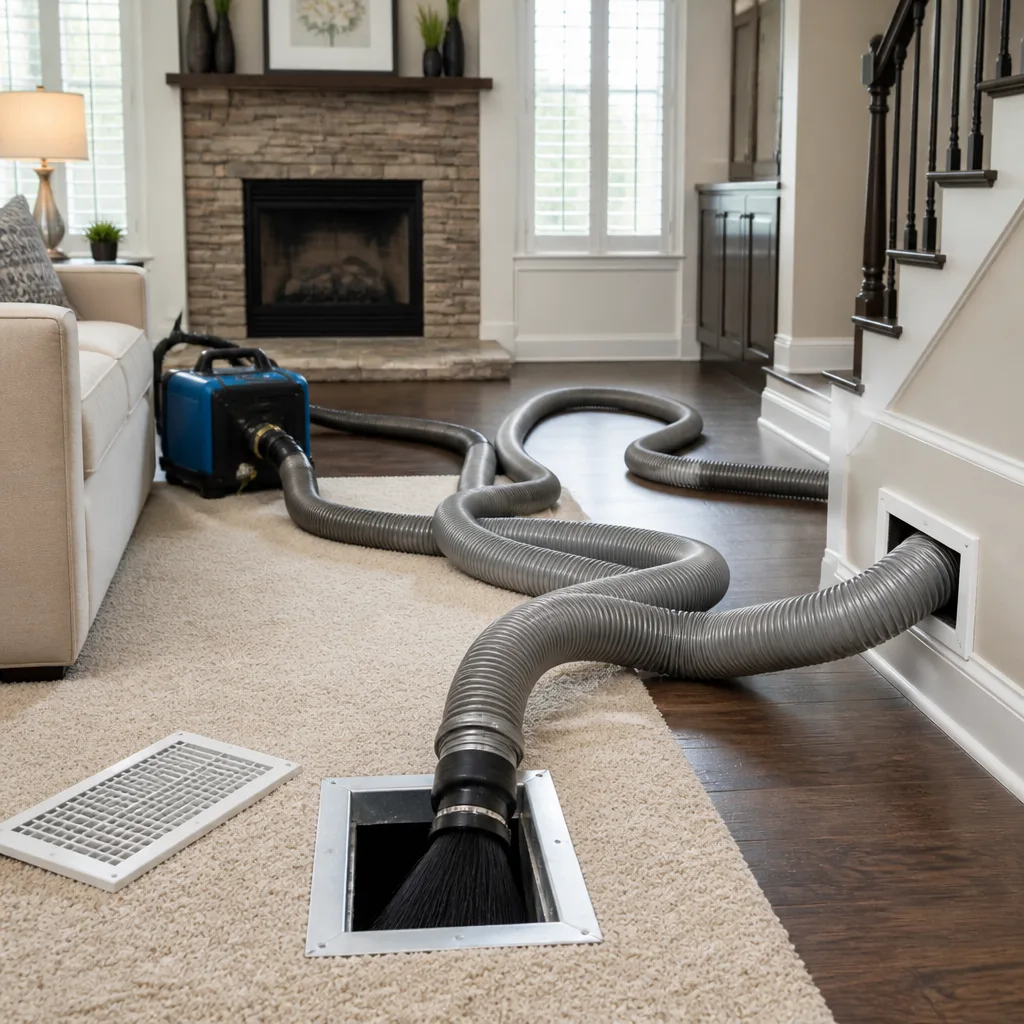 Whole-home duct cleaning
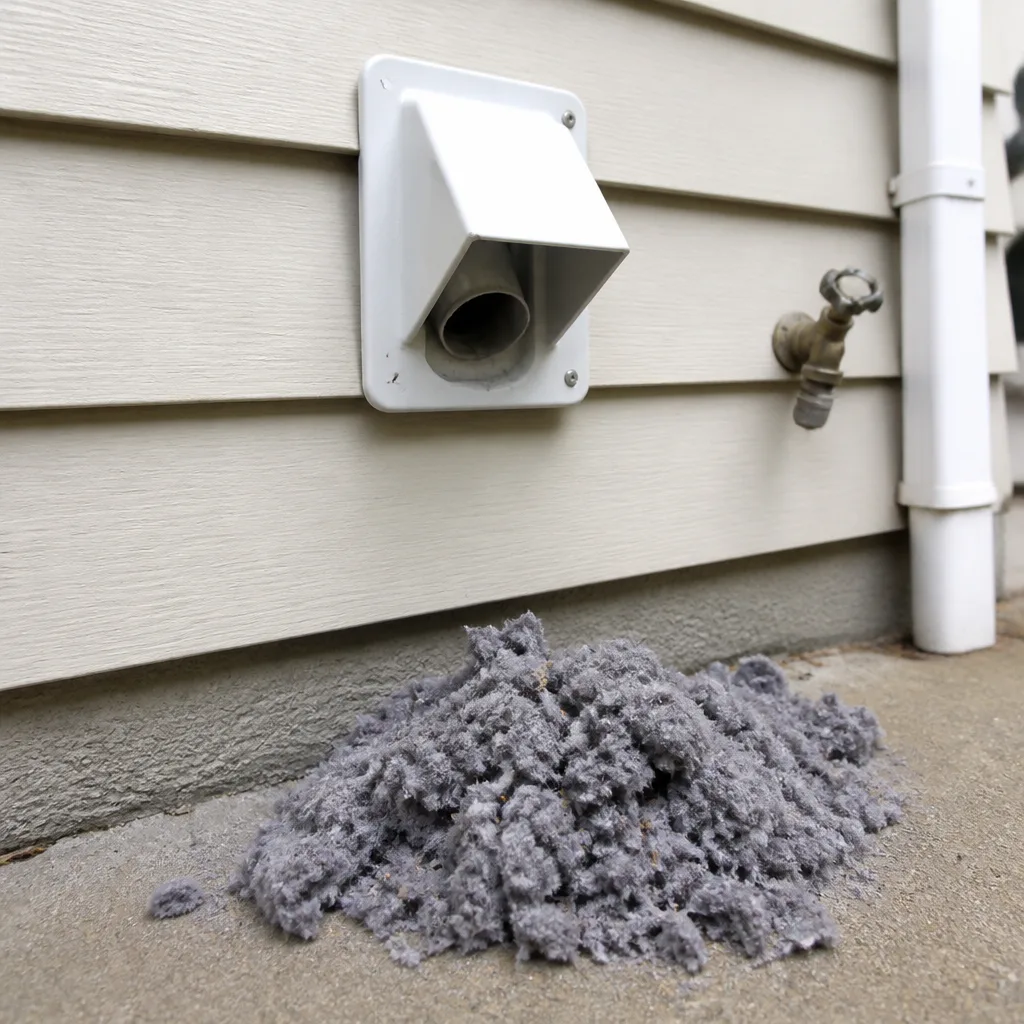 Dryer vent cleaning
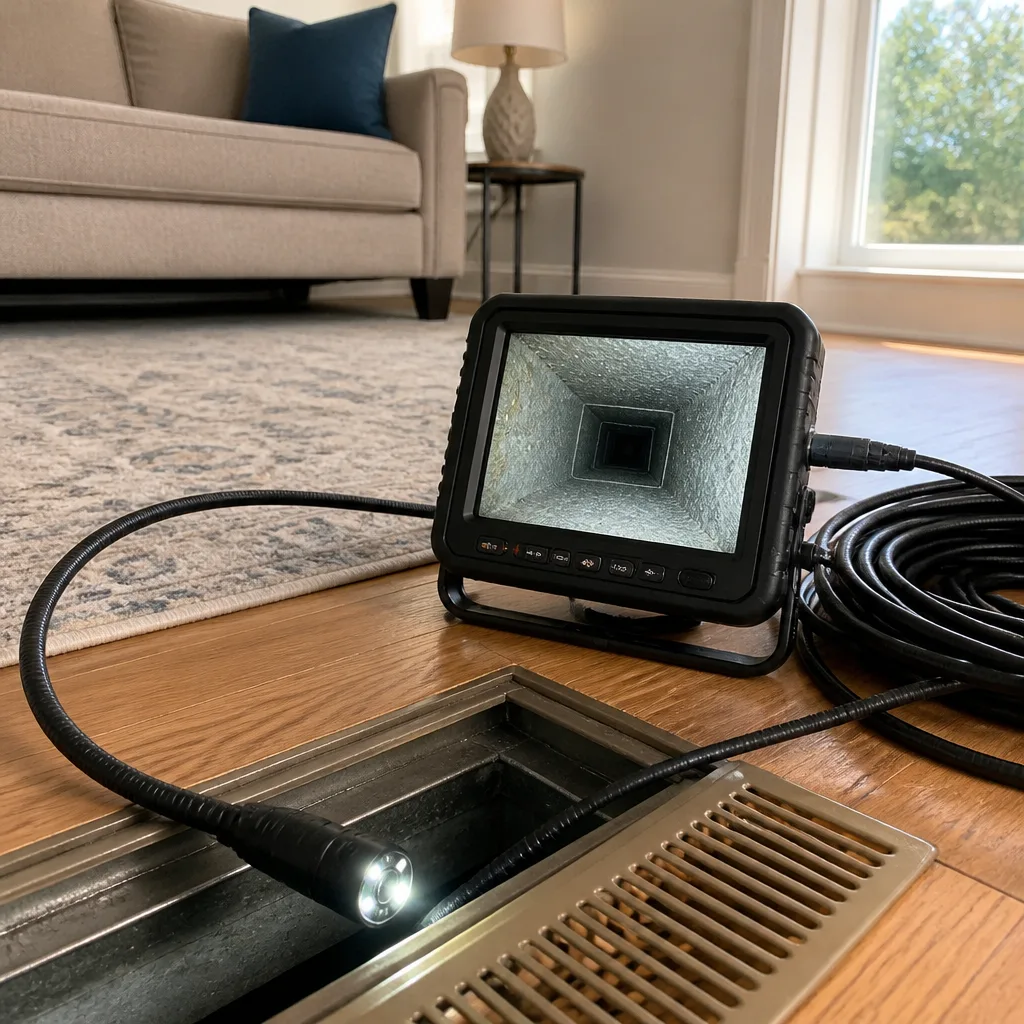 Camera inspection
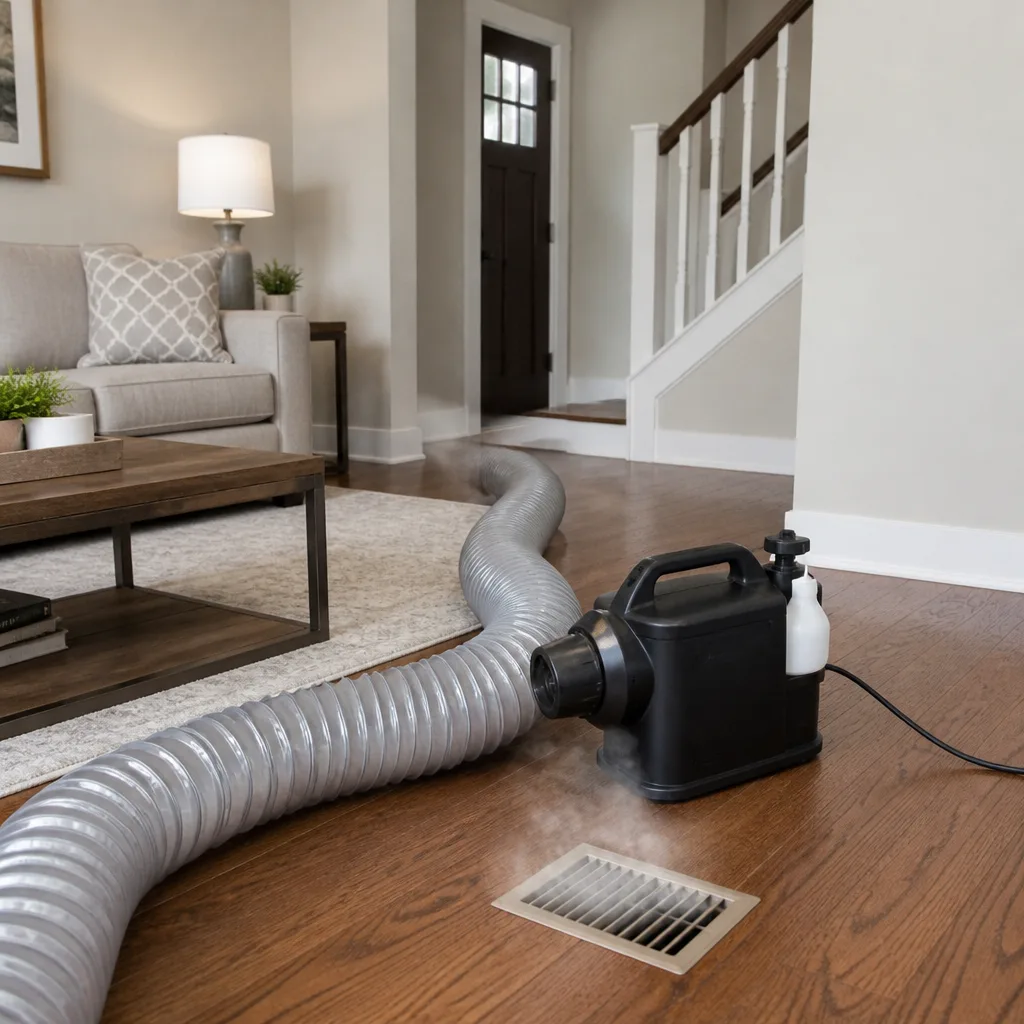 Sanitizing & deodorizing
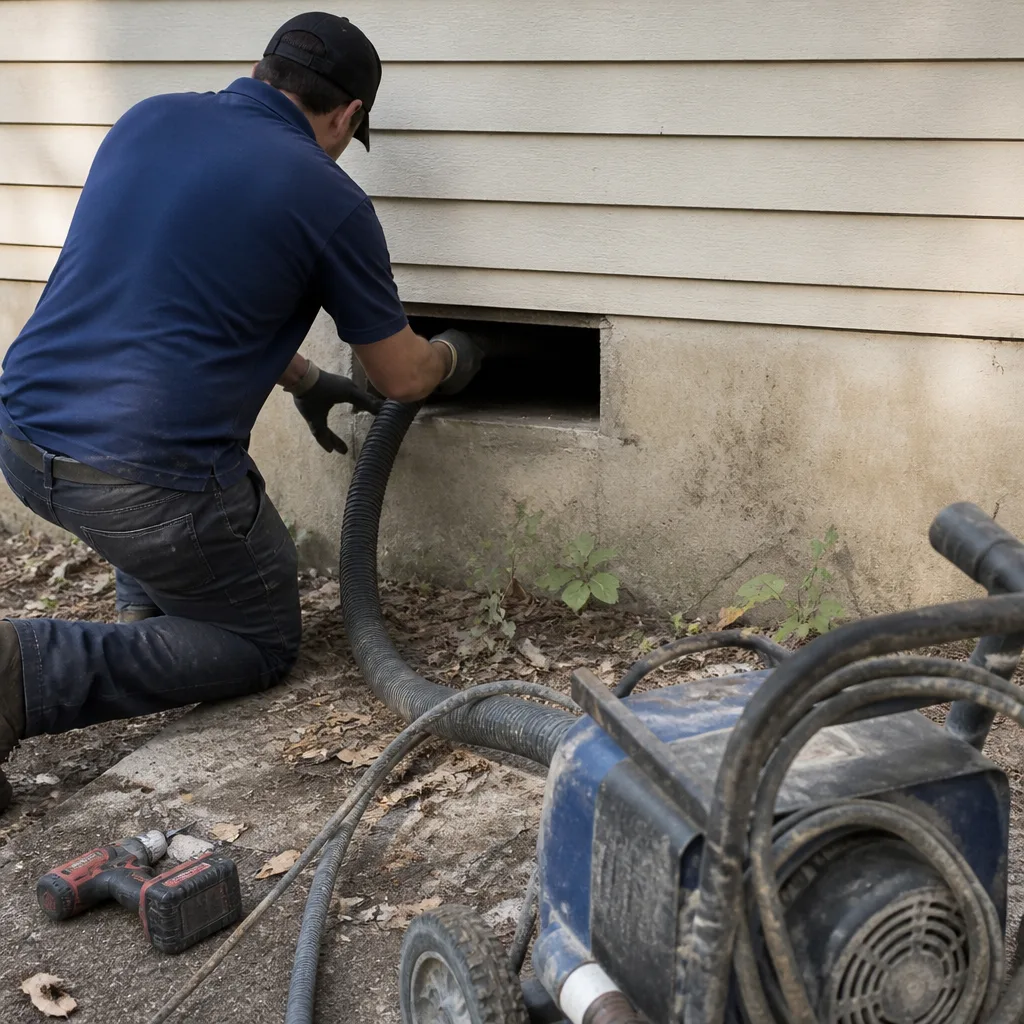
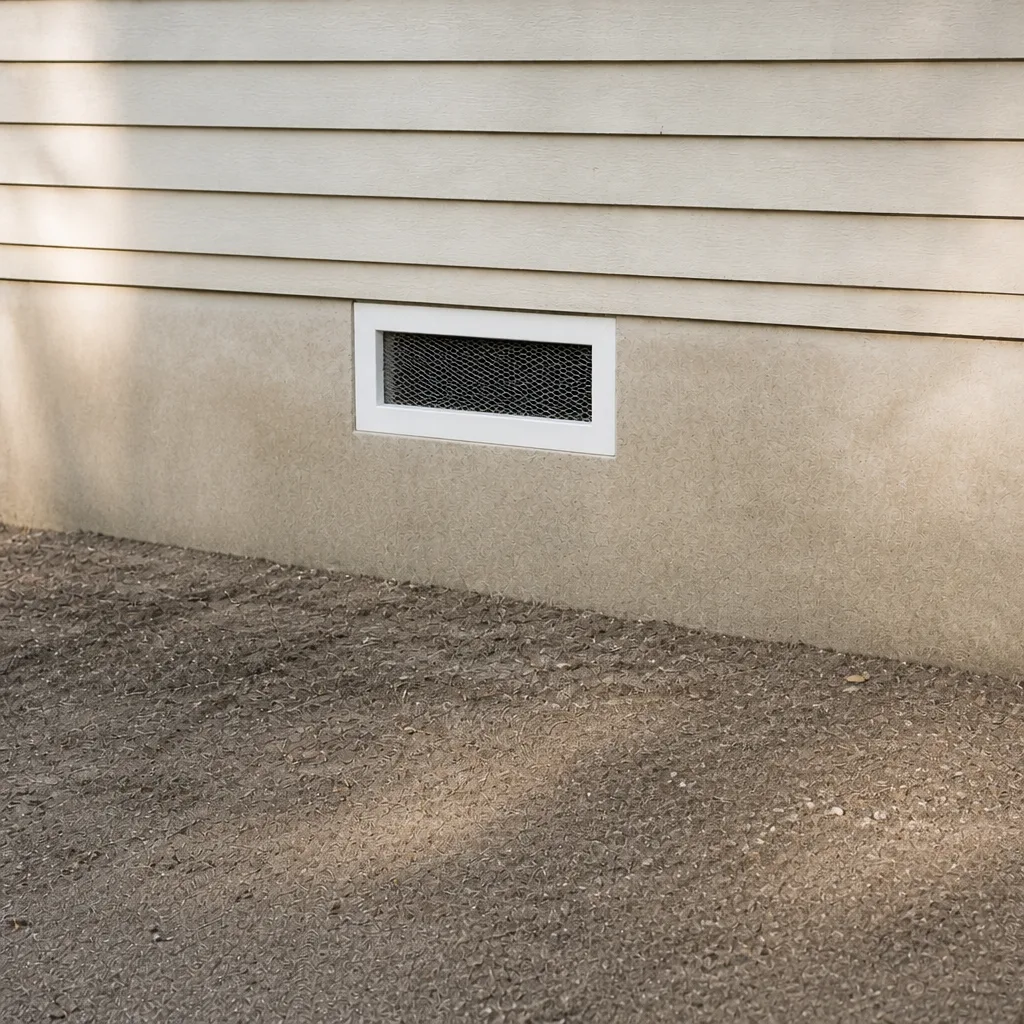
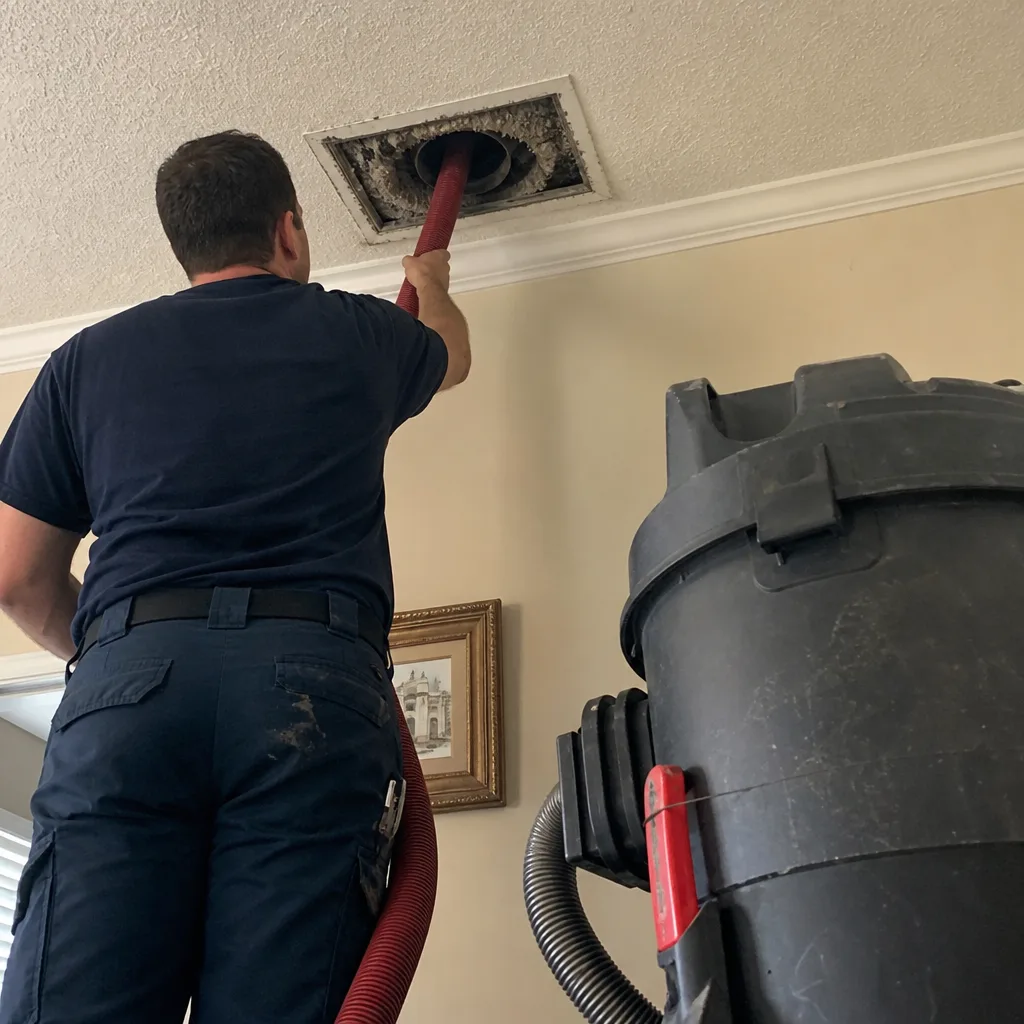
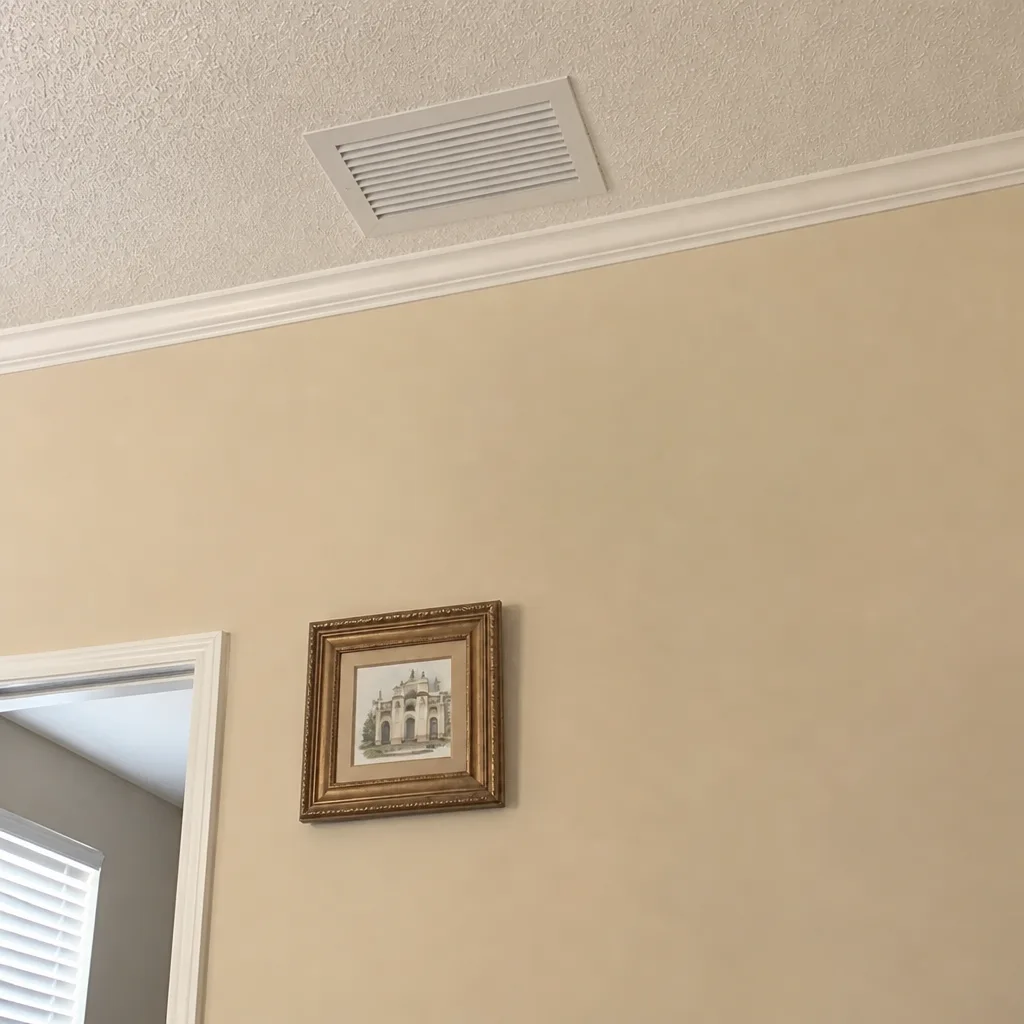
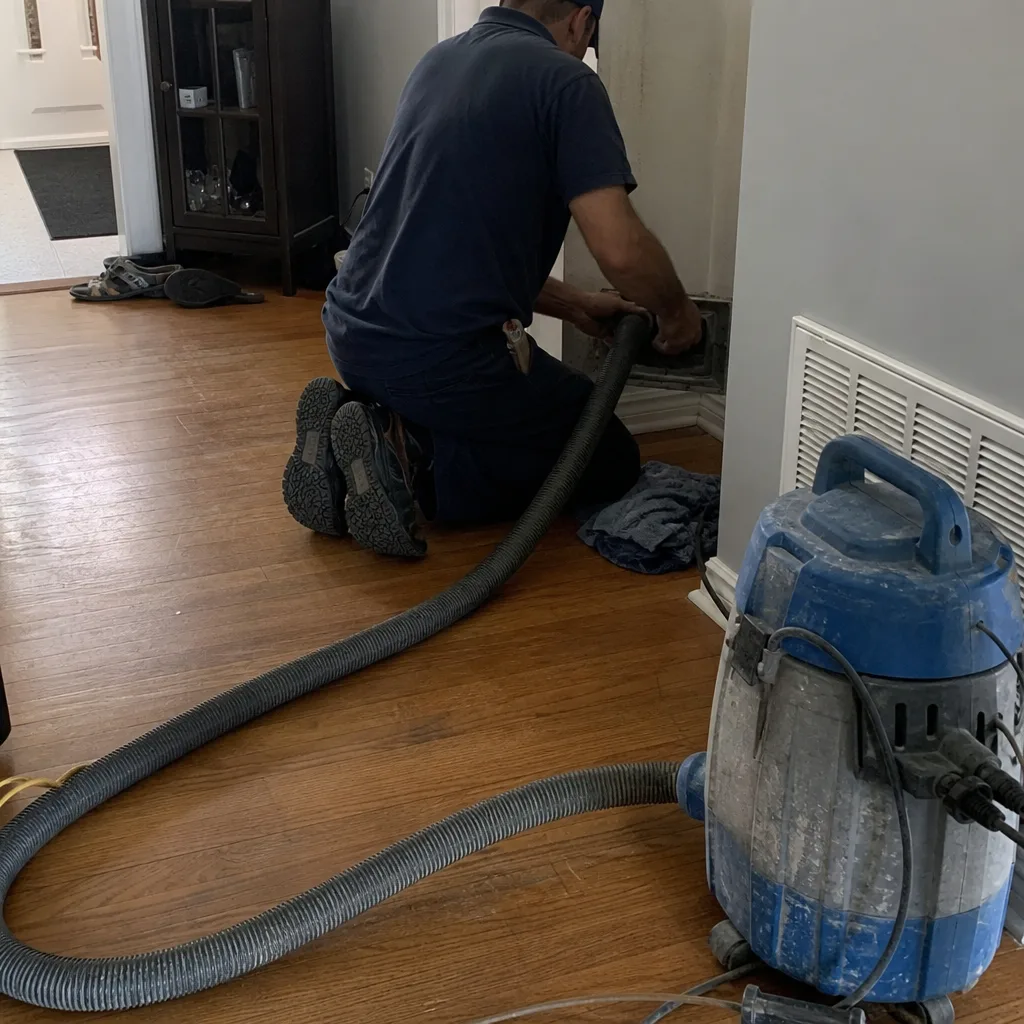
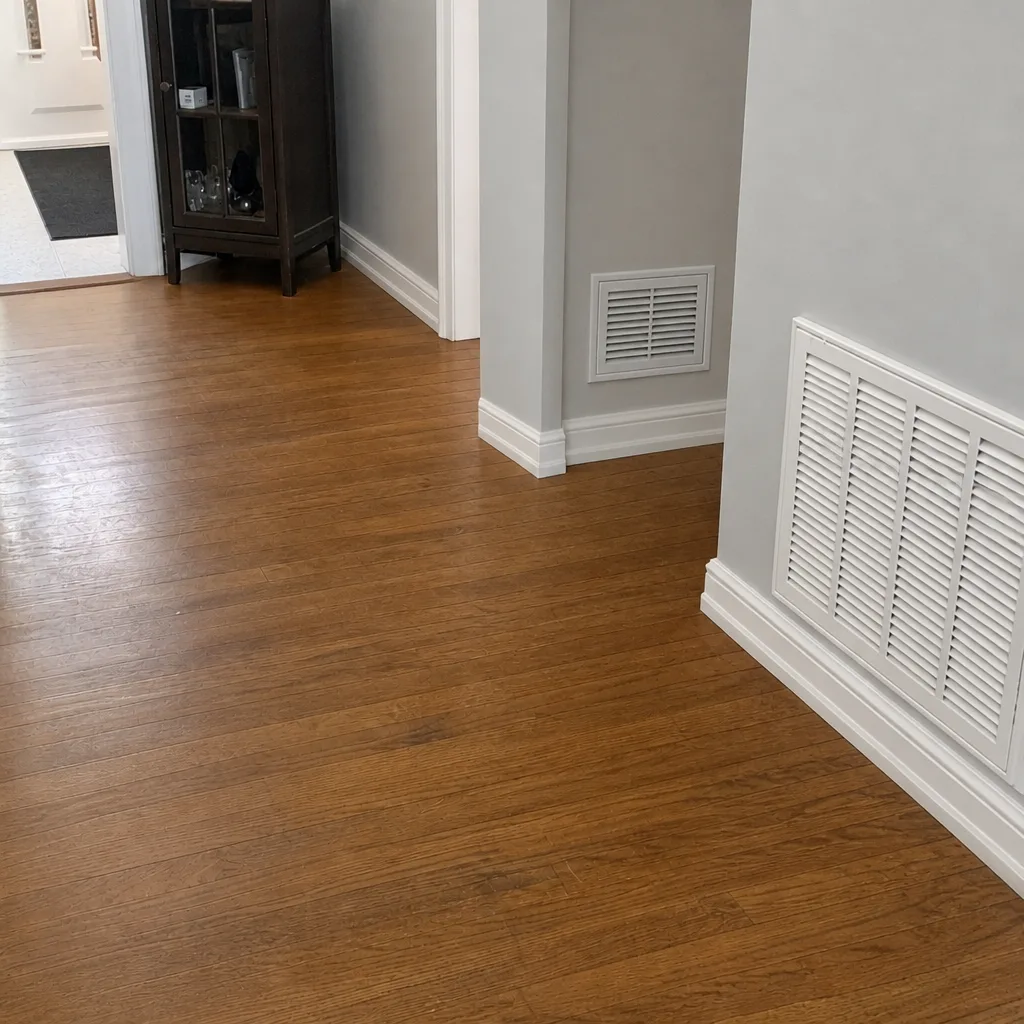
Whole-system duct and dryer vent check with before-and-after photos - you see exactly what came out of your vents
That "$99 whole-house special" is a bait ad - the real number appears once they are in your hallway, or the "clean" is a shop-vac at the register. We photograph the inside of your ducts before and after instead.
Air Duct Cleaning Troubleshooting in North Charleston: Common Problems and How to Fix Them
If you’ve changed your filter three times in two months and your house still smells stale, the filter isn’t your problem. Something upstream is. Most of the air duct complaints we hear in North Charleston point to a root cause the homeowner can’t see from the hallway register: a torn flex run behind a wall, a joint that popped loose under the house, or years of dust and biological growth coating the inside of a trunk line. This guide walks you through how to read the symptoms your duct system is already giving you, tells you which checks you can safely handle yourself, and shows you exactly when a problem has outgrown a filter change and needs a professional on site.
Styles & brands we work with
- Whole-home duct cleaning
- Dryer vent cleaning
- Camera inspection
- Sanitizing & deodorizing
Quick Answer
Most air duct problems in North Charleston come down to one of two things: the ducts are dirty, or the ducts are damaged. Dirty ducts cause stale smells, extra dust, and allergy flare-ups; damaged ducts cause weak airflow, uneven room temperatures, and high utility bills. Cleaning solves the first. Only repair solves the second. Reading the symptom correctly, before you call anyone, is what saves you money.
Table of Contents
- Symptom-to-Cause Map for North Charleston Duct Problems
- Dirty Ducts vs. Damaged Ducts: Why Cleaning Won’t Fix Everything
- How North Charleston Humidity Affects the Inside of Your Ducts
- Safe DIY Duct Checks You Can Do Yourself
- What a Camera Scope and Pressure Test Reveal
- When Duct Repair or Sealing Is the Real Fix
- Dryer Vent Problems That Look Like Air Duct Problems
- Common Mistakes to Avoid
- When to Call a Professional
- Frequently Asked Questions
- The Bottom Line
Symptom-to-Cause Map for North Charleston Duct Problems
Before you call anyone, learn to read the four symptoms that show up most often in North Charleston homes. Each one points to a different cause, and each one has a different fix. Getting the symptom right is half the battle.
- Uneven room temperatures. One bedroom is hot while the living room is comfortable. In a properly sealed system, every register should deliver air within a few degrees of the others. When one room lags, the usual culprits are a crushed flex run, a partially closed damper, or a supply boot that has pulled loose from the floor register.
- Musty odors when the system runs. A musty smell that appears only when the blower kicks on means the odor is coming from the ducts, not the room. That points to mold or mildew growth on interior duct surfaces, usually wet insulation or condensation sitting inside a trunk line. See our air duct cleaning page for how we handle this.
- Visible dust on registers shortly after cleaning them. A fresh layer of dust within a week or two means debris upstream in the plenum or trunk line is being pushed out through the register. A dirty filter alone rarely causes this pattern.
- Higher-than-expected utility bills. When the HVAC system has to run longer to make up for conditioned air leaking out of a damaged joint, energy use climbs. A disconnected flex duct behind a wall is one of the most common causes of an unexplained summer bill jump in North Charleston.
Those four symptoms are diagnostic. If you know which one you have, you can usually narrow the fix down to either a cleaning or a repair before you ever pick up the phone.
Dirty Ducts vs. Damaged Ducts: Why Cleaning Won’t Fix Everything
This is the biggest source of confusion in this trade. A duct that’s dirty needs cleaning. A duct that’s damaged needs repair. Cleaning a damaged duct is money spent on a problem that will come right back. Understanding the difference saves you a second service call.
Dirty ducts are a contamination problem. The system delivers air through an interior surface that has accumulated dust, debris, pet hair, and in humid conditions, biological growth. Cleaning addresses the interior surface and restores airflow. Our Sunstone Air Duct Cleaning crews use rotary-brush agitation through a Rotobrush system paired with Nikro HEPA vacuum extraction so the debris is captured at the source instead of being blown into the room. That approach handles the dirty-duct problem completely.
Damaged ducts are a mechanical problem. The flexible, insulated runs behind your walls and under your floor can collapse, kink, tear, or separate from the hard duct trunk. When that happens, the system loses air pressure before it ever reaches your register. No amount of cleaning will restore airflow through a crushed flex line. The fix is repair: pulling the collapsed section and reconnecting, sealing the joint, or replacing the run.
The three damage patterns we see most often in North Charleston
- Collapsed flex runs under the house. Flex duct that sags or rests on the pier-and-beam ground loses its round shape. When the inner liner collapses, airflow drops dramatically.
- Disconnected joints at the trunk line. The tape or mastic that seals a supply run to the main trunk can fail over time. A disconnected joint means the run is delivering attic or crawlspace air into the room, not conditioned air.
- Torn or kinked runs at transitions. Sharp turns during the original install, plus years of movement, leave the flex inner liner torn. The outer insulation still looks fine, but the liner is what actually moves air.
If any of those descriptions fit your home, a professional air duct repair assessment is the right next step. Cleaning alone won’t solve the airflow problem.
How North Charleston Humidity Affects the Inside of Your Ducts
Humidity is more than a comfort issue here. It’s a duct-health issue. North Charleston sits in a subtropical climate with humid summers and mild, damp winters, and the air passing through your duct system carries that moisture. That has real consequences for how quickly duct contaminants develop.
In a drier climate, dust and debris inside a duct stay relatively inert. In a humid climate like ours, the interior surface of a duct stays damp enough that biological growth can take hold in weeks rather than months. A duct that was clean two summers ago can develop visible mildew along the liner by the next cooling season. That is why North Charleston homeowners who move from drier regions are often surprised at how much more often duct contamination appears to return.
The practical implications for you:
- Condensation on metal trunk lines inside unconditioned attic or crawlspace space drips onto nearby flex runs, wetting insulation and creating a breeding ground for mold. The North Charleston homes we see with this pattern almost always have a condensation issue, not a humidity-only issue.
- A/C coil drip pans that overflow send moisture into the plenum, and that moisture migrates through the trunk line. If you’ve ever had a moisture-related HVAC repair, it’s worth checking upstream duct surfaces.
- Musty odors that get worse in summer are the classic sign of moisture-driven growth inside the system. If the smell disappears in winter and returns in June, the cause is almost certainly in the ducts, not the air handler.
A thorough cleaning approach using Abatement Technologies air filtration equipment lets us handle homes that already have mold concerns without spreading spores through the living space during the job. If you’re wondering whether your ducts need this level of care, the symptom is usually the smell test above.
Safe DIY Duct Checks You Can Do Yourself
Not every troubleshooting step needs a technician. There are four checks most homeowners can perform safely with no tools beyond a screwdriver and a flashlight. Everything else should be handled by a trained professional.
- Inspect every register visually. Pop the grille off a few supply registers and look inside with a flashlight. Fresh dust buildup, debris, or visible dark streaks on the interior liner tells you the system is dirty.
- Check the filter and the filter slot. A filter that’s been in place for a month and is already grey is a sign the system is pulling heavy debris. Also look at the filter slot itself for air gaps around the edges, which let unfiltered air bypass the filter.
- Run the airflow test at each register. With the system running, hold a tissue or your hand at each supply register. All registers should push a similar amount of air. A noticeably weaker register points to a duct problem upstream that needs professional diagnosis.
- Listen at the air handler. A rattle, whistling, or whooshing sound at the return plenum often points to a loose connection or a filter that’s starving the fan. A quiet system is a healthy system.
What you should not attempt yourself: opening ductwork behind a wall, crawling through an unconditioned crawlspace to inspect runs, or disconnecting any part of the system upstream of the filter. Attic and crawlspace work around HVAC equipment carries real risk of electrical shock and injury, and the diagnostic tools needed to find a hidden leak require training. That’s a job for a professional, and skipping that rule can be dangerous.
What a Camera Scope and Pressure Test Reveal
A trained technician uses two diagnostic tools to find what a visual inspection can’t. A duct camera scope lets us see inside every run, including the ones behind walls and under floors. A pressure test (also called a duct leakage test) measures how much air the system is losing before it reaches the register.
Here’s what those tools tell us that a walkthrough cannot:
- Where the leak actually is. A pressure test measures total leakage. The camera tells us which run is leaking. Without both, a technician is guessing.
- Whether the flex liner is torn but the outer insulation looks intact. This is the most common hidden damage in North Charleston duct systems, and it’s practically invisible without a camera.
- Whether contamination is confined to the system or has spread to the air handler plenum. This changes the scope of a cleaning job and determines whether we bring in Abatement Technologies filtration equipment.
- Whether the duct is structurally repairable or needs replacement. A short collapsed section can often be repaired in place. A run with multiple collapsed sections usually needs a full replacement of that run.
Homeowners with Honeywell or Aprilaire air quality systems already have a familiarity with the equipment ecosystem here. That equipment is only as good as the ducts delivering its treated air. A whole-home air cleaner on a leaking duct system is doing a fraction of the job it was designed to do. If you’ve invested in IAQ equipment, the camera scope and pressure test are how you protect that investment.
The same diagnostic discipline applies whether we’re looking at air ducts or dryer vent cleaning. In both cases, the decision to clean versus repair comes from what the camera shows.
When Duct Repair or Sealing Is the Real Fix
Four specific scenarios almost always need repair, not cleaning. If any of these describe your home, the cleaning will be wasted money until the mechanical issue is fixed first.
- A single room that never gets enough air. If one bedroom always runs hot in summer and cold in winter, and its register pushes weak airflow, the flex run serving that room is almost certainly crushed, kinked, or disconnected. Cleaning the rest of the system changes nothing about that room.
- A bill spike with no comfort change. When utility costs rise and rooms still feel fine, the system is losing conditioned air in a place you can’t see: a joint under the house, or a torn run in the attic. Pressure testing pinpoints the loss.
- Fresh dust on a register that was just cleaned. A register that dusts up within a week is pulling debris from a section of duct the brush didn’t reach. That’s often a separated joint that’s letting attic dust into the return side.
- A musty smell that returns within months of a cleaning. If the odor comes back fast, the moisture source (a condensation drip, a poorly sealed boot, or a coil pan overflow) is still active. Repair the moisture path before cleaning again.
Repair work includes sealing joints, reconnecting flex runs to the trunk line, replacing collapsed sections, and re-hanging sagging ducts so they hold their shape. A proper repair job is what makes the next cleaning last. That’s the difference between Sunstone Air Duct Cleaning and a vacuum-only service: we fix what’s broken, not just what’s dirty.
Dryer Vent Problems That Look Like Air Duct Problems
Dryer vent complaints can look like air duct symptoms from the inside of a home, and getting the two confused delays the right fix. A dryer that takes two cycles to dry a load, a laundry room that feels humid, or a lint smell near the wall don’t usually indicate anything wrong with your HVAC ducts. They point to a blocked or crimped dryer vent line.
The reason this matters for troubleshooting is that the fixes are different, and the safety concern is different too. A restricted dryer vent is a fire risk in a way that dirty supply ducts are not. Lint is combustible, and the longer the vent line is backed up, the more lint it accumulates. If you’ve noticed the drying time creeping up over a few months, that’s the signal.
Both problems are assessed with similar equipment: a camera to see inside the run and a rotary tool to clear debris. Our crews handle duct and dryer vent work in North Charleston on the same call when both are flagged during inspection. If you’re not sure which system is causing the symptom, a camera inspection answers it.
Common Mistakes to Avoid
- Assuming a new filter will fix the smell. A filter traps what comes through it, but a musty odor comes from the ducts themselves. Replacing filters repeatedly without addressing the source just delays the real fix.
- Buying the cheapest bid without asking about equipment. A shop-vac approach cannot extract what a rotary-brush and HEPA system can. Ask what equipment will be on site before you sign.
- Cleaning a duct system before checking for damage. Cleaning a crushed or disconnected duct changes nothing about your airflow. If the ducts are damaged, repair comes first.
- Crawling into the attic or crawlspace to “check it yourself.” North Charleston homes often have duct runs in tight, unconditioned spaces. Electrical risk and fall risk are real. Leave the crawlspace inspection to someone trained for it.
- Ignoring a single always-hot room. One stubbornly hot room is not a lifestyle problem. It’s usually a collapsed or disconnected flex run that a camera will find in minutes.
- Skipping the dryer vent. When you have a duct technician on site anyway, ask about the dryer vent. A restricted dryer vent accumulates lint and becomes a fire risk over time.
- Not asking for before-and-after photos. In a system behind walls, photos are how you verify the work actually happened. A professional will happily provide them.
When to Call a Professional
Call a professional when the symptom is mechanical rather than cleanliness-related. That means one room with consistently weak airflow, a utility bill that jumped without a comfort change, a musty smell that returns within weeks of a deep clean, or visible dust accumulating on registers that have already been cleaned. Those four scenarios almost always mean a duct problem you can’t see from the register and cannot safely diagnose from the living space.
Also call if you’re not sure which of those patterns you have. A camera scope plus a pressure test is what separates a guess from a plan, and it takes less time than a full cleaning. Sunstone Air Duct Cleaning offers free estimates in North Charleston. Call (855) 683-7582. We answer 24/7. Fast dispatch from 7am to 7pm, Sunday through Friday. Our technicians have up to 8 years of experience reading exactly these symptom patterns.
Frequently Asked Questions
Dirty ducts cause stale smells, extra dust on registers, and allergy symptoms; damaged ducts cause weak airflow to specific rooms, uneven temperatures, and higher bills. If the symptom is airflow-related and concentrated in one area, it’s usually damage. If it’s whole-home and smell-based, it’s usually dirt. A camera scope confirms which one within an inspection.
Only if the cause is a heavy debris blockage. Most single-room weak airflow in North Charleston homes is caused by a collapsed flex run or a disconnected joint, which is a repair issue, not a cleaning issue. A camera inspection tells you which before any service begins.
It accelerates biological growth inside ducts. The subtropical humidity here keeps duct interior surfaces damp enough that mildew can develop in weeks rather than months, especially where condensation drips onto a trunk line in an attic or crawlspace. If the smell in your home gets noticeably worse from May to September, moisture-driven growth is the likely cause.
The odor lives inside the ducts and gets pushed into the room when the blower runs. That pattern points to biological growth on the interior duct surface, often wet insulation or condensation-related moisture that hasn’t been addressed. Cleaning fixes the current growth; fixing the moisture source is what keeps it from returning.
Most homes here fall into a three-to-five-year window, though homes with pets, recent renovations, or known moisture issues may need attention sooner. The better measure than a calendar is symptom-based: if the smell, dust, or airflow symptoms return, the system is telling you it’s time.
You can safely check registers, filter slots, and airflow at each vent. Anything behind a wall, under the floor, or inside an attic or crawlspace should be handled by a trained technician, because the electrical and fall risks are real. A camera inspection is what reveals damage you can’t reach.
The Bottom Line
Most air duct problems in North Charleston are readable from the symptoms your home is already showing you. Musty smells and extra dust point to dirty ducts. Weak airflow, uneven rooms, and bill spikes point to damage. Cleaning fixes the first, repair fixes the second, and no cleaning alone will resolve a mechanical problem. If you’re not sure which you have, a camera scope and pressure test will tell you in less time than a full job. The system behind your walls doesn’t have to stay a mystery. Call Sunstone Air Duct Cleaning for a free estimate, ask for before-and-after photos, and get a plan that addresses the cause, not just the symptom.
Call (855) 683-7582. We answer 24/7. Fast dispatch from 7am to 7pm, Sunday through Friday.
Written by the team at Sunstone Air Duct Cleaning.
See the difference
 Before
 After
 Before
 After
 Before
 After