
Last updated November 15, 2026
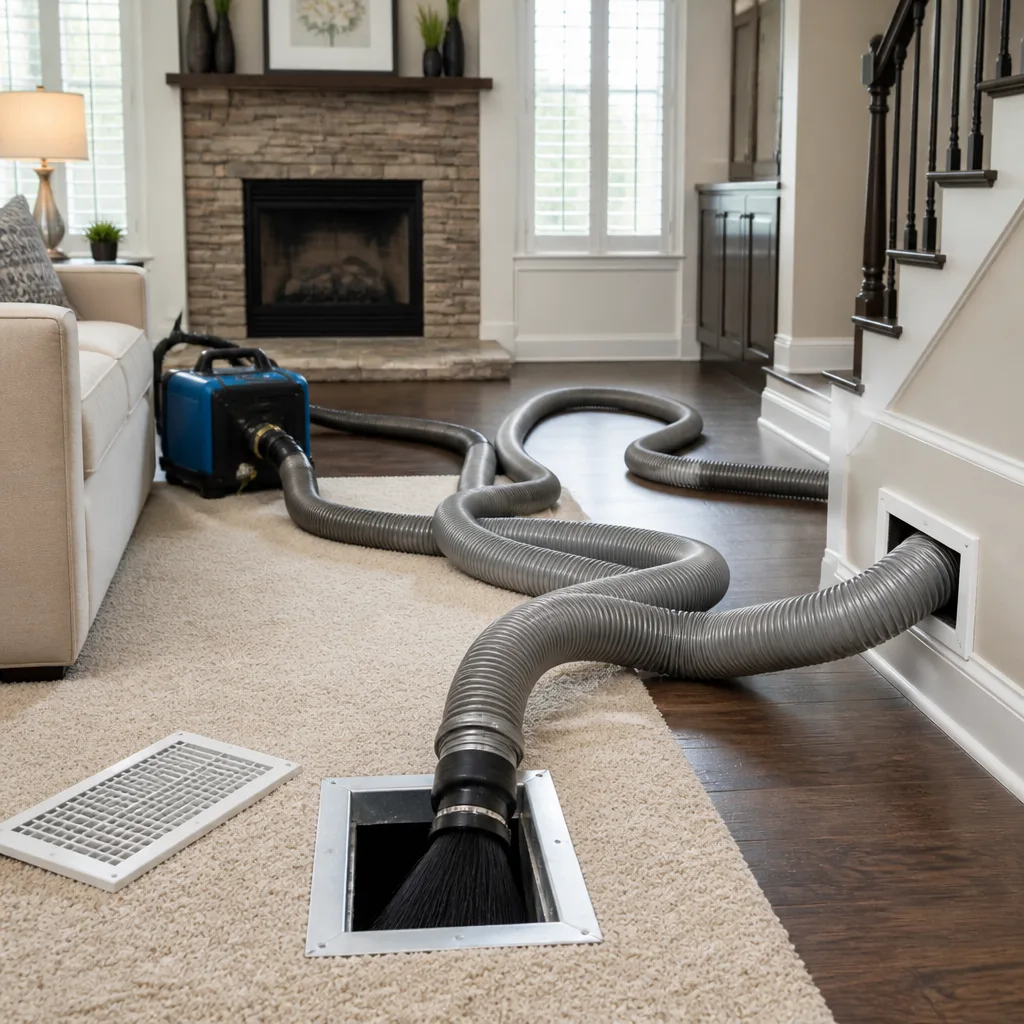 Whole-home duct cleaning
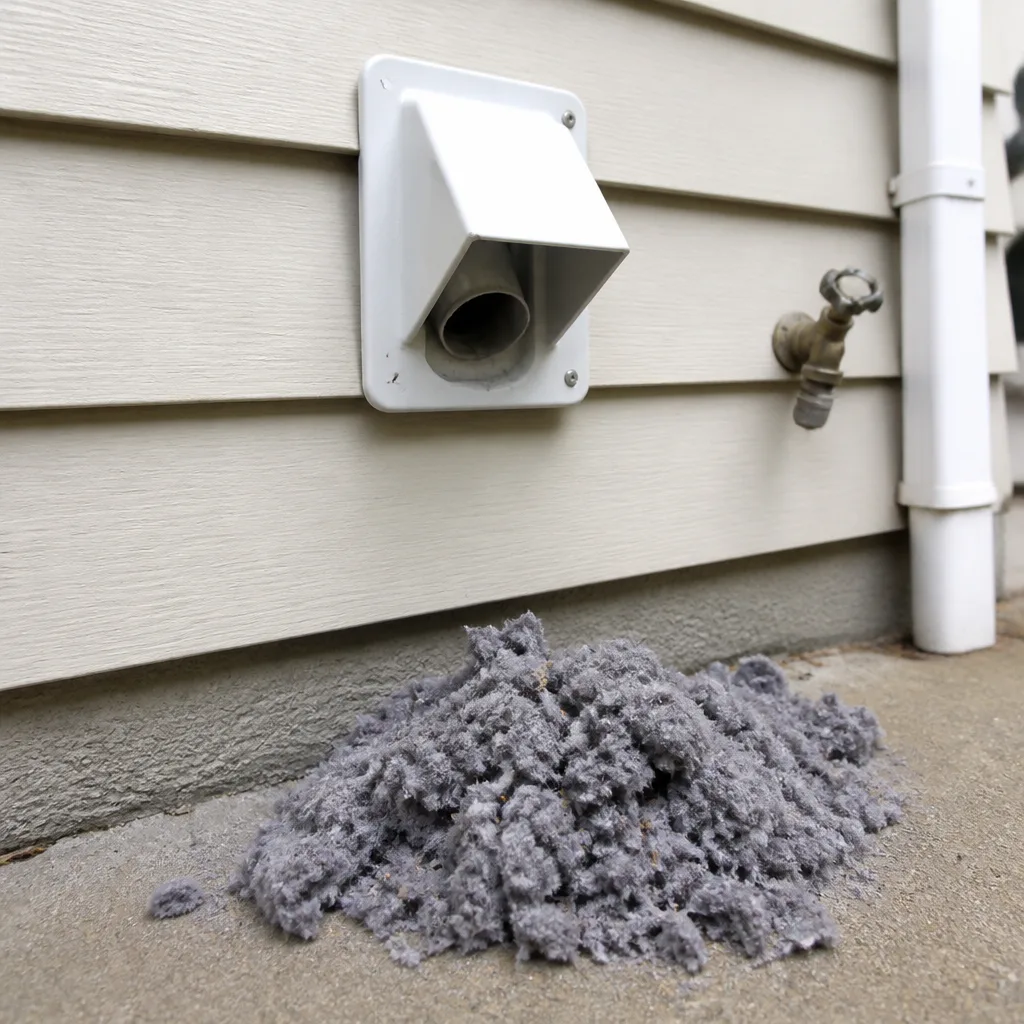 Dryer vent cleaning
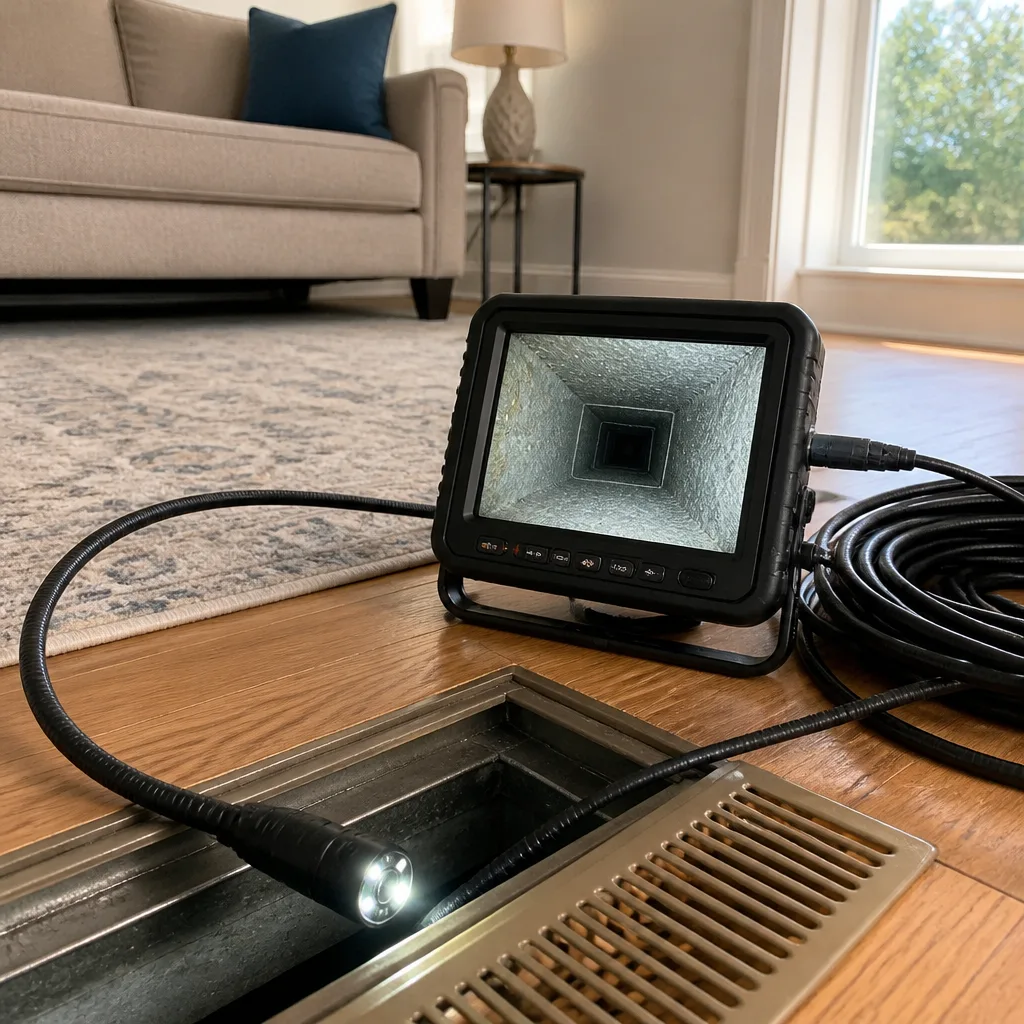 Camera inspection
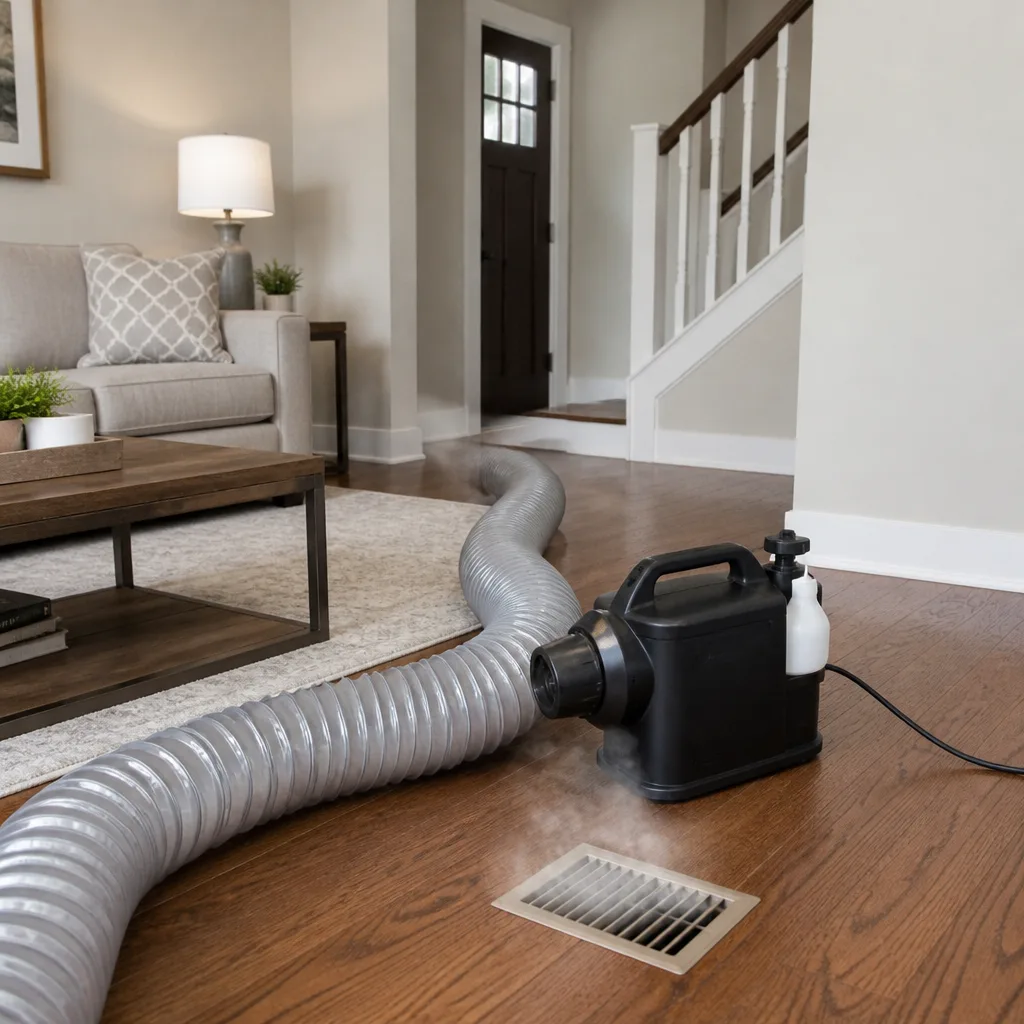 Sanitizing & deodorizing
Whole-system duct and dryer vent check with before-and-after photos - you see exactly what came out of your vents
That "$99 whole-house special" is a bait ad - the real number appears once they are in your hallway, or the "clean" is a shop-vac at the register. We photograph the inside of your ducts before and after instead.
Air Duct Cleaning Maintenance Checklist for North Charleston Homeowners
Changing your filter every 90 days is a national average. Around here, that interval can be wrong by half, and homeowners who follow it blindly are letting contamination build past the point a simple clean will fix. North Charleston’s long humid stretch, its pine pollen season, and its older housing stock each push on your ductwork in different months. A checklist built for a generic climate won’t catch what’s actually happening in your system. What follows is a month-by-month routine tied to how this area actually behaves, plus the filter-reading and register-checking habits that tell you whether your ducts are holding or quietly failing between professional visits.
Quick Answer
A workable air duct maintenance routine in North Charleston means checking your filter every 30 to 45 days during pollen and heavy-AC months rather than quarterly, inspecting registers monthly for dust patterns and odors, and scheduling professional cleaning roughly every two to three years depending on your home’s dust load, pets, and recent renovations. The checklist below turns that into a month-by-month calendar so nothing gets missed.
Styles & brands we work with
- Whole-home duct cleaning
- Dryer vent cleaning
- Camera inspection
- Sanitizing & deodorizing
Table of Contents
- Why a National Filter Rule Fails in North Charleston
- The North Charleston Duct Maintenance Calendar
- How to Read Your Filter’s Load Pattern
- Register Checks You Can Do Before Calling Anyone
- When DIY Helps the Next Clean and When It Hurts
- Documenting Duct Condition Over Time
- Warning Signs That Point to Duct Repair, Not Cleaning
- The Dryer Vent Half of the Checklist
Why a National Filter Rule Fails in North Charleston
The 90-day filter rule is written for a temperate average that doesn’t exist here. North Charleston runs a humid subtropical climate, which means the air conditioning system carries most of the load for a large share of the year. A system that runs nearly continuously moves far more air through the filter than one that cycles on and off, so the filter loads faster. That’s the first way the national rule goes wrong.
The second way is pollen. Spring in the Lowcountry brings a heavy pine and oak pollen release that coats outdoor surfaces and finds its way indoors through return grilles and door traffic. During those weeks a filter can go from clean to visibly gray in under a month. If you’re on a 90-day habit, you’re running a clogged filter through the highest-demand stretch of the year, which strains the blower and lets bypass dust settle into the ductwork.
The third factor is the local housing mix. Much of North Charleston’s housing was built across several decades, and duct systems in older homes often have more seams, older flex connections, and less sealing than newer construction. Loose seams pull attic or crawlspace air into the return side, which loads the filter with material that never came from inside the house. A filter that darkens unusually fast can be a sign of exactly that.
Put together, the practical takeaway is that your filter interval should flex with the season, not sit fixed on a calendar quarter. The calendar below handles that for you. For a fuller picture of what a professional clean involves, see our page on air duct cleaning.
Key Takeaways
- Check filters every 30-45 days from March through September, and every 60-90 days in the cooler stretch.
- Fast-darkening filters can indicate leaky return ducts pulling attic or crawlspace air, not just dust.
- Register dust patterns and odors are the two cheapest diagnostic tools you own.
- Keep dated photos of your registers and filter changes; they’re your leverage against unnecessary work.
The North Charleston Duct Maintenance Calendar
This calendar is built around the local year rather than a generic four-season split. Follow it and you’ll catch problems while they’re still cheap to fix.
January – February: The Baseline Pass
Cooler months mean the AC cycles less, so this is your quiet window for a full inspection. Pull every return grille and photograph the interior. Note dust color and density. Check filter fit; a filter that rattles or leaves gaps is letting unfiltered air past. This is also the best time to book a professional assessment, because demand is lower and any needed air duct repair can be scheduled without rushing.
March – May: Pollen Season, High Alert
Pine pollen arrives fast. Check the filter every 30 days during this stretch, and don’t be surprised if it needs changing monthly. Wipe registers weekly to see how quickly dust returns; rapid return means the filter is bypassing or the ducts are shedding. Keep windows and doors closed during peak pollen days if anyone in the house has allergies.
June – September: Peak Load
The AC runs hardest now. Filters load fastest and condensation is a real concern in ductwork that runs through unconditioned space. Check for musty odors at registers on humid days. Listen for whistling at grilles, which can mean restricted airflow from a loaded filter or a crushed flex run. This is the stretch where a neglected system shows its weak points.
October – December: Recovery and Prep
Load eases. This is the window to address anything you flagged during the summer, clean up after any fall renovation dust, and do a final filter change before the holiday season brings more people and more indoor activity. Photograph everything again so you have a year-over-year record.
How to Read Your Filter’s Load Pattern
Your filter is a diagnostic device, not just a consumable. How it loads tells you what’s going on upstream and downstream of it, and reading that pattern is one of the highest-value habits in this whole checklist.
Start with a baseline. After a fresh filter goes in, note the date on the frame with a marker. Check it at 30 days and photograph it against a white sheet of paper so the contrast is consistent. Then interpret:
- Even gray coating, gradual: Normal. Your filter interval is roughly right.
- Dark patch on one side only: Air is entering unevenly. Could be a return duct leak or a poorly sealed filter frame.
- Rapid darkening in under three weeks: Unusually high particulate load. Check for a return leak pulling attic or crawlspace air, nearby construction, or a filter that’s too thin for the frame.
- Visible fiberglass or insulation strands: Duct liner may be breaking down. Stop and get this looked at before running the system more.
- Musty smell on the filter itself: Moisture is present somewhere in the system. This is a professional-check item, especially in a humid climate.
In our experience, homeowners who track load pattern catch failing duct seams and blower issues months before they’d otherwise notice. If the pattern is consistently abnormal, an inspection makes sense before you spend more on filters. Our team uses Sunstone Air Duct Cleaning equipment including Rotobrush rotary-brush systems to agitate and extract debris rather than simply blowing it around, which is what you want if contamination has built up past a simple filter change.
Register Checks You Can Do Before Calling Anyone
Registers are the cheapest inspection points in your home. Five minutes with a flashlight and your nose, repeated monthly, covers most of what a homeowner can reasonably assess.
- Shine a light into the supply register. Look for dust coating, debris, or anything that shouldn’t be there.
- Wipe the grille with a white cloth. Compare against last month. Increasing dust means something changed.
- Smell the airflow. Musty, stale, or chemical odors are all signals worth noting and dating.
- Feel the airflow strength. Weak flow at one register versus others points to a blockage or disconnected run.
- Listen for rattle or whistle. Whistling means restriction; rattling can mean a loose connection.
- Check for condensation or dampness. Any moisture at a register in a humid climate is a flag.
- Photograph and date. Keep the photos in one folder on your phone.
What you’re building is a trend line. One dusty register means little. A register that goes from light dust to heavy coating in six weeks tells a story, and that story is what helps a technician (and you) decide whether cleaning, sealing, or repair is the right next step.
When DIY Helps the Next Clean and When It Hurts
There’s a real line between homeowner maintenance that makes a professional visit more effective and DIY attempts that make it harder or riskier. Knowing the line saves money and protects your system.
What Helps
- Changing filters on schedule and labeling them with dates.
- Vacuuming register grilles and the floor around them.
- Keeping return areas clear of stored boxes and furniture.
- Sealing obvious gaps around the filter frame with removable tape.
- Photographing everything before and after any professional visit.
What Hurts
- Removing or reaching into duct sections to “see what’s in there” – you can dislodge contamination and lose the seals.
- Spraying household cleaners or fragrances into registers, which can coat duct surfaces and become a new contaminant.
- Using a shop vac on duct interiors, which can push fine dust deeper rather than capture it.
- Attempting to reseal or reroute flex runs without the right materials and knowledge.
- Adjusting blower settings or dampers without understanding the system balance.
The rule of thumb: if a task involves opening the duct system itself or touching the air handler, leave it to a professional. For a fuller breakdown of what a professional service involves, our air duct cleaning in North Charleston page covers the process step by step. Our technicians have up to 8 years of experience with systems like these, and that experience is what tells them the difference between a clean-and-go job and one that needs repair first.
Documenting Duct Condition Over Time
Documentation is your leverage. When a contractor quotes you work, a dated record of your duct condition lets you ask better questions and spot unnecessary add-ons.
Build a simple folder – a physical one or a phone album – with these entries:
- Dated photos of every filter at each change.
- Dated photos inside supply registers, taken from the same angle each time.
- Any notes about odors, airflow changes, or new sounds.
- Copies of any prior service reports, with the date and what was done.
- Photos of any recent renovation, since drywall dust and construction debris are a common source of new contamination.
When you get a quote, ask the technician to show you before-and-after photos of your own ducts. A professional has no reason to refuse. If a quote includes work you can’t connect to anything in your documentation, ask for the reasoning. That’s how you separate necessary repair from upsell – and it’s a conversation our team is happy to have.
Warning Signs That Point to Duct Repair, Not Cleaning
Not every duct problem is a cleaning problem. Some are structural, and cleaning alone won’t fix them. Here are the signals that point toward repair:
- Persistent dust after a professional clean. If dust returns quickly, the system is likely drawing in unfiltered air through a leak.
- Uneven airflow between rooms. A disconnected or crushed flex run is a common cause.
- Visible gaps or sagging in flex runs. These let attic or crawlspace air into the system and need to be sealed or replaced.
- Musty odors that return after cleaning. Moisture intrusion is the usual culprit, and it usually means a damaged section.
- Rattling or whistling at specific runs. Both suggest a loose or restricted connection.
Repair is where a single-service cleaner often stops and refers you onward. We handle both, which means the diagnosis and the fix happen in one visit rather than a chain of phone calls. That matters in a place like North Charleston, where a failed flex run in a humid attic can get worse quickly if it’s left sitting.
The Dryer Vent Half of the Checklist
Your duct maintenance routine should include the dryer vent, because the same habits apply and the stakes are higher. Lint accumulation in a dryer vent is a leading cause of residential fires, and the fix is straightforward regular cleaning.
The homeowner side of the checklist:
- Clean the lint trap before and after every load.
- Check the exterior vent flap monthly – it should open freely and close snugly.
- Look for lint visible around the outside vent opening; that’s a sign of buildup.
- Notice drying times. If loads take longer than they used to, airflow is restricted.
- Inspect the flexible connector behind the dryer for kinks or crushing.
Professional dryer vent cleaning should be on a similar cadence to duct cleaning, sooner in a home with a long vent run or a large household. If you’re already having your ducts serviced, it makes sense to handle the dryer vent at the same time. Our page on North Charleston covers the local service picture in more detail.
Common Mistakes to Avoid
- Following the national 90-day filter rule without adjustment. North Charleston’s pollen and long cooling season load filters faster; check monthly through spring and summer.
- Ignoring a filter that darkens unevenly. One-sided loading is an air distribution symptom, not a filter problem, and it points toward a return leak worth investigating.
- Spraying fragrances or cleaners into registers. This coats duct surfaces and can introduce a new contaminant instead of removing one.
- Assuming a rapid-dust register is normal. If dust returns within weeks of a clean, that’s a signal – likely a leak or a failing connection – not a maintenance routine problem.
- Skipping photos. Without a dated record, you have no basis to evaluate a quote or confirm work was done.
- Waiting for a musty odor to be “just the season.” In a humid climate, a persistent musty smell at registers usually means moisture somewhere in the system.
- Treating the dryer vent as a separate concern. Lint buildup is a fire-safety issue and deserves the same calendar attention as your ducts.
See the difference
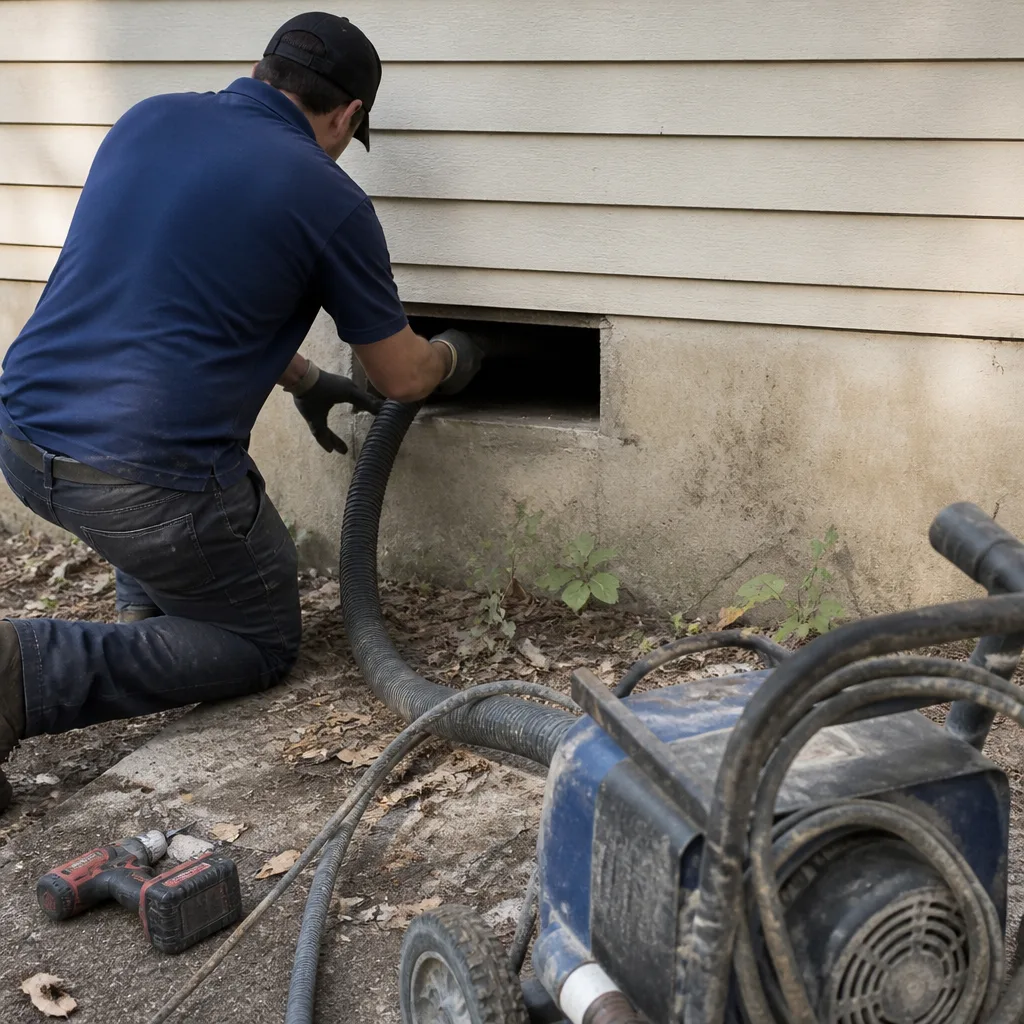 Before
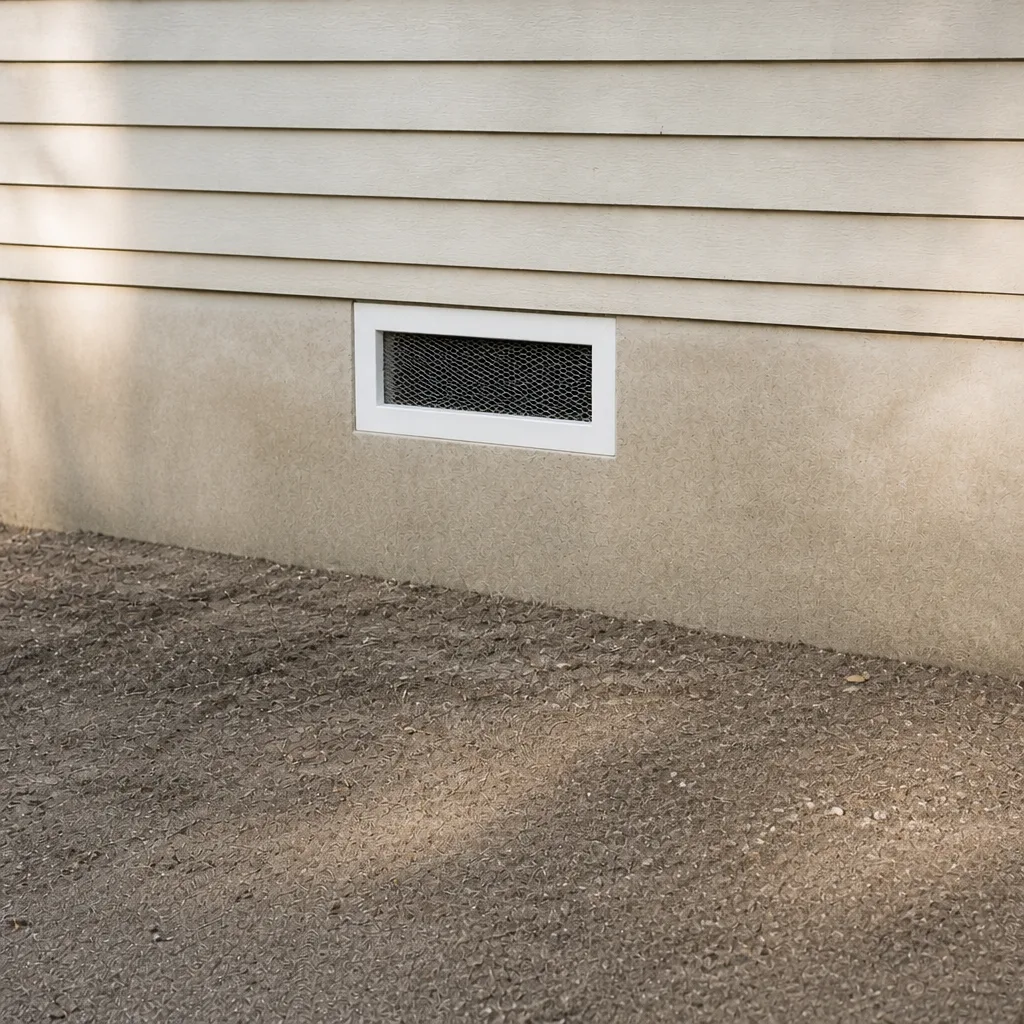 After
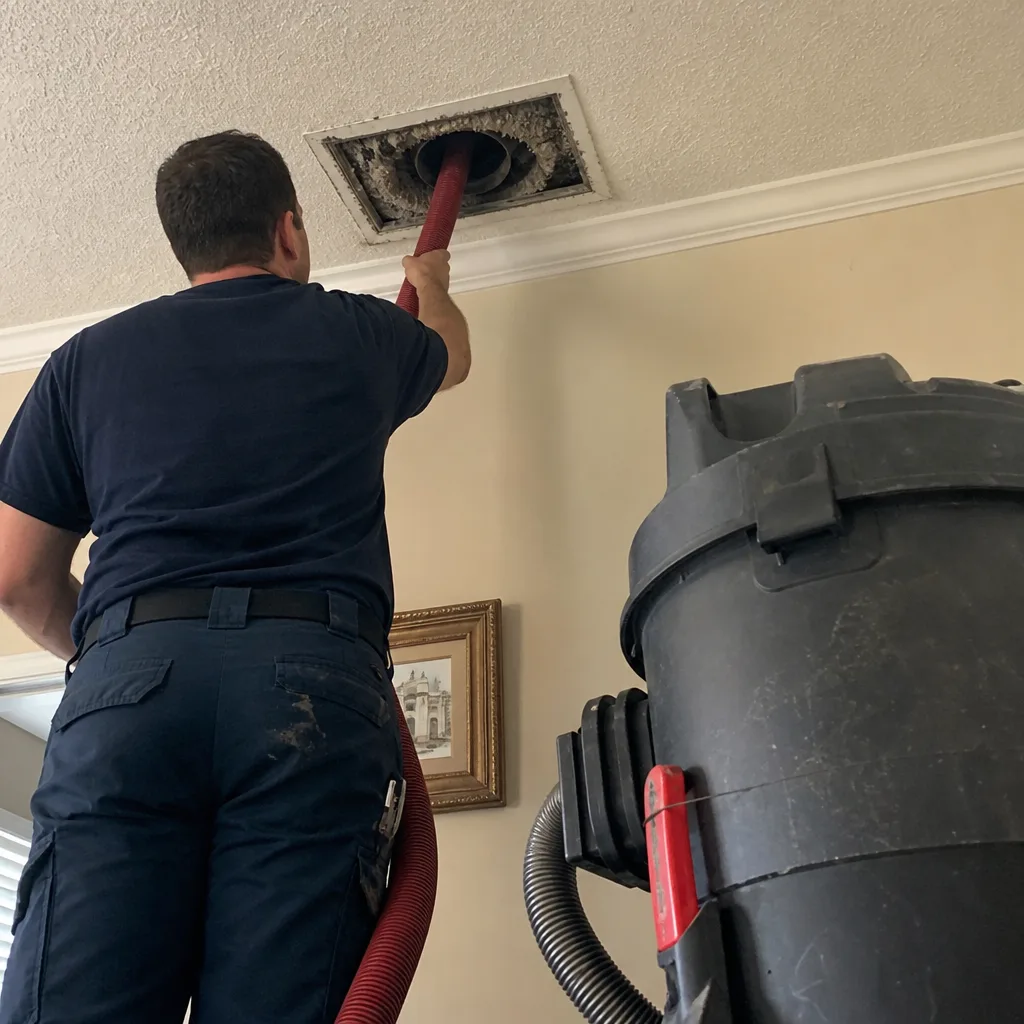 Before
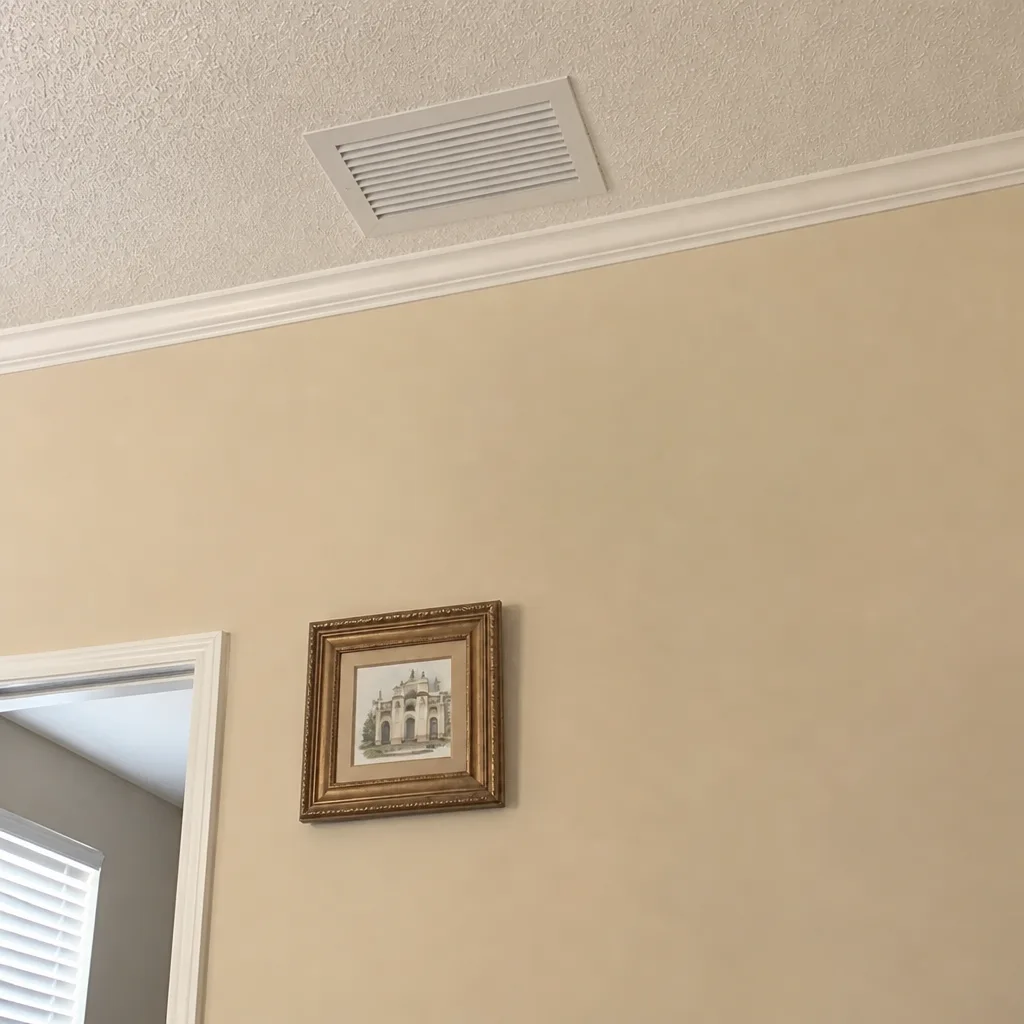 After
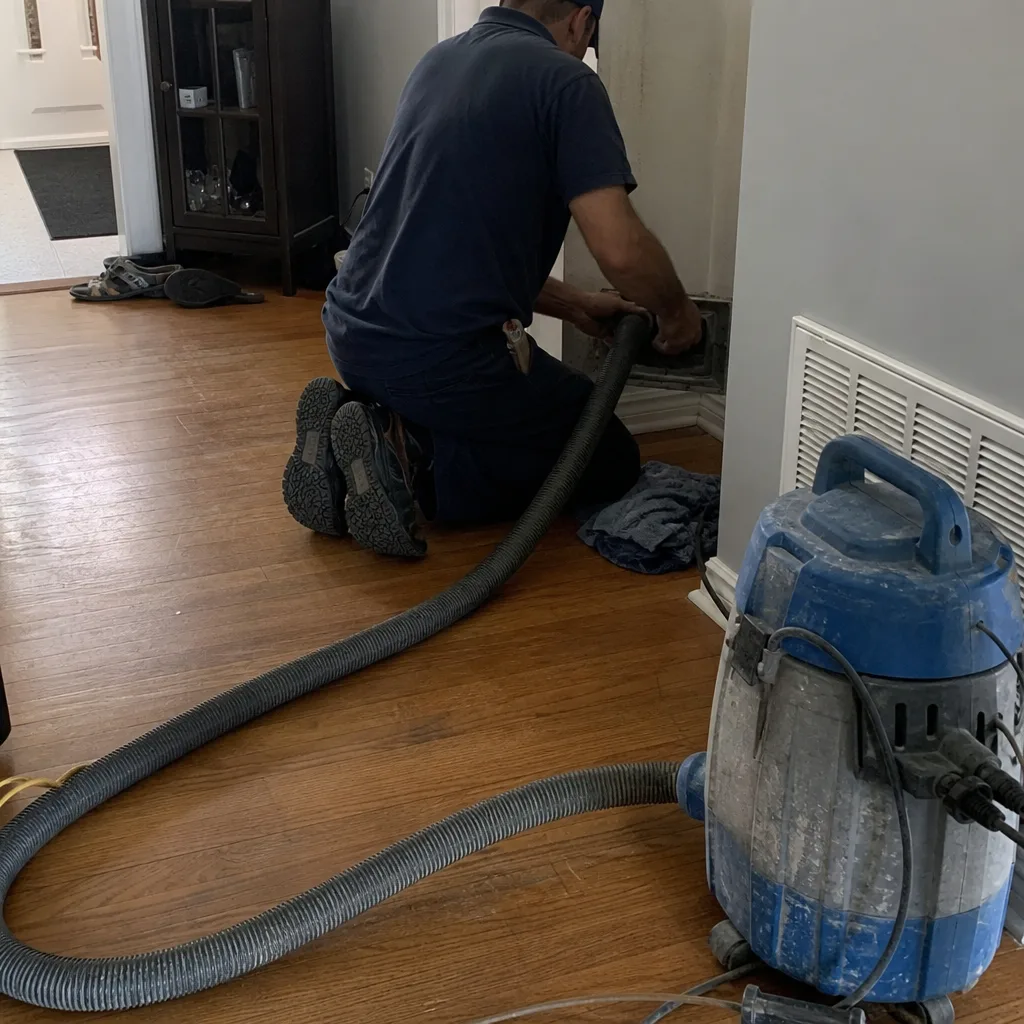 Before
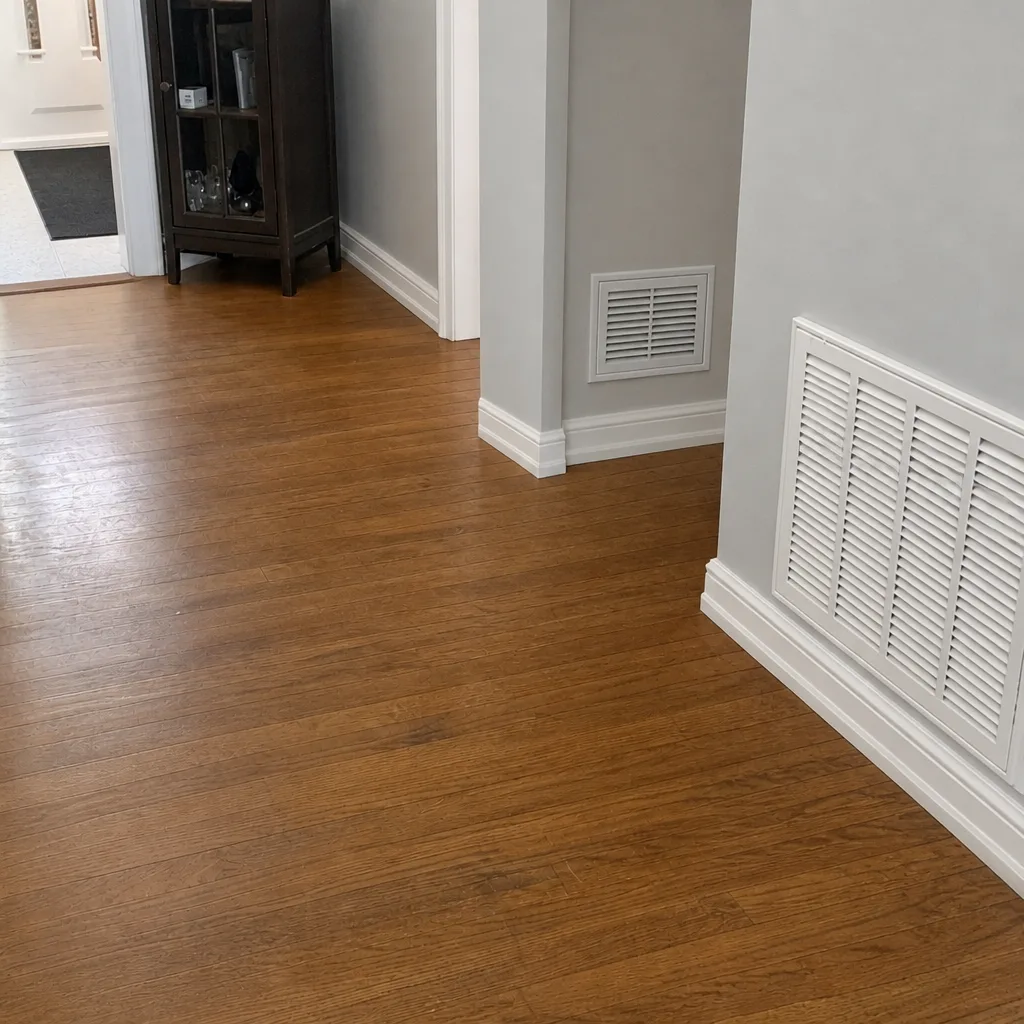 After
When to Call a Professional
Call when you can’t trace a problem to the filter, when dust returns quickly after a clean, when you smell mustiness at a register, or when airflow at one register is clearly weaker than the rest. Call if you’ve had recent renovation work and want to be sure construction dust hasn’t settled into the system. Call if you see insulation fibers in a filter or notice gaps in visible duct runs. And call if you’ve never had the system inspected and you don’t know its history. Sunstone Air Duct Cleaning offers free estimates in North Charleston – call (855) 683-7582. Our team uses Rotobrush and Nikro HEPA-filtered extraction systems, and we handle repair alongside cleaning so nothing is left half-done.
Frequently Asked Questions
Every 30 to 45 days during pollen season and the heavy cooling months (roughly March through September), and every 60 to 90 days through the cooler stretch. North Charleston’s long humid season and heavy spring pollen load the filter faster than the national 90-day average assumes, so a fixed quarterly schedule will leave you running a clogged filter through the highest-demand weeks.
Cost depends on the number of systems, the length of the duct runs, and whether repair is needed. We don’t quote per vent, because per-vent pricing is what makes bait-and-switch quotes possible; instead we set one flat price per system after an on-site assessment, agreed before any work starts. Call (855) 683-7582 for a free estimate.
A low teaser price usually means the work stops at a surface vacuum with consumer-grade equipment, with no rotary-brush agitation, no HEPA capture, and no repair capability. The thoroughness is what you’re paying for; a low quote often means the contamination stays where it is. Ask any contractor what equipment they use and whether they can show before-and-after photos of your own ducts. Call (855) 683-7582 to compare an honest quote.
Ask for before-and-after photos of your own ducts, not stock images, and walk through the system with the technician as the work finishes. A professional has no reason to refuse either request. That’s the simplest way to confirm the work matches the quote. Call (855) 683-7582 to schedule an assessment.
Most homes benefit every two to three years, sooner with pets, allergy sufferers, recent renovations, or a history of moisture. Homes with leaky or older ductwork should be inspected more often because repair issues can develop between cleanings. A free estimate will tell you where your system stands. Call (855) 683-7582.
It can reduce the volume of dust, pollen, and other particulates circulating through your home, which many allergy sufferers notice. It’s not a medical fix, but in a climate with a heavy pollen season, keeping the system clean removes a source of ongoing exposure. If you’re considering it, start with a free estimate at (855) 683-7582.
The Bottom Line
The checklist in this guide works because it’s tied to North Charleston’s actual seasons and housing rather than a generic calendar. Check filters every 30 to 45 days through pollen and cooling season. Read your filter’s load pattern – uneven or rapid loading is a diagnostic clue, not just a chore. Inspect registers monthly and document with dated photos. Know where DIY helps and where it stops, and treat the dryer vent with the same rigor as the ducts. Do that, and you’ll catch problems while they’re still cheap and have real leverage when you get a quote. When it’s time for a professional visit, we’re ready.
Call (855) 683-7582 for a free estimate. We answer 24/7. Fast dispatch from 7am to 7pm, Sunday through Friday.
Written by the team at Sunstone Air Duct Cleaning.