
Last updated November 15, 2026
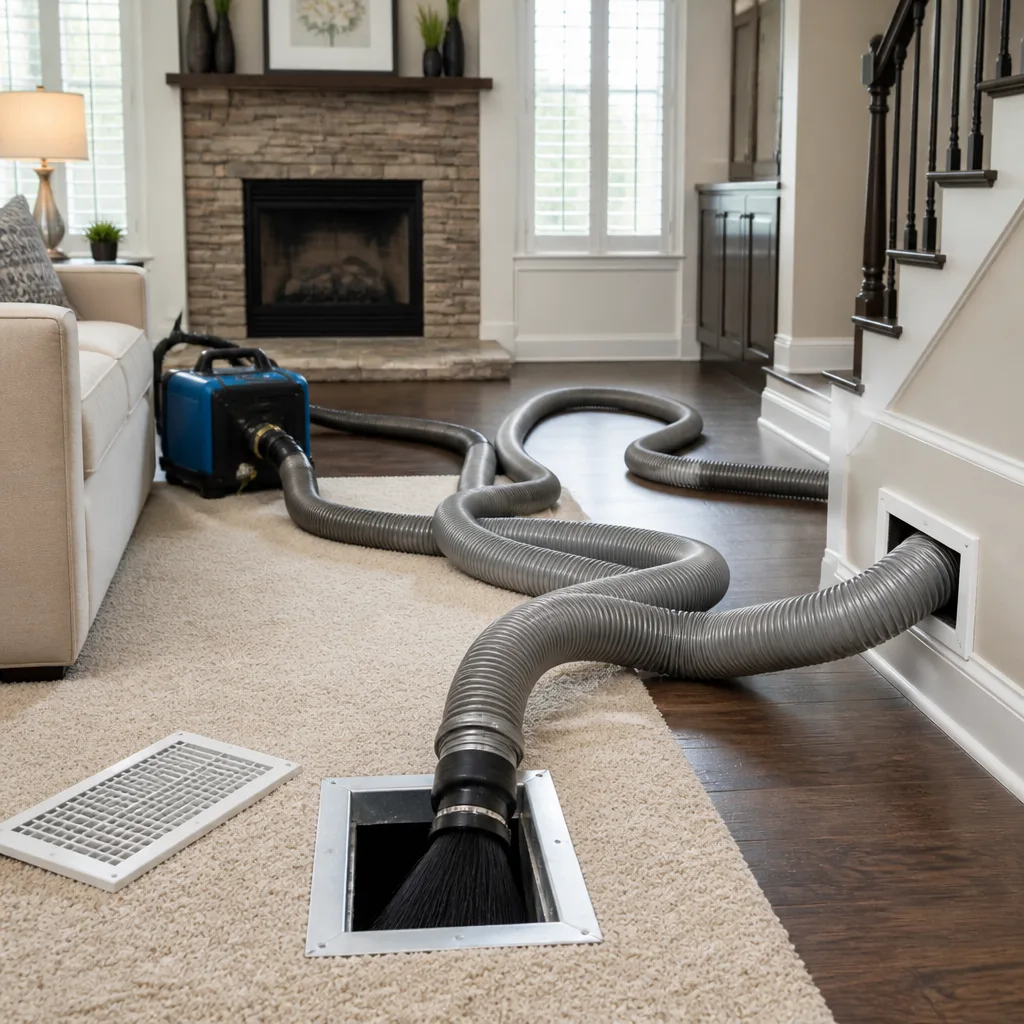 Whole-home duct cleaning
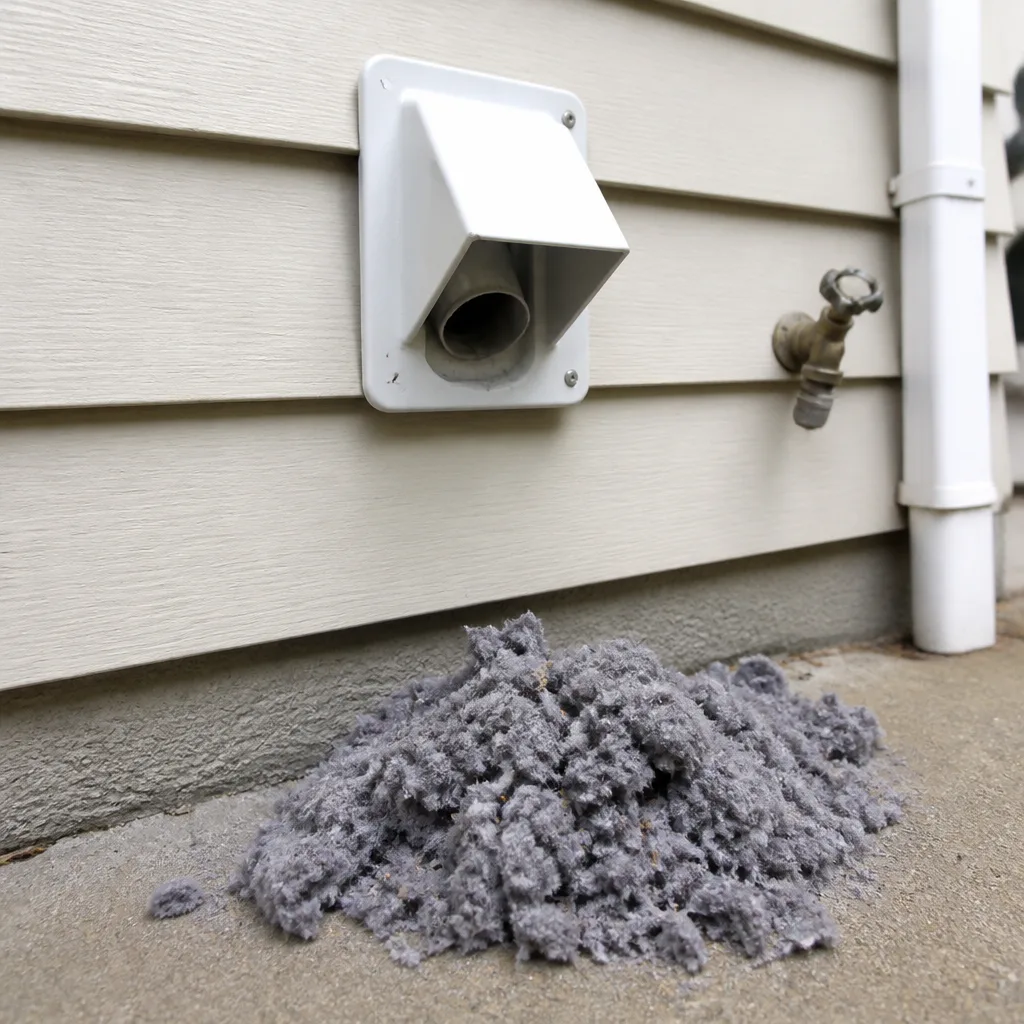 Dryer vent cleaning
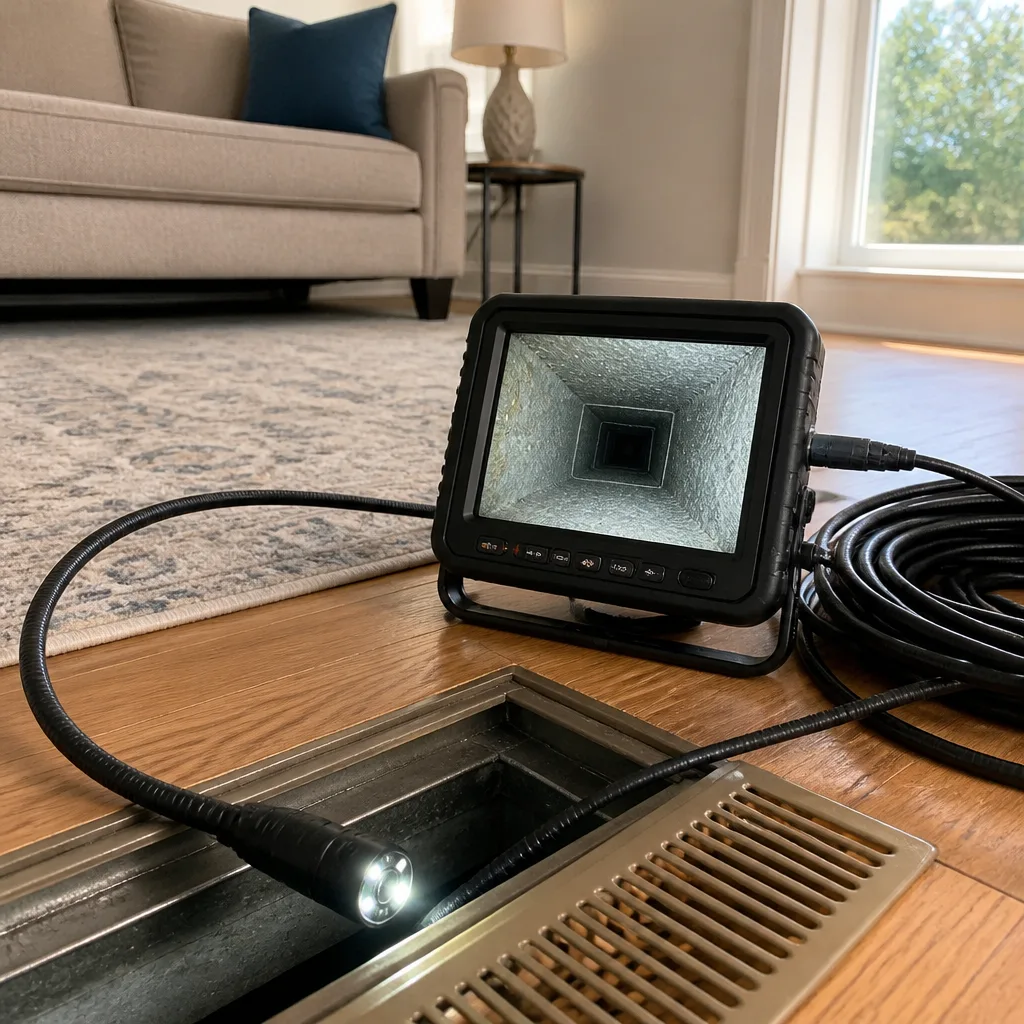 Camera inspection
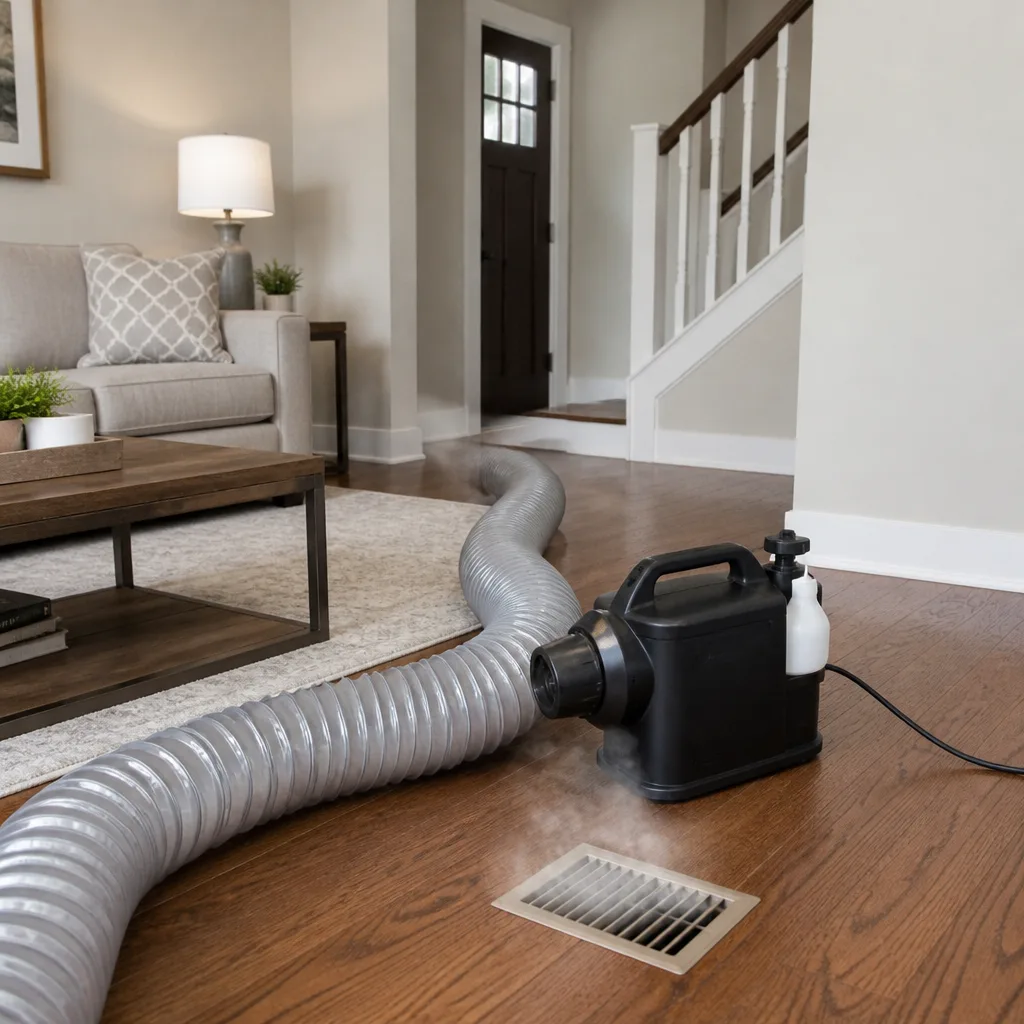 Sanitizing & deodorizing
Whole-system duct and dryer vent check with before-and-after photos - you see exactly what came out of your vents
That "$99 whole-house special" is a bait ad - the real number appears once they are in your hallway, or the "clean" is a shop-vac at the register. We photograph the inside of your ducts before and after instead.
Air Duct Cleaning Emergency Preparedness Guide for North Charleston Homes
Most homeowners in North Charleston treat their ductwork as an afterthought until a storm makes it urgent. Here’s the counterintuitive part: a weather event doesn’t usually destroy ducts outright. It sets up a slow contamination problem that shows up weeks later, which is why the first 72 hours after a storm decide whether you’re facing a routine cleaning or a full remediation. This guide walks through what to check before you touch the thermostat, how to spot storm intrusion without opening walls, the 24-hour contamination window, and how to document everything for an insurance claim. You’ll leave knowing exactly what to do when the power comes back first. Keep a copy near your air handler, because the one time you’ll want it is the one time you won’t search for it.
Quick Answer
After a storm or flood event, do not turn your HVAC system back on until you’ve confirmed the air handler, exterior penetrations, and any crawlspace ducts are dry and free of debris. Running a contaminated system spreads mold spores and silt through every room in a matter of hours, turning a cleanable problem into a remediation project. In North Charleston, where hurricane season runs from June through November, that single decision is the difference between a duct cleaning and a duct restoration.
Styles & brands we work with
- Whole-home duct cleaning
- Dryer vent cleaning
- Camera inspection
- Sanitizing & deodorizing
Table of Contents
- What to Do in the First 72 Hours
- The Air Handler Check: Before You Flip the Switch
- How to Tell If Storm Water or Debris Got Into Your Ducts
- The 24-Hour Contamination Window
- Documenting Duct Damage for Your Insurance Claim
- Cleaning vs. Restoration: Which One Do You Need?
- Building a Storm-Season Duct Plan for North Charleston
- What Professional-Grade Equipment Actually Does Differently
What to Do in the First 72 Hours
Those first three days after a storm are the whole game. In North Charleston, hurricanes and tropical systems push water into places that stay hidden for a while: crawlspaces, wall cavities, and the flexible duct runs that snake through attics and subfloors. The interior of a North Charleston home can stay humid for days after the rain stops, and that lingering moisture is what feeds mold. Your job in the first 72 hours is to stop the system from spreading anything before you decide what to clean.
Here’s the sequence we recommend. It’s the same order our technicians use on post-storm assessments, and it saves homeowners from a much larger bill.
- Leave the system off. Don’t run the AC or heat until you’ve inspected. Cool air feels good after a storm, but a running blower pulls moisture and debris deeper into the ducts.
- Kill power at the breaker to the air handler and condensing unit before you open anything. Water and electricity don’t mix, and standing water near the equipment is common after flooding.
- Photograph everything before you touch it. Wide shots of each room, close-ups of the air handler, and clear photos of any water lines on walls or equipment.
- Check the exterior penetrations. Look where ductwork, refrigerant lines, and the condensate drain pass through the outside wall. If the sealant cracked or pulled away, storm-driven rain gets a straight path inside.
- Inspect crawlspace ducts. North Charleston has plenty of raised homes with duct runs under the floor. If that space flooded, the insulation on those ducts is likely soaked and needs to come out.
- Smell the air near vents. A musty or earthy odor close to a supply register is a strong signal that moisture reached the duct interior.
If any of those checks come back negative, that’s your cue to call for professional help rather than run a test cycle. If everything looks dry, you can power back up and watch for the indicators in the next section.
The Air Handler Check: Before You Flip the Switch
The air handler is where the decision gets made. It’s the box that holds your blower and, in most setups, the evaporator coil. In a North Charleston home, it’s usually in the attic, a closet, or the garage. When storm water gets near it, the blower becomes a distribution engine: instead of pushing clean air, it pushes whatever is sitting in the ducts into living spaces. A wet coil is worse, because mold colonizes the fins fast and then gets carried downstream every time the system runs.
Here’s a homeowner-level checklist at the air handler itself. Look, don’t disassemble. Electrical components and wet equipment are not a do-it-yourself combination, and if you’re unsure about anything you see, stop and call a professional.
- The cabinet: Is there rust, water staining, or standing water inside or around the base? Rust streaks inside the cabinet tell you water sat there long enough to start corrosion.
- The blower compartment: Any silt, grit, or leaves visible? That’s a sign water carried debris in.
- The coil: Is it wet when it shouldn’t be, or coated in a grayish film? That film is often the start of biological growth.
- The filter: Is it saturated, wavy, or discolored in streaks? A filter that took on water during the storm won’t dry into a usable filter.
- The condensate line: Is it clogged with silt or backed up? A blocked drain line keeps the whole assembly wet longer.
If you see water, visible growth, or debris inside the cabinet, don’t flip that breaker yet. The next step is a professional assessment. air duct cleaning after a storm starts with inspecting the air handler, not with the vacuum. The other thing to check while you’re there: the filter housing and the return plenum. Both are entry points for water, and both are often missed.
How to Tell If Storm Water or Debris Got Into Your Ducts
You can’t see inside your walls. That fact makes homeowners guess, and guessing leads to the wrong response after a storm. There are still plenty of clues available without cutting drywall. Some are environmental, some are behavioral, and some come down to timing. If two or more of these show up in a North Charleston home after a weather event, treat the system as contaminated until a professional says otherwise.
- Water lines: A faint ring on the wall near a return grille, or a stain on the ceiling below a duct run in the attic. Mark where it is, photograph it, then leave it alone.
- Staining inside the return grille: Take the grille off carefully. A dark streak or water mark on the metal frame tells you moisture reached that point.
- Musty smell near one room, not all: That pattern suggests a localized problem, often a run of flexible duct that got wet in the attic or crawlspace.
- New dust on horizontal surfaces: A sudden layer of fine dust after the storm, especially in rooms distant from the entry point, means the system pushed something through.
- Humidity that won’t come down: North Charleston gets plenty of humidity on a normal day, but if the indoor air stays damp after the weather clears, wet duct insulation is one of the usual suspects.
- Visible insulation damage: Sagging, discolored, or separated insulation on accessible duct runs in the attic or crawlspace.
For what to do about these signs, don’t reach for a shop vacuum. Consumer-grade vacuums can blow fine particulate right back into the air, and a wet duct interior now has contamination that needs HEPA-filtered extraction. Our North Charleston team uses Nikro HEPA-filtered vacuum equipment to pull that material out at the source rather than redistributing it into the room.
The 24-Hour Contamination Window
Here’s the part most people don’t realize. When a contaminated system runs, spores and silt move fast. In our experience, the majority of the contamination event happens in the first 24 hours of operation because that’s when the blower is moving the most air through the most contaminated space. Every cycle distributes a fresh load of particles into bedrooms, kitchens, and living areas. It settles on surfaces, and then it gets disturbed again by foot traffic and reopened air.
This matters more in North Charleston than in many places. The region’s warm, humid climate creates conditions that mold needs to establish quickly: moisture, warmth, and a food source. Your duct interiors supply all three. A system that runs for a day with wet insulation and a wet coil gives biological growth everything it needs. That growth then spreads with every air exchange.
The practical upshot:
- Day 1 to Day 2 is prevention. If ducts look dry and the air handler is clean, a normal cycle is fine.
- Day 2 onward is assessment. Any sign of moisture means an inspection before you run the system again.
- Week 1 onward is remediation territory. Once growth establishes inside the ducts, cleaning becomes more involved and, in some cases, restoration is needed too.
This is not a reason to panic. It’s a reason to slow down on the very first decision. The single biggest saving move after a North Charleston storm is not turning the system back on until someone qualified has looked at it.
Documenting Duct Damage for Your Insurance Claim
Insurance claims for storm damage are won or lost on documentation, and ductwork is a classic problem area because it lives inside walls. Adjusters can’t see duct damage directly, so they rely on what you provide. Getting the details right means the difference between a claim that moves quickly and one that gets denied or partially covered. Start in the first 48 hours, before cleanup begins. What you document now is what the claim gets paid on.
Here’s what adjusters actually want, from what we’ve seen handling post-storm assessments:
- Wide shots of each room showing water level or damage, with a recognizable reference point.
- Close-ups of the air handler, coil, and filter, unopened and un-cleaned. Don’t replace a water-logged filter until you’ve photographed it.
- Photos of exterior penetrations where storm water could have entered.
- Crawlspace and attic photos of affected duct runs. Wet insulation is visually obvious and photographic.
- Dates and times for every photo. Your phone’s metadata helps, but a written log is safer.
- Any receipts for emergency water extraction or temporary protection.
- A professional inspection report with scope of damage, affected square footage of ductwork, and photo documentation from inside the system.
That last item is the one most homeowners miss. A camera inspection of your duct interiors is the proof adjusters need, because it shows the actual condition rather than an estimate of it. A report from a professional duct service carries more weight than a homeowner’s written description. Keep your “before” photos and the inspection report together in one folder.
Cleaning vs. Restoration: Which One Do You Need?
These two services get conflated after every storm, and the confusion costs people money. Cleaning is about contamination removal. Restoration is about structural repair after physical damage. Sometimes you need one, sometimes the other, and often both. The difference comes down to what’s actually wrong inside the system.
Post-storm duct cleaning removes silt, debris, and biological growth from ducts that are intact. The structure of the ductwork is fine, but the interior is contaminated. This is a maintenance issue after a bad storm, and it’s the right call when your inspection finds wet-then-dried debris, silt on the duct floor, or dust plumes. Professional equipment, like the Rotobrush rotary-brush systems we use, agitates and extracts the debris rather than just blowing it through. That matters after a storm because silt that’s been sitting on the bottom of a flexible run doesn’t come out on its own.
Post-storm duct restoration is for physical damage. This is when a duct run has torn, separated at a joint, collapsed in the crawlspace, or lost its insulation. Water and wind can do this, and so can roof damage that punches through to attic ductwork. Restoration means repair, replacement, or reconnection. Cleaning a damaged system without repairing it first just re-contaminates the home, because the compromised section leaks and pulls in outside air.
How to tell which you’re facing:
- Cleaning only: ducts are intact, dry, and functional, but visibly soiled inside.
- Restoration also needed: visible sagging, disconnected joints, torn flex duct, wet insulation that should be removed and replaced, or air loss you can feel at a joint.
- Both: contaminated ducts plus structural problems. This is common after major storm events in North Charleston, and it’s the reason one visit that handles cleaning and repair is better than two.
That’s where a company that offers repair alongside cleaning makes a real difference. A single-call solution keeps the same team responsible for the diagnostic, the cleaning, and the restoration, which simplifies documentation for insurance and shortens the timeline.
Building a Storm-Season Duct Plan for North Charleston
Hurricane season in North Charleston runs from June through November, and any serious guide has to account for the whole window, not just the two days of a named storm. Most of the damage we see comes from the accumulation of smaller events. A tropical system that drops four inches of rain can do as much duct damage as a named hurricane if it catches your system in the wrong state. A plan made in May holds up a lot better than scrambling in September.
What a real storm-season duct plan looks like:
- Book a pre-season inspection in late spring. Know the condition of your ducts and air handler before the first storm hits. If there’s existing damage, repair now rather than wait for water to find it.
- Photograph your system in normal condition. Pre-storm photos make post-storm claims far easier.
- Know where your air handler and exterior penetrations are. Mark the breaker so you can find it in the dark without searching.
- Store a few square of plastic sheeting near the air handler so you can cover the cabinet if the roof leaks above it.
- After every named storm, do the five-minute visual check described earlier, even if the storm seemed minor.
- Book a post-season cleaning if you used the system during a storm event. Regular dryer vent cleaning is also worth scheduling in the same visit, since storm-season checks are a natural time to handle fire-safety maintenance too.
For property managers running several units in North Charleston, keep the same plan on a shared calendar. One inspection and one cleaning per unit after each storm season keeps costs predictable and reduces the chance of an emergency call in the middle of the next event.
What Professional-Grade Equipment Actually Does Differently
This is the part of storm recovery where the choice of equipment matters most. After a flood event, ductwork has three problems the wrong tools make worse: silt on the duct floor, biological growth on the surfaces, and fine particulate suspended in the air. A shop vacuum handles none of these well. It can pick up the big debris, but its exhaust pushes fine particles back into the room. In a post-storm home, that’s the last thing you want.
The systems we bring to a North Charleston job are built for this exact problem. Rotobrush rotary-brush equipment agitates the interior surface of the duct, breaking loose silt and growth that a vacuum alone can’t dislodge. Nikro HEPA-filtered extraction captures the particulate at the source instead of distributing it. For homes with mold concerns or post-renovation dust after storm repairs, Abatement Technologies air filtration units give us the same class of air scrubbing that professional remediation crews rely on. That combination is what lets a single visit handle both cleaning and post-storm assessment reliably.
This also matters because it lets us work alongside the indoor air quality systems many North Charleston homeowners already have. If your home runs a Honeywell or Aprilaire filtration or humidity control setup, we know how that equipment interacts with the duct system during a cleaning and can service it without disrupting the components. The air inside your home is only as clean as the system moving it, and after a storm that system needs to be handled by tools designed for the job.
Common Mistakes to Avoid
- Turning the AC on as soon as the power comes back. This is the single most expensive mistake after a North Charleston storm. If moisture reached the ducts, that first cycle distributes spores through every room before you’ve had a chance to inspect.
- Running a box fan near the air handler. Fans feel like they help, but they push airborne particulate deeper into the system and into living space rather than clearing it.
- Replacing a wet filter immediately. A water-logged filter is your best evidence for the insurance claim. Photograph it first, then replace it when the system is ready to run.
- Assuming the ducts are fine because the air handler looks dry. Crawlspace and attic runs are the usual hiding places for post-storm moisture, and they’re the runs most likely to have compromised insulation after a North Charleston flood event.
- Filing the claim without a professional inspection report. Adjusters want camera documentation of the duct interiors. Homeowner descriptions alone get claims delayed or rejected.
- Hiring a cleanup crew that only vacuums. If the ducts are physically damaged, cleaning alone re-contaminates the home within days. Confirm the company offers repair alongside cleaning.
- Skipping the dryer vent. Storm-season checks are the natural time to look at your dryer vent too. A blocked dryer vent is one of the leading causes of residential fires, and it becomes more likely when lint has been sitting through a humid summer.
See the difference
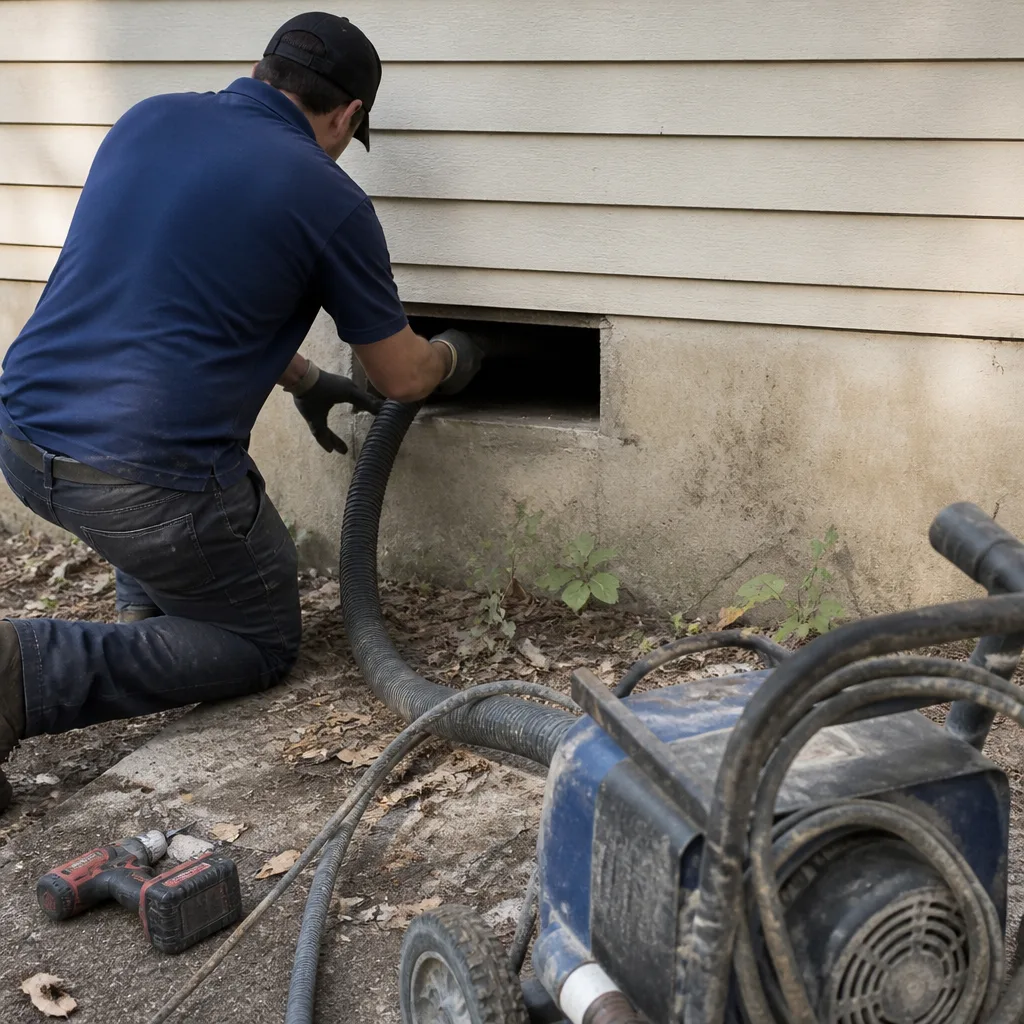 Before
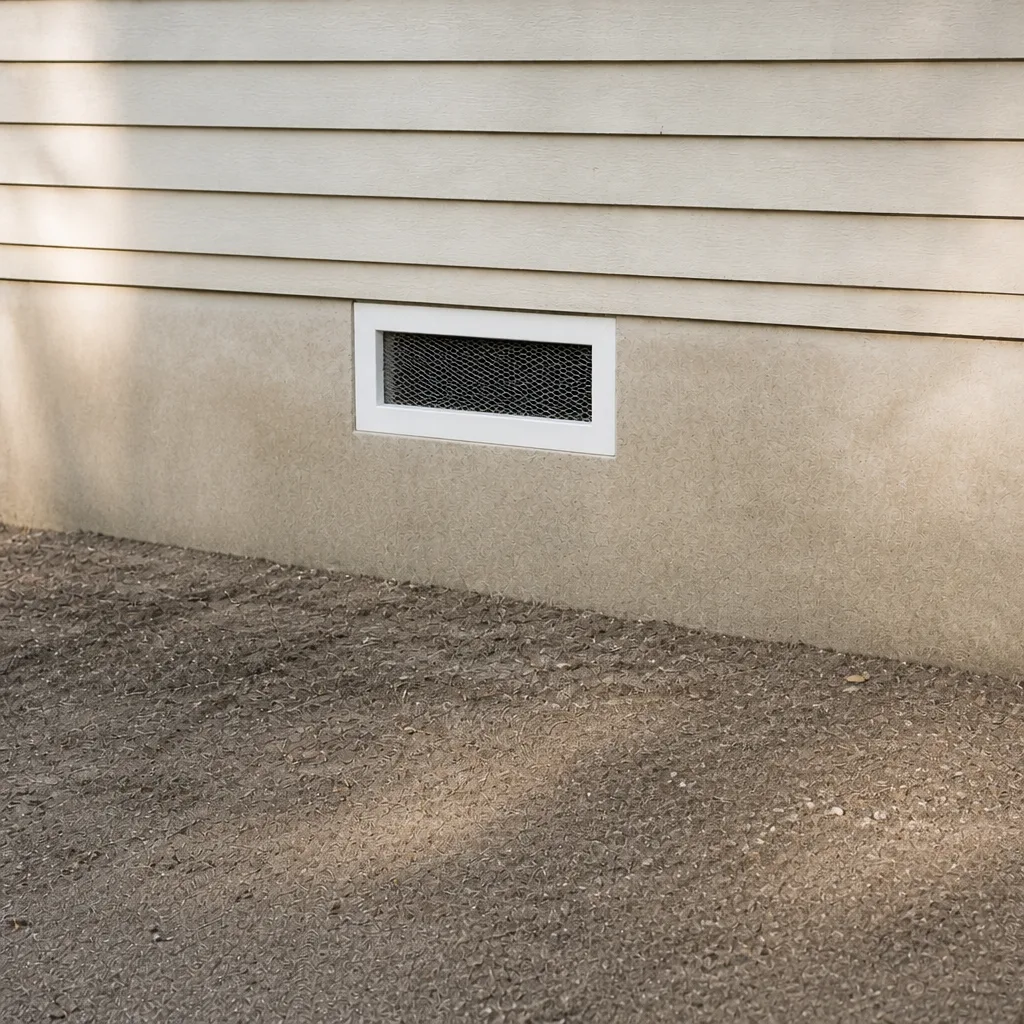 After
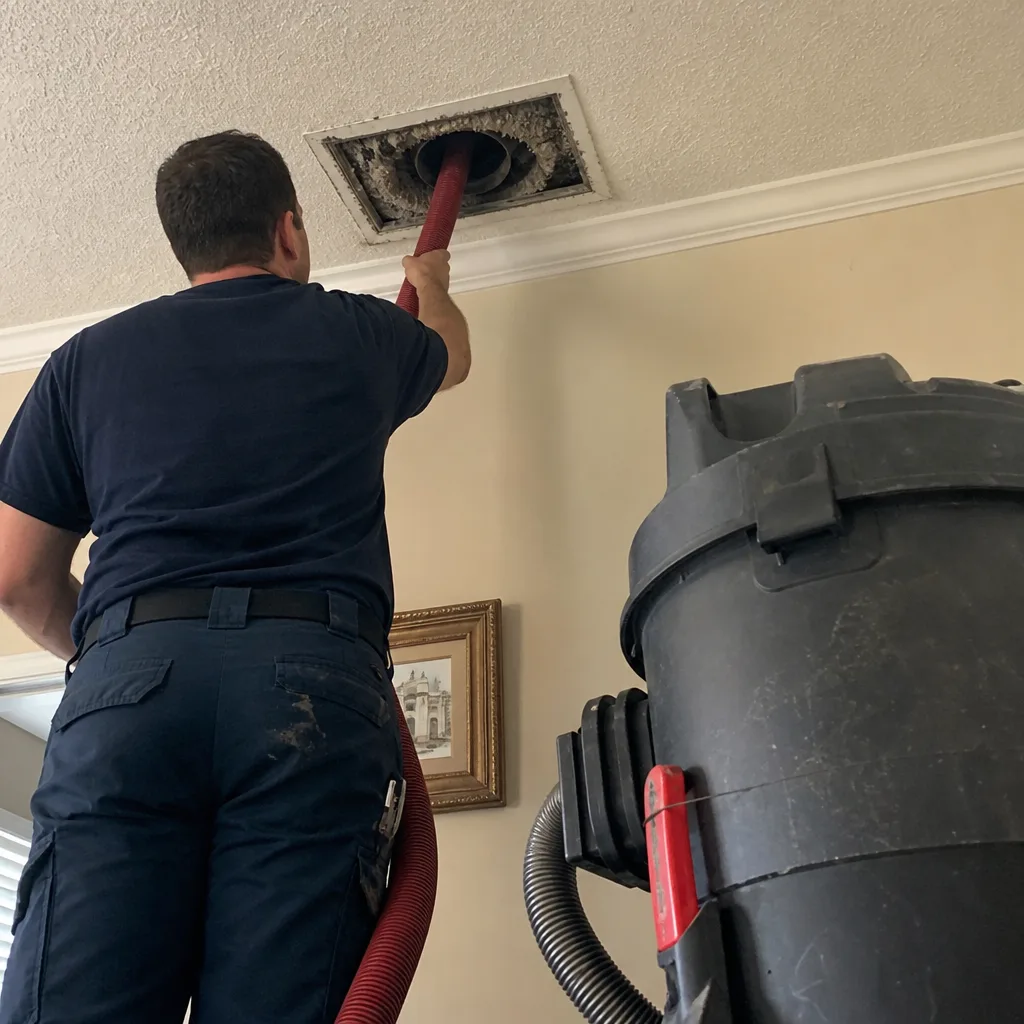 Before
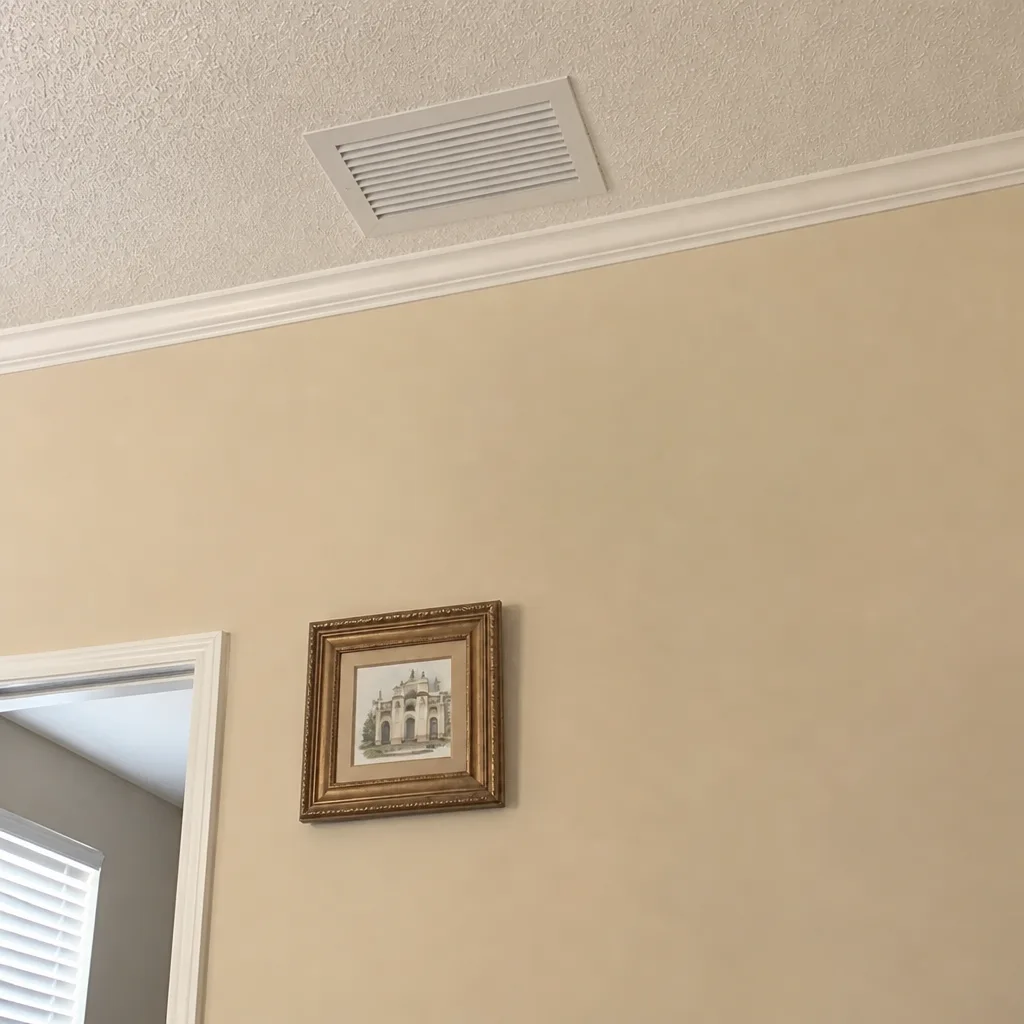 After
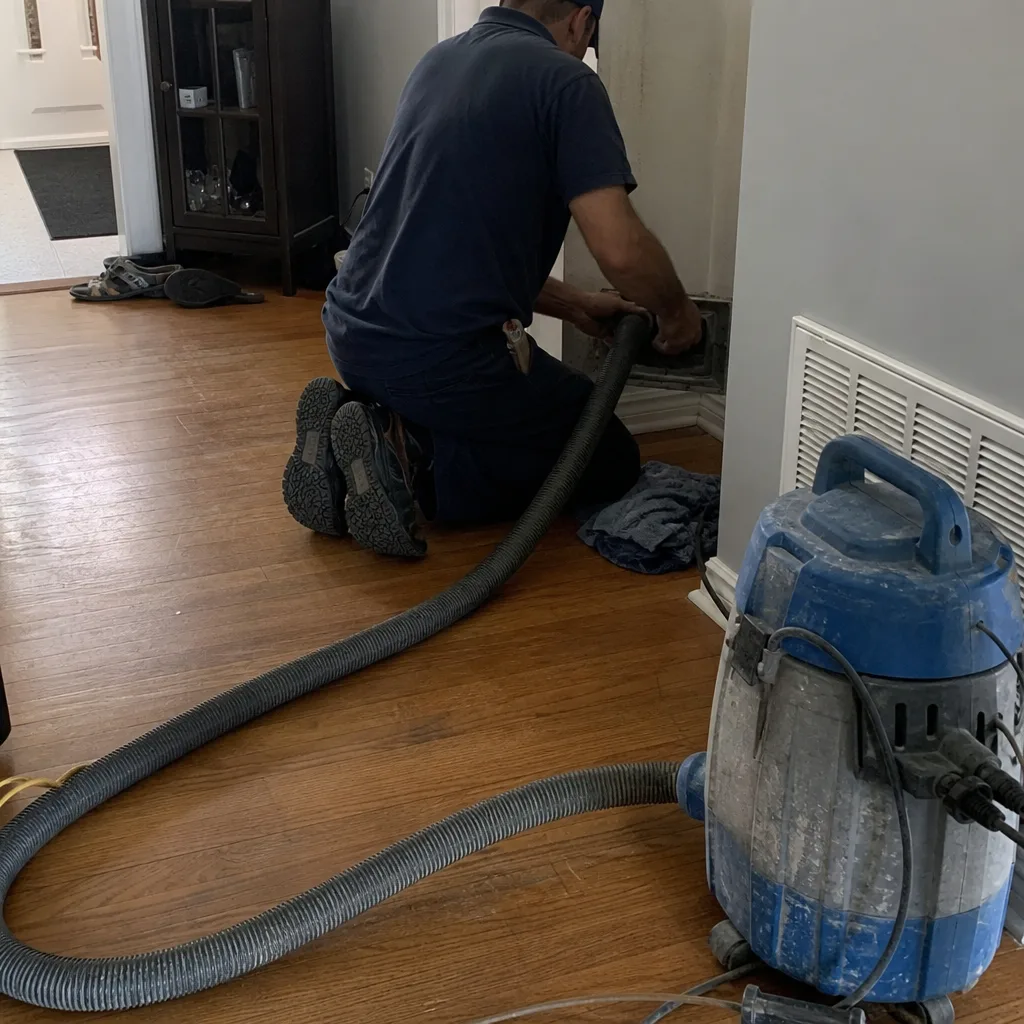 Before
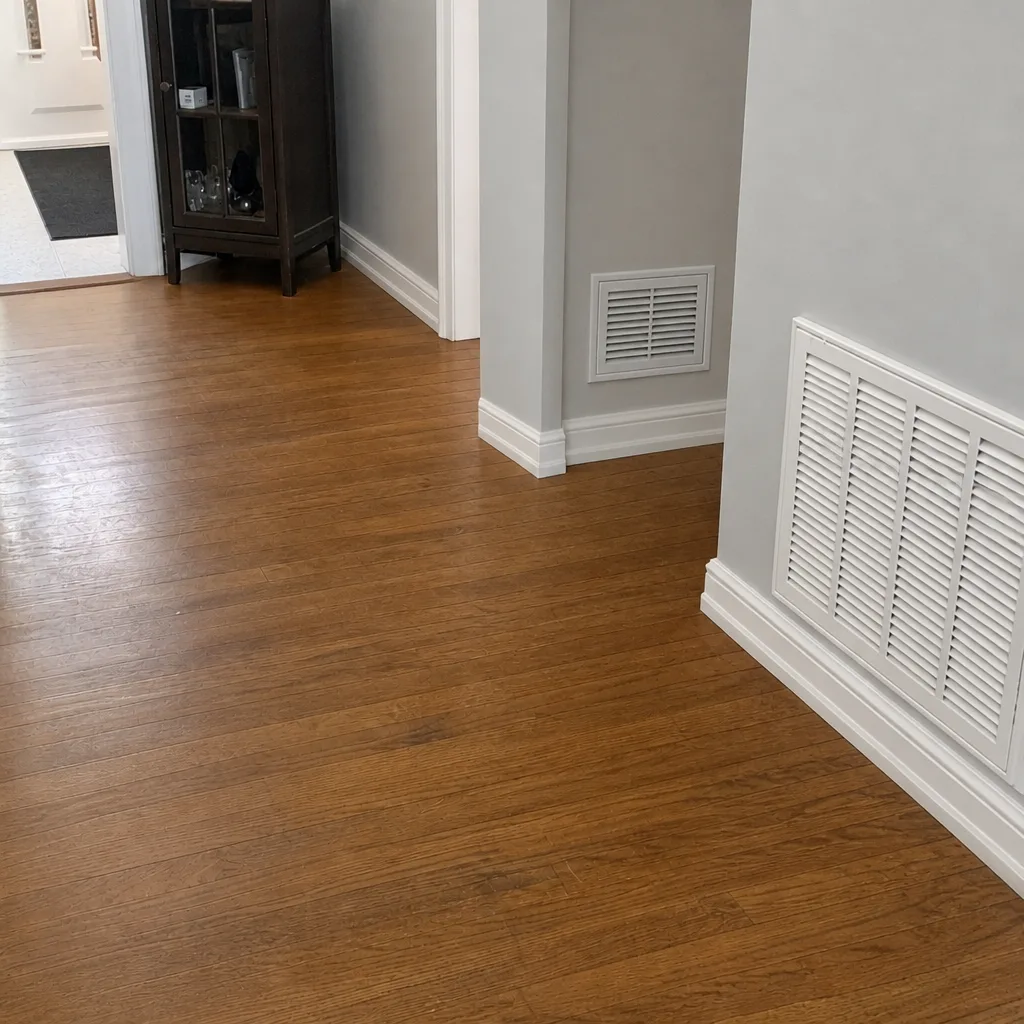 After
When to Call a Professional
Some checks after a storm are homeowner-level. Others are not. Call a professional if you find water inside the air handler cabinet, visible growth on the coil, wet insulation on any duct run, or a musty smell that doesn’t go away after a day of dry weather. Call if you suspect duct separation, if the system is making new noises, or if you need a camera inspection report for an insurance claim. Call if you have allergy or asthma concerns in the household and you’re unsure whether it’s safe to run the system. Sunstone Air Duct Cleaning offers free estimates in North Charleston. Call (855) 683-7582. We answer 24/7. Fast dispatch from 7am to 7pm, Sunday through Friday. Our technicians have up to 8 years of experience, and we use professional-grade Rotobrush and Nikro equipment rather than consumer-grade tools. Estimates are free, and the written estimate sets the final price.
Frequently Asked Questions
You need it if there’s evidence of moisture, debris, or smell inside the system. Not every storm requires a cleaning. A dry system with no visible intrusion is fine. If you’re unsure, a free inspection answers the question in a single visit. Call (855) 683-7582 for an exact quote; estimates are free.
Only after you’ve confirmed the air handler, exterior penetrations, and crawlspace ducts are dry and free of debris. Running a system that has contamination inside spreads spores and silt through the home within 24 hours. If you see water or growth, leave the breaker off and call us.
Look for water lines near return grilles, staining inside the grille frame, musty smell near one room, new dust on surfaces, and sagging insulation on accessible runs. Two or more of these signs suggest duct intrusion even without opening anything. A camera inspection confirms it.
Coverage depends on your policy and whether the damage traces to a covered event. Most policies want photo documentation, dates, and a professional inspection report with camera footage of the duct interiors. We can work with your insurer to provide the documentation they need, though whether it’s covered is up to them.
Cleaning removes contamination from ducts that are structurally intact. Restoration repairs or replaces ducts that have physical damage like torn flex, disconnected joints, or lost insulation. Many storms require both, which is one reason a service that handles cleaning and repair is the better call after a major event.
Once after any storm that may have affected the system, and once per season as a baseline. Homes in flood-prone areas or with allergy concerns often benefit from a post-season cleaning that also catches the dust and silt that accumulate year-round. The estimate is free, and we’ll tell you honestly if it isn’t needed yet.
The Bottom Line
Storm damage to ducts is almost never about the ducts themselves. It’s about what happens next. North Charleston’s hurricane exposure means the answer to “should I turn the system on?” is the most consequential decision of the entire recovery. Skip that step and you’re looking at remediation. Do it right and you’re looking at a cleaning, sometimes with a repair folded in, sometimes not. Keep your evidence, document everything for the claim, know which of the three services you need, and use equipment that actually extracts contaminants instead of relocating them. When you need a professional assessment, our team at Sunstone Air Duct Cleaning is here to help. One call covers cleaning, repair, and dryer vent safety, and we can walk you through what to check next.
If your home in North Charleston has taken on storm water or you’re simply not sure whether your ducts are safe to run, call Sunstone Air Duct Cleaning at (855) 683-7582 for a free estimate. We answer 24/7. Fast dispatch from 7am to 7pm, Sunday through Friday. Built for homes that take air quality seriously.
Written by the team at Sunstone Air Duct Cleaning.